
Can You Live on $1000 a Month After Bills? Real Numbers from Toronto
 Mar, 19 2026
Can you really live on $1000 a month after bills? If you’re in Toronto and carrying debt, the answer isn’t yes or no-it’s how. Most people assume $1000 is impossible. But I’ve seen it work. Not because someone won the lottery. Not because they cut out coffee. It’s because they rebuilt their spending around one hard truth: your bills don’t have to eat everything.
What $1000 actually buys in Toronto
Let’s start with reality. Rent in Toronto isn’t $600 anymore. It’s $1500 minimum for a basement apartment in Scarborough or Etobicoke. That’s the first punch. So if you’re living on $1000 after bills, you’re not paying rent. You’re living with roommates, sleeping in a basement suite, or staying with family. No shame in that. But you need to know what you’re working with.Here’s what a typical $1000 post-bill budget looks like for someone in Toronto in 2026:
- Net income: $1000/month
- Utilities (hydro, internet, phone): $180
- Transportation (TTC pass): $150
- Food: $200
- Debt payments (credit card, student loan): $300
- Remaining: $170
That $170? It’s for clothes, medicine, car repairs, or emergencies. No vacations. No new phone. No dining out. But it’s not nothing. That’s the gap most people miss.
Debt consolidation isn’t magic-it’s math
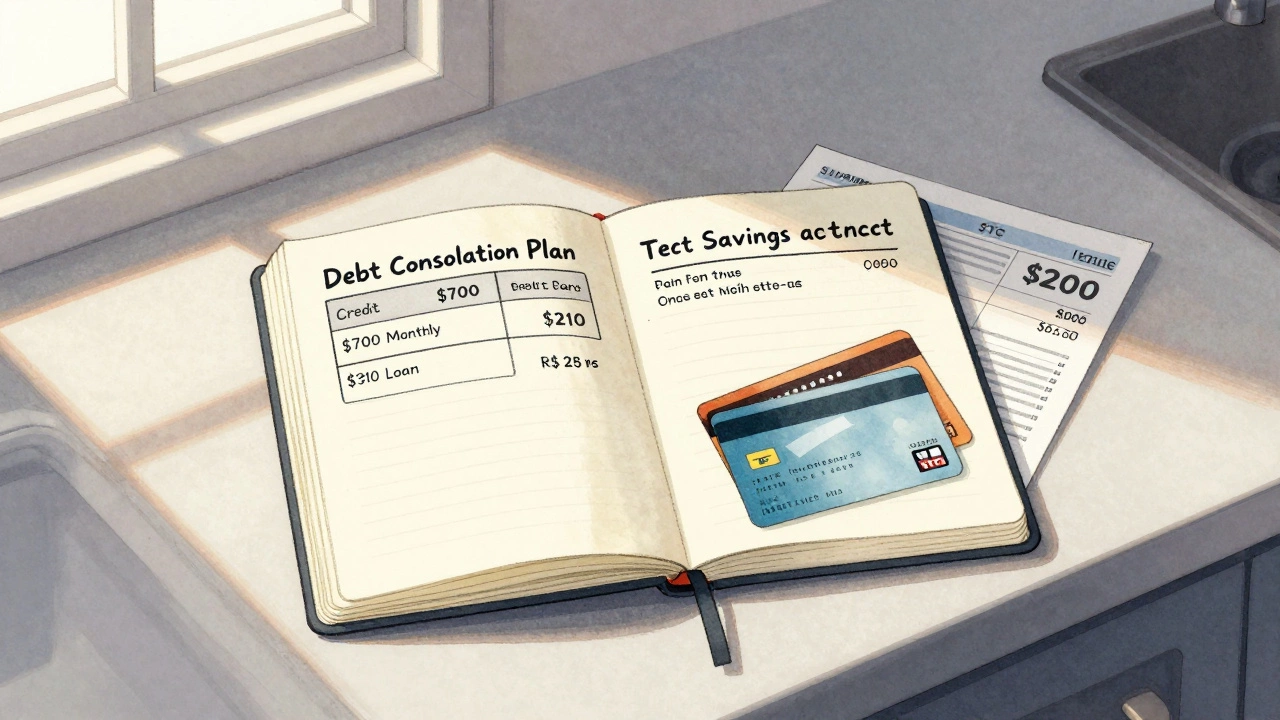
If you’re paying $500 a month on credit cards at 24% interest, you’re throwing away $12,000 a year in fees alone. That’s not debt. That’s a trap. Debt consolidation doesn’t erase what you owe. It changes the rules.Here’s what worked for Maria, a single mom in North York:
- She had $18,000 in credit card debt across three cards.
- She was paying $700/month in minimums and interest.
- She got a $15,000 consolidation loan at 8.9% over 5 years.
- Her new payment: $310/month.
She saved $390 a month. That’s $4,680 a year. She put that toward food and transit. She didn’t get rich. But she stopped drowning.
Consolidation works when you stop using credit cards. If you keep charging, you’ll be right back where you started. You need a plan. A written one. Not a mental one.
The three rules of living on $1000
Rule 1: Track every dollar for 30 days. Use a free app like Mint or just a notebook. You’ll be shocked where the money goes. One guy in Scarborough realized he was spending $120 a month on convenience snacks and bottled water. He switched to a reusable bottle and bought bulk rice. Saved $90.Rule 2: Use the 50/30/20 rule backwards. Most budget advice says 50% needs, 30% wants, 20% savings. But if you’re at $1000, you flip it: 70% needs, 20% debt, 10% survival buffer. No wants. Not even Netflix. Not yet.
Rule 3: Stop paying for things you don’t use. Gym memberships. Streaming services. Phone upgrades. You don’t need them. You need food, heat, and a way to get to work. Everything else is noise.
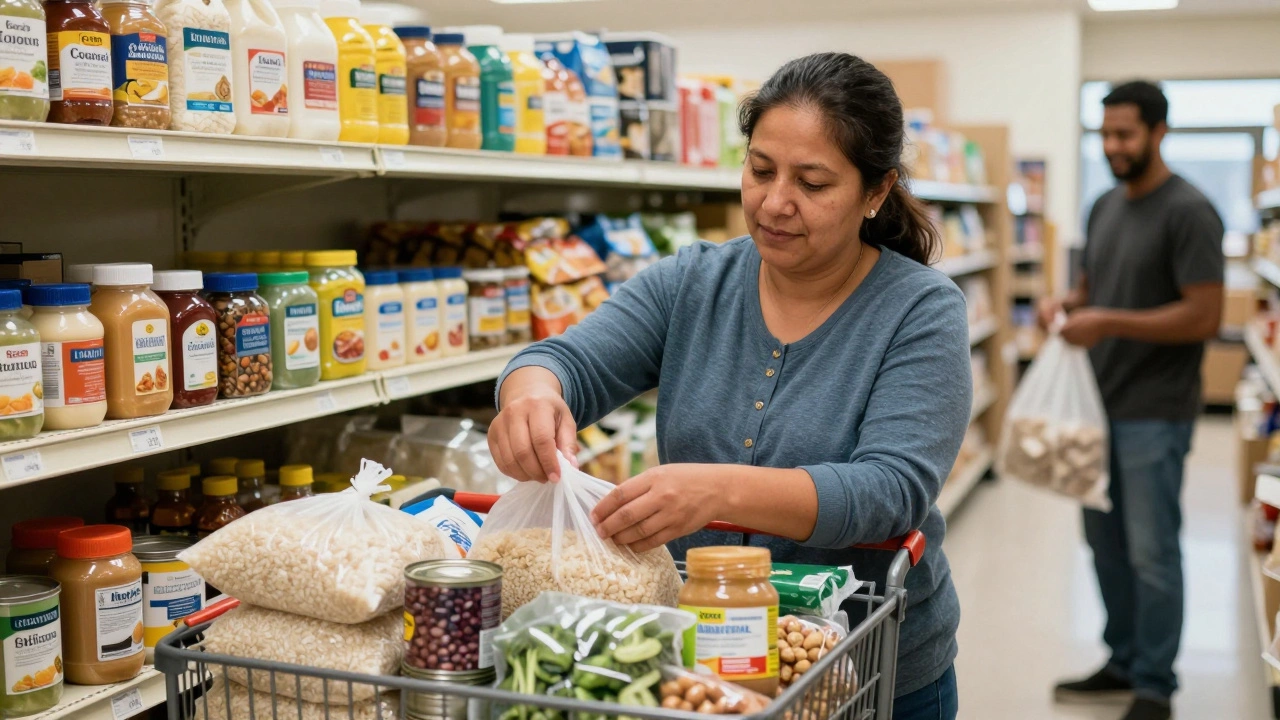
Food on 0: Real tips from Toronto food banks
You can eat well on $200 a month. Not fancy. Not exciting. But enough. Here’s what people actually buy:- 5kg bag of rice: $7
- 10kg bag of oats: $12
- 20 eggs: $5
- 1kg lentils: $2
- Carrots, onions, potatoes (bulk): $15/week
- Chicken thighs (on sale): $4/kg
- Store-brand peanut butter: $4
That’s $45 for a full month of staples. Add $10 for frozen veggies, $15 for milk, and you’re at $70. The rest? Canned beans, tuna, and a few bananas. You make 3 meals a day. You freeze leftovers. You cook once, eat three times. No one is starving. But you’re not eating out.
Food banks in Toronto give out 15kg of groceries per person per month. That’s $60-$80 in retail value. Use them. No stigma. You’re not broken. You’re adapting.
What happens when debt shrinks
When Maria paid off her last credit card after 14 months, something changed. She didn’t get a raise. She didn’t win money. She just stopped paying interest.Her $310 payment disappeared. Her income stayed $1000. Now she had $310 extra. She put $200 into a high-interest savings account. She kept $110 for emergencies. Three months later, her car broke down. She paid for it. No panic. No new debt.
That’s the hidden power of debt consolidation. It doesn’t make you rich. It gives you breathing room. And breathing room is everything when you’re living on $1000.
Who can’t make it work
Some people can’t live on $1000 after bills. Not because they’re lazy. Because their situation is broken.- If you’re paying $1800/month in rent alone-no.
- If you have three kids and no childcare support-no.
- If you’re paying $500/month on medical bills without insurance-no.
These aren’t budgeting problems. They’re systemic ones. If you’re in one of these cases, debt consolidation won’t fix it. You need housing assistance, social services, or income support. Don’t blame yourself. Go to Toronto’s social services website. Ask for help. You’re not failing. The system is.
Where to start tomorrow
You don’t need a plan for five years. You need one step.- Write down every bill you pay. Rent, hydro, phone, car, debt. Add them up.
- Subtract from your net income. What’s left?
- If it’s negative, call your creditors. Ask for a payment plan. Most will reduce your rate if you ask.
- Go to a credit counselling agency. Credit Canada offers free sessions. No pressure. No sales.
- Use one food bank this week. Just once. See what they give you.
You don’t need to be perfect. You just need to start. One less payment. One less fear. One less night wondering how you’ll pay for the bus.
It’s not about money. It’s about control.
Living on $1000 after bills isn’t about sacrifice. It’s about reclaiming power. When you stop letting debt dictate your choices, you start making them. You decide when to eat. When to rest. When to say no. That’s not poverty. That’s resilience.You don’t need to earn more. You need to spend less on the wrong things. And you need to know: you’re not alone. Thousands in Toronto are doing this right now. Not because they’re heroes. Because they’re smart. And they’re still here.
Can you survive on $1000 a month in Toronto with debt?
Yes-but only if your housing cost is under $600 and your debt payments are under $300. Most people need to consolidate debt, move into shared housing, or get income support to make this work. It’s not impossible, but it requires drastic changes to spending and living arrangements.
What’s the best way to consolidate debt on a low income?
A credit counselling agency can help you set up a Debt Management Plan (DMP). They negotiate lower interest rates with your creditors and combine payments into one affordable monthly amount. Unlike payday loans or private consolidation loans, DMPs don’t require good credit and won’t hurt your score further. Credit Canada and Mykredit offer free help.
Is food bank use stigmatized in Toronto?
No. In 2025, over 1.2 million Torontonians used food banks. One in five households relied on them. Using a food bank is a smart financial move-not a failure. It’s a temporary bridge while you rebuild your budget. No one judges you for eating. They’re grateful you’re still here.
How much should I pay toward debt if I’m on $1000/month?
Aim for 20% of your income-$200/month-if you can. If you’re paying more than $300, you’re likely in danger of falling behind. Consolidation can drop that to $150-$250. Never pay less than the minimum, but don’t pay more than you can sustain. Consistency beats speed.
Can I still save if I’m living on $1000 after bills?
Yes-but only after debt is under control. Once your debt payments are stable, even $25/month into a high-interest savings account builds a safety net. Start small. $5 a week. It’s not about how much. It’s about proving to yourself that you can build something, even if it’s tiny.
What if my rent is $1200 and I only make $1000?
You can’t survive on $1000 with $1200 rent. That’s not a budget problem-it’s a housing crisis. Apply for Ontario Housing Benefit or rent supplements through the City of Toronto. You may qualify for up to $600/month off your rent. Don’t wait until you’re evicted. Go to toronto.ca/housing now.
Does debt consolidation hurt my credit score?
It can, short-term. Opening a new loan or closing old cards may dip your score by 10-30 points. But if you make consistent payments for 6-12 months, your score will rise. The real damage comes from missed payments and maxed-out cards. Consolidation stops that damage. Think of it like a bandage-you’ll feel worse at first, but you’re healing.
What are the risks of debt consolidation?
The biggest risk is using the freed-up credit again. If you consolidate $10,000 in credit cards but keep using them, you’ll end up with $20,000 in debt. Also, some consolidation loans have high fees or long terms that cost more over time. Always compare total cost-not just monthly payment. Use a free calculator from Financial Consumer Agency of Canada.
Are there government programs to help low-income people in Toronto?
Yes. Ontario Works gives monthly income support. The Canada Workers Benefit gives tax credits up to $2,500. The Ontario Trillium Benefit reduces hydro and property tax. The Ontario Disability Support Program helps if you have a disability. You don’t need to be ‘deserving.’ You just need to apply. Visit ontario.ca/assistance or go to your local service center.
How long does it take to get out of debt on $1000/month?
It depends on how much you owe. If you have $5,000 at 20% interest and pay $300/month, you’ll be debt-free in 19 months. If you have $15,000, it takes 4-5 years. But with consolidation, you can cut that time in half. The key isn’t income. It’s consistency. Pay the same amount every month, no matter how small.