
At What Age Do Student Loans Get Written Off? A Practical Guide
 Nov, 9 2026
Student Loan Forgiveness Estimator
Federal student loans do not expire at a specific age. Use this tool to estimate when you could become debt-free through repayment plans.
Your Estimated Timeline
Imagine hitting 65, ready to enjoy your retirement, and checking your bank account only to see a government agency still taking money from your Social Security check for college debts you took on at 18. It sounds like a nightmare scenario, but it is a very real possibility for millions of borrowers. The big question everyone asks is simple: at what age do student loans get written off?
The short, frustrating answer? There isn't one. Unlike credit card debt or medical bills, federal student loans don't just disappear when you hit a certain birthday. They don't expire after seven years, and they certainly don't vanish when you retire. If you are waiting for a magic number-like 70 or 75-to erase your debt, you might be waiting forever. But that doesn't mean you're stuck with this debt until the day you die. There are specific pathways to forgiveness, and understanding them can save you tens of thousands of dollars.
The Myth of the Expiration Date
Most people confuse student loans with other types of consumer debt. If you owe money on a credit card, the statute of limitations usually runs out in three to ten years, depending on your state. After that, the creditor can't sue you. Many borrowers assume the same rule applies to their student loans. They hear rumors about a "seven-year rule" or an "age limit," and they stop making payments, thinking the clock has run out.
Here is the hard truth: Federal student loans have no statute of limitations. This means the Department of Education can pursue collection indefinitely, regardless of how old you are or how long ago you graduated. Even if you default on your loans in your 20s, the debt remains valid into your 60s, 70s, and beyond. The government can garnish wages, intercept tax refunds, and yes, even reduce your Social Security benefits by up to 15% (with some protections for those below a certain income threshold).
Private student loans are slightly different. Because they are treated more like traditional personal loans, they do have statutes of limitations that vary by state. However, relying on these laws is risky. Private lenders often have aggressive collection tactics, and if you miss a payment, they can sue you within that window. Once a judgment is entered, it can last for decades, sometimes renewing automatically. So, while private loans technically "expire" legally in some jurisdictions, the practical reality is that ignoring them rarely makes them go away quietly.
When Does Debt Actually Disappear?
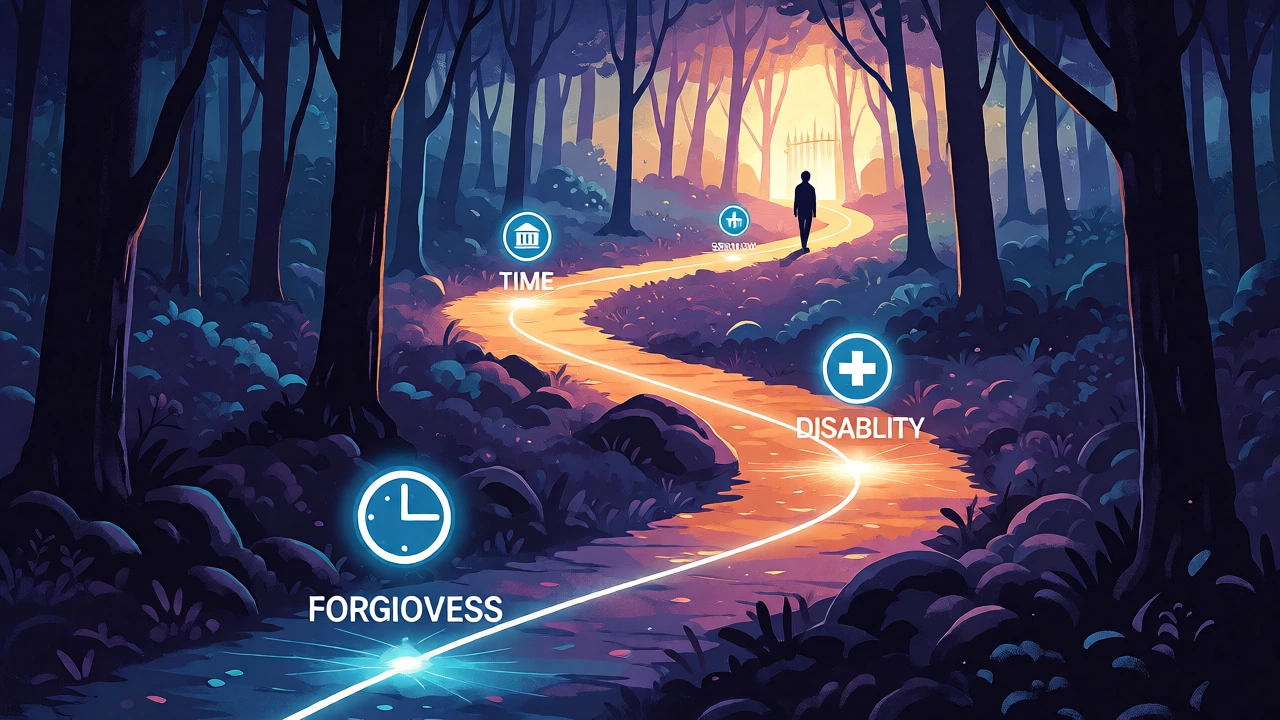
If age isn't the key, what is? For most borrowers, the path to having their loans written off involves time, repayment plans, or specific life events. Let's break down the three main scenarios where student loans actually cease to exist before death.
Federal Income-Driven Repayment (IDR) Forgiveness is the most common route for regular borrowers. These plans cap your monthly payments at a percentage of your discretionary income (usually 10% or 20%). After 20 years of qualifying payments for undergraduate loans or 25 years for graduate loans, any remaining balance is forgiven. This isn't based on your age; it's based on the duration of your repayment history. If you start paying at 22, you could be debt-free by 42 or 47. If you struggle early on and enter a plan later, you might be paying into your 60s.
Another major avenue is Public Service Loan Forgiveness (PSLF). If you work full-time for a government organization or a non-profit, you can have your remaining balance forgiven after 120 qualifying monthly payments. That’s exactly ten years. No matter your age, if you stay in eligible public service jobs and make consistent payments, your debt vanishes. This program has seen significant administrative improvements recently, making it more accessible than it was five years ago.
Finally, there is Total and Permanent Disability Discharge. If you become totally and permanently disabled, you can apply to have your federal student loans discharged entirely. This process requires documentation from a physician or proof that you receive Social Security Disability Insurance (SSDI). In this case, the trigger isn't age-it's health status. Similarly, if you pass away, your federal student loans are discharged upon submission of a death certificate. Your family members generally aren't liable for your federal student debt unless they co-signed a private loan.
The Retirement Trap: Why You Can't Just Wait It Out
You might think, "I'll just wait until I'm old enough to collect Social Security and let them take a small chunk." While possible, this strategy comes with heavy costs. First, interest continues to accrue on unpaid balances. If you are on a standard repayment plan and not paying enough to cover the interest, your principal balance grows every month. This phenomenon, known as negative amortization, can turn a $30,000 loan into a $60,000 debt over thirty years.
Second, relying on Social Security offsets is inefficient. The government will take up to 15% of your monthly benefit, but there is a floor-you keep at least $950 per month (as of recent adjustments) or the amount equal to 75% of the federal poverty level for a family of four, whichever is higher. If your benefit is low, they might not take much at all, meaning the debt lingers for decades without significantly reducing the principal.
Consider a concrete example. Take Sarah, who graduates in 2026 with $40,000 in federal student loans. She chooses an Income-Driven Repayment plan. Her payments are modest, tied to her salary. At age 67, she retires. Her loan hasn't been paid off yet because she only started making qualifying payments at 24. She has 20 years left on her IDR timeline. Instead of enjoying her retirement fully free of debt, she continues making payments until she is 87. If she had refinanced or aggressively paid during her peak earning years, she could have been debt-free by 50.
State Laws and Private Loan Nuances
While federal rules are uniform across the country, private student loans depend on where you live. The statute of limitations-the time a lender has to sue you for unpaid debt-varies significantly. In New York, it’s six years. In Texas, it’s four years. In California, it’s four years for written contracts. Once this period passes, the debt becomes "time-barred." This means the lender loses the right to win a lawsuit against you.
| Discharge Type | Trigger Condition | Timeframe | Tax Implication |
|---|---|---|---|
| IDR Forgiveness | Completion of 20/25 year plan | 20-25 Years | Taxable as income (until 2025)* |
| PSLF | 120 Qualifying Payments + Public Job | Minimum 10 Years | Not Taxable |
| Death Discharge | Borrower Death | Immediate | Not Taxable |
| Disability Discharge | Medically Determined Disability | Upon Approval | Not Taxable |
However, a critical warning: making a single payment or acknowledging the debt in writing can restart the clock. Many collectors know this and will call you repeatedly, hoping for a verbal agreement or a small partial payment to reset the statute of limitations. If you are dealing with old private loans, consult a lawyer before responding to collection calls. Ignoring them completely might be safer than engaging poorly.

What Happens When You Die?
This is often the biggest fear for older borrowers. Will my children inherit my student loan debt? For federal loans, the answer is a reassuring no. Upon the borrower's death, the loan is discharged. The servicer simply needs a certified copy of the death certificate. The debt does not pass to spouses, children, or estates.
Private loans are trickier. Some private lenders offer "death discharges," but many do not. If you had a co-signer-which is common for young borrowers-the co-signer becomes fully responsible for the remaining balance. This is why reading the fine print on private loans is crucial. If you are nearing retirement with significant private debt, consider whether you can refinance into a loan without a co-signer requirement or pay it down to avoid burdening your heirs.
Action Plan: How to Manage Debt Into Retirement
Since there is no automatic age-based write-off, you need a proactive strategy. Here is how to handle student loans as you approach your senior years:
- Audit Your Loans: Log into the National Student Loan Data System (NSLDS) for federal loans and check your credit report for private ones. Know exactly who holds your debt and what the terms are.
- Enroll in Income-Driven Repayment: If you haven't already, switch to an IDR plan. This lowers monthly payments now and sets you on a track toward eventual forgiveness. Remember, months spent in deferment or forbearance generally do not count toward the 20/25 year clock.
- Check for PSLF Eligibility: If you worked in public service for any part of your career, consolidate your loans into a Direct Consolidation Loan and recertify your employment. You might qualify for faster forgiveness than you realize.
- Consider Refinancing Carefully: Refinancing federal loans into private ones removes access to federal protections like income-driven plans and forgiveness options. Only do this if you have high income, stable job security, and can secure a significantly lower interest rate.
- Plan for Taxes: If you anticipate IDR forgiveness, set aside money for potential taxes on the forgiven amount. While current laws exempt forgiven debt from taxation through 2025, future legislation could change this.
Living with student debt into retirement is stressful, but it is manageable. The key is to stop viewing age as a solution. Age doesn't forgive debt; repayment plans and legal discharges do. By taking control of your repayment strategy now, you can ensure that your golden years are truly gold, rather than overshadowed by old college bills.
Do student loans go away after 7 years?
No, this is a common myth. The "7-year rule" refers to how long late payments remain on your credit report, not when the debt itself disappears. Federal student loans remain valid indefinitely until paid or discharged through specific programs like IDR or PSLF.
Can Social Security garnish my checks for student loans?
Yes, the U.S. Treasury can offset up to 15% of your Social Security retirement benefits to repay defaulted federal student loans. However, you cannot be reduced below $950 per month or 75% of the federal poverty guideline for a family of four, whichever is greater.
Are student loans forgiven at age 65?
There is no automatic forgiveness at age 65. Forgiveness depends on the type of loan and repayment plan. Federal loans under Income-Driven Repayment are forgiven after 20 or 25 years of payments, regardless of age. Private loans must be repaid according to contract terms or settled via bankruptcy in rare cases.
What happens to student loans if I die?
Federal student loans are discharged upon the death of the borrower. Family members are not responsible for paying them back. Private loans vary; some lenders offer death discharges, but others may require a co-signer to pay the remaining balance.
Is student loan forgiveness taxable?
Under current law (through 2025), forgiven student loan debt is not considered taxable income. This applies to both PSLF and IDR forgiveness. However, this provision could expire or change with new legislation, so it is wise to monitor policy updates.