
Best Websites for Stock Investing in 2026
 Jan, 29 2026
Choosing the right website to buy and sell stocks isn’t about picking the one with the flashiest design or the loudest ads. It’s about finding the platform that matches how you actually invest - whether you’re buying a few shares once a year or trading daily. The best stock website for you depends on your goals, experience level, and how much you’re willing to pay for tools and support.
What to Look for in a Stock Website
Before comparing platforms, know what matters most to you. Some people care about low fees. Others need research tools, educational content, or mobile apps that work smoothly. Here’s what to check:
- Trading fees - Are trades free? Or do they charge $5 per trade? Even small fees add up over time.
- Account minimums - Can you start with $10 or do you need $1,000? Many new investors start small.
- Stock selection - Does the platform offer U.S. stocks, Canadian stocks, ETFs, and international shares?
- Research tools - Real-time quotes, analyst ratings, earnings calendars, and charts matter if you’re making decisions based on data.
- Mobile app quality - If you check your portfolio on your phone, the app needs to be fast and reliable.
- Customer support - Can you call someone at 3 p.m. on a Tuesday? Or are you stuck with chatbots?
These aren’t just features - they’re the difference between feeling in control and feeling lost.
Top Platforms for Stock Investing in 2026
Based on real user feedback, trading volume, and tool availability, these five platforms stand out in 2026.
1. Questrade (Best for Canadian Investors)
Questrade is the go-to for Canadians who want to trade stocks without paying commissions. It offers free ETF purchases and zero-fee stock trades on Canadian and U.S. exchanges. The platform has solid research tools, including real-time Level 1 quotes and basic charting. The mobile app is clean and responsive, making it easy to track your portfolio on the go. If you’re in Canada and want to keep costs low while still getting decent tools, Questrade is hard to beat.
2. Interactive Brokers (Best for Active Traders)
If you’re trading multiple times a week or holding international stocks, Interactive Brokers delivers. It’s the cheapest option for high-volume traders, with fees as low as $0.0035 per share on U.S. stocks. It supports over 135 markets across 33 countries, making it ideal for global investors. The interface is powerful but complex - not for beginners. You get advanced order types, real-time news feeds, and detailed tax reporting. This is the platform professionals use, but it takes time to learn.
3. Wealthsimple Trade (Best for Beginners)
Wealthsimple Trade is simple, free, and built for people who don’t want to be overwhelmed. You can buy U.S. and Canadian stocks and ETFs with no commissions. The app is intuitive, with a clean layout and helpful explanations for new terms. It doesn’t have advanced charts or deep research tools, but you don’t need them if you’re just starting out. The real strength is in its educational content - short videos and articles that explain what a P/E ratio is or how dividends work. If you’re nervous about investing, Wealthsimple makes it feel safe.
4. Fidelity (Best for Research and Education)
Fidelity has been around for decades and still leads in research quality. It offers free stock trades, detailed analyst reports, and access to Morningstar data - all without extra fees. Its educational center includes webinars, interactive courses, and a stock screener that lets you filter by dividend yield, market cap, or growth rate. Fidelity also gives you free access to financial advisors if you have over $10,000 invested. For investors who want to understand what they’re buying, not just click ‘buy,’ Fidelity is unmatched.
5. Robinhood (Best for Simplicity and Gamification)
Robinhood made trading feel like a game - and for some, that’s exactly what they want. It offers commission-free trading, a clean interface, and fractional shares so you can buy parts of expensive stocks like Amazon or Tesla. The app is addictive because it’s simple: tap to buy, tap to sell. But don’t be fooled - it has almost no research tools. No earnings calendars, no analyst ratings, no chart patterns. If you’re buying stocks because your friend told you to, Robinhood works. If you want to understand why a stock is rising or falling, you’ll need to look elsewhere.
What You Should Avoid
Not all platforms are created equal. Some have hidden costs or poor support. Watch out for:
- Platforms that charge for data - Real-time quotes shouldn’t cost extra. If a site charges $10/month for Level 1 data, walk away.
- Too many upsells - If you’re constantly being pushed to upgrade to a premium account or buy a financial plan, it’s a red flag.
- Slow customer service - If you can’t reach a human when your trade doesn’t go through, you’re at risk.
- Outdated apps - If the mobile app crashes when you try to check your balance, it’s not worth the hassle.
These aren’t just annoyances - they’re risks to your money and peace of mind.

Real-World Examples
Here’s how three different investors chose their platforms:
- Maria, 28, Toronto - She saves $200 a month and wants to invest in ETFs. She chose Wealthsimple Trade because it’s free, easy to use, and she can start with $50. She reads the educational articles every week.
- James, 45, Calgary - He trades 3-5 times a week and holds U.S. and European stocks. He uses Interactive Brokers because his monthly fees are under $10, and he gets access to global markets.
- Chloe, 62, Vancouver - She’s building a dividend portfolio and wants reliable data. She uses Fidelity because she can filter stocks by dividend history and get free advice from a planner.
Each person picked based on their behavior, not their friend’s recommendation.
How to Decide for Yourself
Ask yourself these questions:
- Do I trade often or just buy and hold?
- Do I need to buy international stocks?
- Am I comfortable learning on my own, or do I need hand-holding?
- Do I care about detailed charts and reports?
- How much am I willing to pay for tools I don’t use?
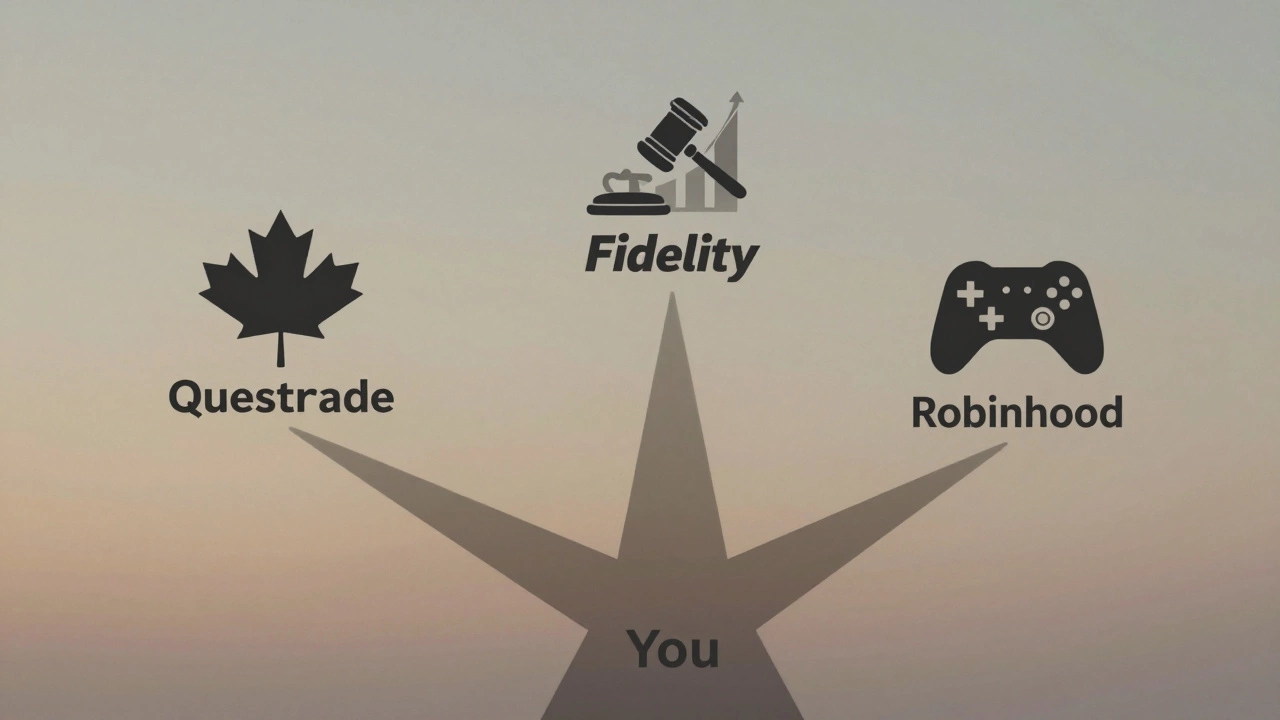
If you’re unsure, start with a free account on two platforms - say, Questrade and Wealthsimple. Try buying one share of a company you like. See which app feels easier. See which one gives you confidence. That’s the one you stick with.
Final Thoughts
The best stock website isn’t the one with the most features. It’s the one you’ll actually use. Too many people sign up for fancy platforms and then never log in because it’s too confusing. Others pick the cheapest option but end up missing out because they don’t understand what they’re buying.
Start simple. Learn as you go. Don’t rush into trading. The market won’t disappear if you wait a few months to get comfortable. And remember - the goal isn’t to be the loudest trader in the room. It’s to build wealth over time, without stress.
What is the cheapest website to buy stocks?
The cheapest platforms for buying stocks in 2026 are Questrade, Wealthsimple Trade, and Robinhood - all offer $0 commission trades on U.S. and Canadian stocks. Interactive Brokers has the lowest per-share fees for high-volume traders, but it’s not cost-effective for occasional investors. Avoid platforms that charge for data, account maintenance, or withdrawals.
Can I buy U.S. stocks from Canada?
Yes, you can buy U.S. stocks from Canada using platforms like Questrade, Wealthsimple Trade, and Fidelity. These platforms let you trade U.S. stocks in U.S. dollars. Be aware that currency conversion fees may apply when you deposit or withdraw funds. Some platforms, like Interactive Brokers, offer better exchange rates than others.
Is it safe to invest through online stock websites?
Yes, if you use regulated platforms. In Canada, look for membership with the Canadian Investor Protection Fund (CIPF). In the U.S., check for SIPC protection. These programs protect your cash and securities up to $1 million if the brokerage fails. Avoid platforms that aren’t registered with financial regulators - they’re not safe.
Do I need a lot of money to start investing in stocks?
No. You can start with as little as $1. Platforms like Wealthsimple Trade and Robinhood allow fractional shares, so you can buy a portion of a $4,000 stock like Amazon. Many people begin by investing $25 or $50 a month. The key isn’t how much you start with - it’s that you start.
Should I use a robo-advisor instead of a stock website?
It depends. Robo-advisors like Wealthsimple Invest or Questrade Smartfolio automatically build and manage portfolios for you - they’re great if you want to set it and forget it. But if you want to pick your own stocks, learn how the market works, or trade actively, a stock website gives you more control. You can even use both: a robo-advisor for your long-term savings and a stock website for hands-on investing.
Next Steps
If you’re ready to start:
- Decide how often you’ll trade - monthly, quarterly, or daily.
- Choose one platform from the list above based on your needs.
- Open a free account - no credit card needed to sign up.
- Deposit $50 and buy one share of a company you understand - like a grocery chain or telecom you use every day.
- Wait three months. Watch how the price moves. Read one article a week about investing.
Don’t try to beat the market. Just learn how it works. That’s how real investors build wealth - slowly, steadily, and without drama.