
Can a US Citizen Have an ISA? What You Need to Know
 Dec, 8 2025
ISA Tax Impact Calculator
This tool estimates the potential IRS penalties and compliance costs for US citizens holding UK ISAs. Enter your account details to see how much you might owe.
If you're a US citizen living in the UK-or planning to move there-you’ve probably heard about ISAs. They’re one of the most popular ways to save and invest tax-free in Britain. But here’s the real question: Can you have an ISA if you are a US citizen? The short answer is yes, you can open one. But there’s a catch-your US tax obligations might make it a bad idea.
What Is an ISA?
An ISA, or Individual Savings Account, is a UK government-backed savings or investment account that lets you earn interest or returns without paying UK income tax or capital gains tax. There are several types: Cash ISA, Stocks and Shares ISA, Innovative Finance ISA, Lifetime ISA, and Help to Buy ISA. Each has its own rules, but they all share the same tax advantage.
For UK residents, ISAs are straightforward. You can put up to £20,000 per tax year (2025/2026) into one or more ISAs. The money grows tax-free, and you can withdraw it without penalties. But if you’re a US citizen, the IRS doesn’t recognize these tax breaks.
Why the US Tax System Doesn’t Like ISAs
The United States taxes its citizens on worldwide income-no matter where they live. That means if you’re a US citizen, you have to report every dollar you earn, invest, or save to the IRS. This includes interest from a Cash ISA or capital gains from a Stocks and Shares ISA.
The problem? The IRS treats ISAs as foreign financial accounts and often as Passive Foreign Investment Companies (PFICs). PFICs are foreign mutual funds or investment vehicles that generate passive income. ISAs, especially Stocks and Shares ISAs, frequently fall into this category because they hold funds, ETFs, or other pooled investments.
Being classified as a PFIC means you face harsh tax rules:
- Excess distributions are taxed at the highest ordinary income rate
- You owe interest charges on deferred taxes
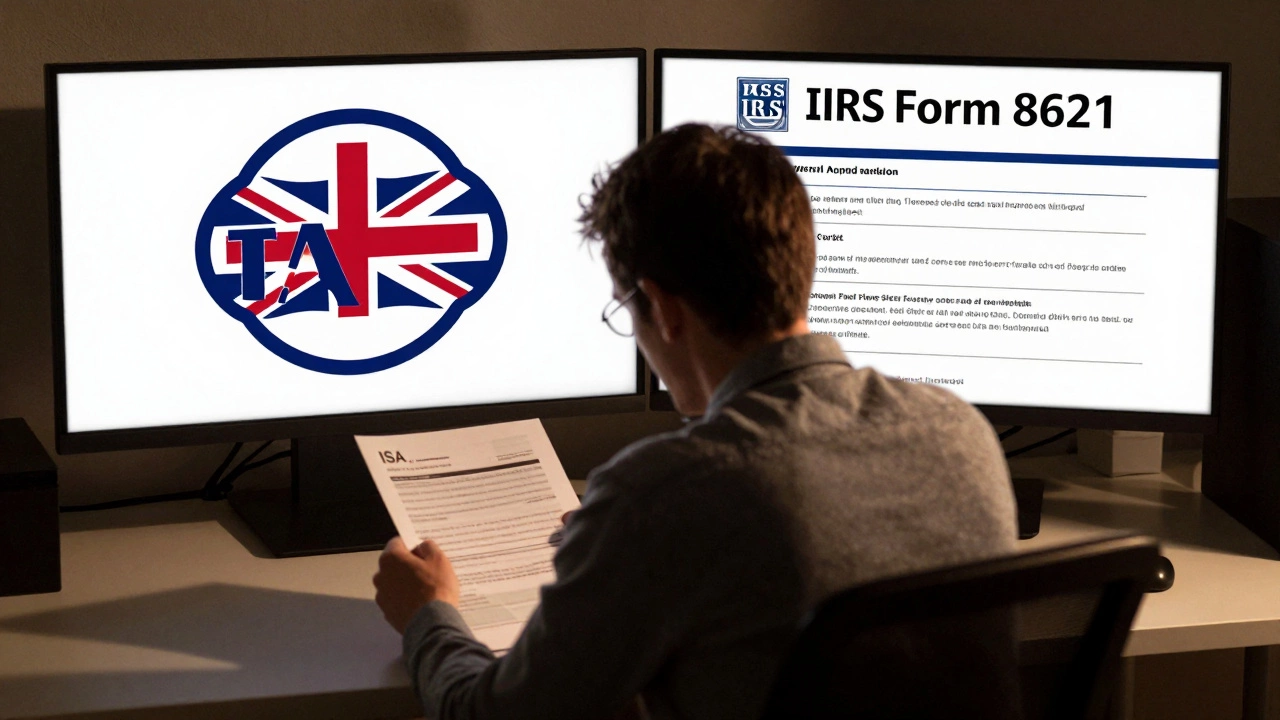
- You must file Form 8621 every year-complex, time-consuming, and expensive to get right
Many US citizens who opened ISAs without knowing this ended up paying thousands in back taxes and penalties. The IRS doesn’t care that the UK treats ISAs as tax-free. To them, it’s just another investment account with unreported gains.
Can You Open an ISA as a US Citizen?
Legally, yes. UK banks and brokers don’t ask for your US tax status when you open an ISA. Many US citizens living in the UK have ISAs because they assume, like locals, that the tax-free status applies to them too.
But here’s the reality: opening an ISA doesn’t make you a UK taxpayer. You’re still a US citizen subject to US tax law. Even if you never file a US tax return, the IRS can still find out through FATCA (Foreign Account Tax Compliance Act). UK financial institutions report account details to HMRC, which shares them with the IRS.
So while you can open an ISA, you shouldn’t assume it’s safe. The account itself isn’t illegal-it’s the unreported income that creates the risk.

What Happens If You Already Have an ISA?
If you’re already a US citizen with an ISA, you have three choices:
- Keep it and file Form 8621 every year. This is the most compliant but also the most expensive route. You’ll need a tax professional who understands PFICs. Annual filing fees can run $500-$1,500 per ISA.
- Close it and pay back taxes and penalties. If you’ve earned gains, you’ll owe tax on those gains plus interest and possible penalties. This can be costly, but it clears the slate.
- Do nothing. This is risky. The IRS has been cracking down on offshore accounts. If you’re audited, you could face penalties up to 50% of the account value per year.
Most US tax advisors recommend closing the ISA if you’re not already filing Form 8621. The cost of compliance usually outweighs the tax benefits.
Alternatives for US Citizens Living in the UK
If you want to save or invest in the UK without triggering IRS headaches, here are better options:
- UK workplace pensions - Contributions are often tax-deductible in the UK, and under the US-UK tax treaty, they’re generally treated favorably by the IRS. You won’t pay tax until you withdraw, and the treaty helps avoid double taxation.
- Non-ISA brokerage accounts - Open a regular investment account with a UK broker, but only hold US-domiciled ETFs or mutual funds (like those listed on US exchanges). These aren’t PFICs, so you avoid Form 8621.
- US-based retirement accounts - If you’re self-employed or have freelance income, consider a Roth IRA or Solo 401(k). You can contribute from UK earnings and still benefit from US tax rules.
Many US citizens in the UK use a mix of UK pensions and US-domiciled ETFs held in non-ISA accounts. This gives them growth potential without the PFIC trap.

What If You’re Not Living in the UK?
If you’re a US citizen living in the US, you can’t open an ISA. ISAs are only available to UK residents. Even if you had one while living abroad, you’d lose your eligibility once you move back to the US. You can keep the account open, but you can’t add new money. And you still have to report it to the IRS.
So if you’re in the US and thinking about an ISA: don’t bother. It’s not an option. Focus on US tax-advantaged accounts like IRAs, HSAs, or 401(k)s instead.
The Bottom Line
Yes, you can open an ISA as a US citizen. But should you? Almost always, no.
The UK government gives you a tax break. The IRS doesn’t recognize it. And when you try to use that tax break, you risk triggering expensive reporting rules, penalties, and back taxes. The IRS doesn’t care if your ISA is legal in the UK-it only cares if you reported it.
For most US citizens, the cost of keeping an ISA outweighs the benefit. The tax-free growth sounds great until you realize you’ll pay more in accounting fees and penalties than you saved in taxes.
If you’re planning to move to the UK, focus on UK pensions and US-domiciled investments instead. If you already have an ISA, talk to a cross-border tax advisor. Don’t wait until the IRS comes knocking.
Frequently Asked Questions
Can a US citizen open a Cash ISA in the UK?
Yes, a US citizen can open a Cash ISA in the UK if they’re a UK resident. But the IRS doesn’t recognize the tax-free status. Any interest earned must be reported on your US tax return, and the account may be classified as a PFIC, triggering complex reporting requirements and potential penalties.
Do I have to report my ISA to the IRS?
Yes. You must report your ISA on Form 8938 (Statement of Specified Foreign Financial Assets) if your total foreign assets exceed $50,000 (or $75,000 if married filing jointly). You may also need to file FinCEN Form 114 (FBAR) if the account balance exceeds $10,000 at any point during the year. Additionally, if the ISA holds non-US funds, you likely need to file Form 8621 as a PFIC.
Is it illegal for a US citizen to have an ISA?
No, it’s not illegal to hold an ISA. But failing to report income or gains from it to the IRS is illegal. Many US citizens have ISAs without knowing the reporting rules. The issue isn’t ownership-it’s non-compliance with US tax law.
Can I transfer my ISA to a US account?
You can’t transfer an ISA directly to a US account. ISAs are UK-specific products. If you want to move the money, you must close the ISA, withdraw the funds, and deposit them into a US bank or brokerage account. Any gains at the time of withdrawal are taxable in the US.
What’s the best way for a US citizen to save in the UK?
The best approach is to use a UK workplace pension if available, or invest in US-domiciled ETFs through a regular (non-ISA) brokerage account. These avoid PFIC rules. You can also contribute to a US Roth IRA if you have earned income. Always consult a cross-border tax advisor before making decisions.