
Can a US Citizen Open an ISA? Here’s What You Need to Know
 Dec, 4 2025
ISA Tax Impact Calculator
If you’re a US citizen living in the UK-or thinking about moving there-you’ve probably heard about ISAs. They’re called Individual Savings Accounts, and they’re one of the most popular ways Brits save and invest without paying tax on interest, dividends, or capital gains. But here’s the big question: Can a US citizen open an ISA? The short answer is yes… but with serious catches.
What Is an ISA?
An ISA is a UK government-backed savings or investment account that lets you earn money without paying UK income tax or capital gains tax. There are several types:
- Cash ISA: Like a high-interest savings account, but tax-free.
- Stocks and Shares ISA: Invest in funds, stocks, or bonds without paying tax on profits.
- Innovative Finance ISA: Lend money through peer-to-peer platforms tax-free.
- Lifetime ISA: For first-time homebuyers or retirement, with a 25% government bonus.
Each tax year (April 6 to April 5), you can put up to £20,000 into one or more ISAs. That’s a big perk-especially compared to US taxable accounts where you pay taxes on everything from dividends to selling stocks.
Who Can Open an ISA?
The UK government says you must be:
- A UK resident for tax purposes
- At least 16 years old (18 for Stocks and Shares ISAs)
- Not already using your ISA allowance for that tax year
That last point is key. You don’t need to be a British citizen. You just need to be tax resident in the UK. That’s different from being a citizen. Many Americans living in the UK qualify as tax residents if they live there for 183 days or more in a tax year-or if their only home is in the UK.
So if you’re a US citizen living in London, Manchester, or Edinburgh, and you meet the residency rules, you can open an ISA. But if you’re living in New York, Dallas, or Los Angeles? Then no-you can’t open one.
The Big Problem: US Tax Rules
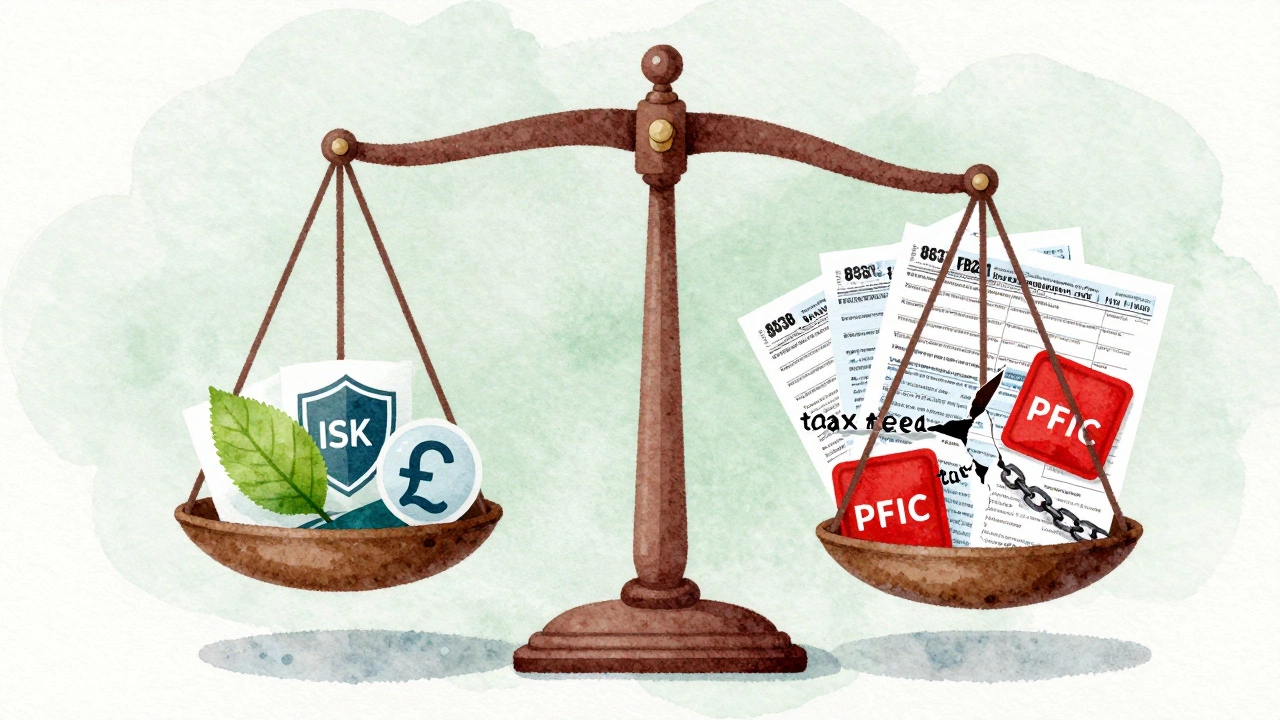
Just because you can open an ISA doesn’t mean you should. The US tax system doesn’t recognize ISAs as tax-free accounts. The IRS treats them as regular foreign investment accounts. That means:
- Any interest or dividends earned in your ISA are taxable in the US-even if you never withdrew them.
- If you sell investments inside the ISA and make a profit, you owe US capital gains tax.
- You must file Form 8938 (Statement of Specified Foreign Financial Assets) if your ISA balance exceeds $50,000 at any point in the year.
- You may also need to file FinCEN Form 114 (FBAR) if your total foreign financial accounts exceed $10,000 at any time.
Worse, some ISAs-especially Stocks and Shares ISAs-are classified by the IRS as Passive Foreign Investment Companies (PFICs). PFICs come with brutal tax rules: you could owe up to 50% in taxes on gains, plus interest charges retroactive to when you opened the account.
There’s no way around this. The US doesn’t have a tax treaty with the UK that exempts ISAs. Unlike pensions or 401(k)s-which the IRS recognizes under the treaty-ISAs get zero special treatment.
Real-World Example: Sarah’s Story
Sarah, a US citizen, moved to Edinburgh in 2023. She opened a Stocks and Shares ISA and invested £15,000 in UK index funds. In 2024, her portfolio grew by 8%-£1,200 in gains. She didn’t touch the money. She didn’t even withdraw it.
But when she filed her US taxes in April 2025, she had to report the £1,200 as taxable income. Her CPA told her the ISA was a PFIC. Because she didn’t make a qualified electing fund (QEF) election when she opened it, she owed $450 in back taxes and interest. She also had to file Form 8621, which took 12 hours to complete.
Sarah’s ISA didn’t save her money. It cost her time, stress, and cash.
What Should US Citizens Do Instead?
If you’re a US citizen living in the UK, you still want to save smart. Here’s what actually works:
- Use a UK workplace pension: If your employer offers one, contribute to it. The US-UK tax treaty protects pensions. You won’t pay US tax on contributions or growth until you withdraw.
- Open a taxable brokerage account: Use a broker like Interactive Brokers or Charles Schwab that lets you hold UK stocks. You’ll pay US taxes, but at least you’ll know exactly what you owe.
- Stick to cash savings: If you’re saving short-term, use a regular UK savings account. The interest might be low, but at least it’s not a PFIC.
- Consult a cross-border tax advisor: Not your regular CPA. Find someone who specializes in US-UK taxes. They’ll know how to avoid PFIC traps and file the right forms.
Some people try to open an ISA and then forget about it. That’s a mistake. The IRS doesn’t forget. They get reports from UK banks through FATCA. If you don’t report it, you risk penalties up to 50% of the account value.
Can You Open an ISA If You’re Temporarily in the UK?
If you’re in the UK on a short-term work visa-say, a two-year assignment-you might still qualify as a tax resident. But if you plan to return to the US, opening an ISA is risky.
Once you leave the UK, you can’t add more money to your ISA. But you can keep it open. The problem? You’ll still owe US taxes on growth, and you’ll still need to file forms every year. If you sell the investments after returning to the US, you’ll face the same PFIC nightmare.
Unless you’re planning to stay in the UK permanently, the costs usually outweigh the benefits.
What About Dual Citizens?
If you’re a dual US-UK citizen, the rules are the same. Your US citizenship triggers IRS reporting requirements. Holding a British passport doesn’t protect you. The IRS doesn’t care what passport you carry. It cares about your citizenship.
Even if you’ve never filed a US tax return, you’re still required to. The IRS has programs like Streamlined Filing to help people catch up-but they don’t erase past penalties.
The Bottom Line
Yes, a US citizen can legally open an ISA if they’re tax resident in the UK. But it’s not a tax-free savings account for Americans. It’s a tax minefield.
For most US citizens, the ISA’s UK tax benefits are canceled out by US tax complications. The risk of penalties, complex filings, and unexpected tax bills makes it a bad deal unless you’re fully committed to living in the UK long-term and have expert tax advice.
Instead of chasing the ISA, focus on what the US-UK tax treaty actually protects: pensions. Contribute to your employer’s pension. Use a simple brokerage account. Keep your savings in cash if you need access. And always talk to a cross-border tax specialist before opening any foreign account.
What looks like a free lunch in the UK is often a bill you didn’t know you’d have to pay in the US.
Frequently Asked Questions
Can a US citizen open a Cash ISA while living in the UK?
Yes, if you’re a UK tax resident. But the IRS still treats the interest as taxable income, and you must report it on your US tax return. You’ll also need to file Form 8938 and possibly an FBAR if your total foreign accounts exceed $10,000.
Is a Stocks and Shares ISA a PFIC?
Almost always. The IRS considers most UK investment funds inside a Stocks and Shares ISA to be Passive Foreign Investment Companies (PFICs). This means you could face high taxes and interest charges on gains, even if you never withdrew the money.
Can I open an ISA if I’m on a work visa in the UK?
You can if you’re considered a UK tax resident. That usually means living in the UK for 183 days or more in a tax year. But if you plan to return to the US, opening an ISA could create future tax problems. Consider waiting until you’re certain you’ll stay.
What happens to my ISA if I move back to the US?
You can keep the account open, but you can’t add more money. You’ll still owe US taxes on any growth, dividends, or interest earned after you move. You’ll also need to keep filing Form 8938 and possibly Form 8621 if it’s a PFIC. Selling investments later could trigger heavy tax bills.
Do I need to report my ISA to the IRS every year?
Yes. If your ISA balance exceeds $50,000 at any point in the year, you must file Form 8938 with your US tax return. If your total foreign financial accounts exceed $10,000 at any time, you must file FinCEN Form 114 (FBAR). Missing either can lead to penalties of $10,000 or more.
Can I avoid PFIC rules by investing in UK ETFs directly?
No. Most UK-domiciled ETFs and funds are still classified as PFICs by the IRS, whether held inside an ISA or not. The account structure doesn’t change the underlying asset classification. Only US-domiciled funds (like Vanguard ETFs traded on US exchanges) are exempt.