
Can I Borrow Money with a 500 Credit Score? Real Options for 2026
 Jun, 29 2026
Bad Credit Loan Cost Estimator
Loan Details
Estimated Results
Select Your Loan Type
Based on a 500 credit score, here is what lenders typically offer. Click an option to update the calculation.
Secured Loan
Best ValueRequires collateral (car title, savings). Lower rates because risk is reduced.
Online Installment
Common OptionUnsecured. Based on income/bank activity. Higher interest due to high risk.
Payday Loan
Avoid If PossibleShort term, no credit check usually. Extremely high fees and interest rates.
Looking at a credit score of 500 feels like hitting a wall. Most major banks will not even look at your application. But the door isn't completely locked. You can still borrow money, but you have to change your strategy. You are no longer shopping for the best rates; you are shopping for approval.
In 2026, the lending landscape has shifted slightly toward alternative data, giving borrowers with poor credit more options than before. However, the cost of borrowing remains high. If you need cash now, understanding which lenders actually approve scores in the "deep subprime" range is critical to avoiding scams and predatory terms.
The Reality of Borrowing with a 500 Score
A FICO score of 500 falls into the "Poor" category (300-579). To a traditional bank, this signals a high risk of default. They see a history of missed payments, collections, or perhaps bankruptcy. Their solution is simple: deny the loan.
This doesn't mean money is unavailable. It means you must look outside the traditional banking system. The entities that lend here include online installment lenders, secured loan providers, and sometimes credit unions with specific community programs. These lenders use different risk models. They might look at your current income stability rather than just your past debt history.
Be aware that "approval" often comes with a price tag. Interest rates (APR) for loans at this score level frequently exceed 40%, and can reach 100% or more for unsecured options. You are paying for the privilege of accessing credit when others won't give it to you.
Best Loan Options for Deep Subprime Borrowers
If you have a 500 credit score, your choices are limited but distinct. Here are the most viable paths to get funds in 2026:
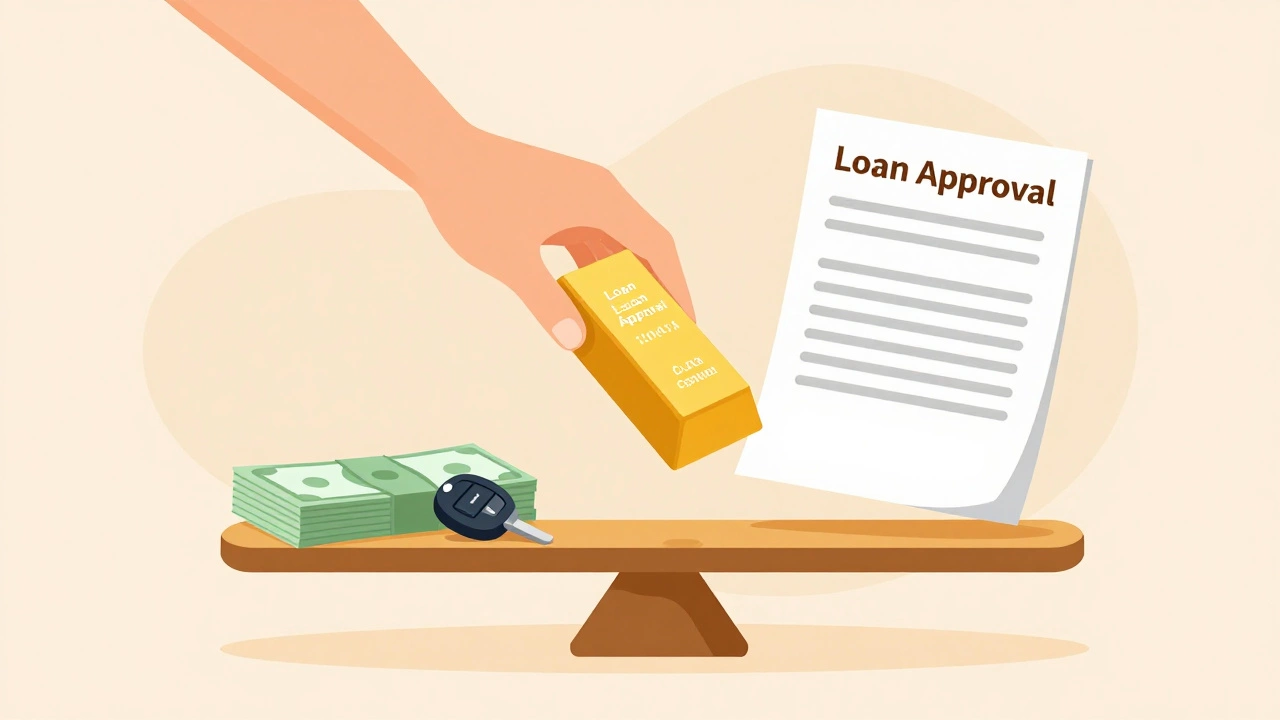
- Secured Personal Loans: This is often the safest route. You put up collateral, such as a savings account, a car title, or jewelry. Because the lender can take the asset if you don't pay, they are more willing to approve low scores. The interest rates are significantly lower than unsecured options.
- Credit Builder Loans: Offered by some credit unions and non-profits like Self or Credit Strong. You don't get the cash upfront. Instead, the money sits in an account while you make payments. Once paid off, you get the principal back, and the lender reports your on-time payments to credit bureaus. This builds credit without the risk of high-interest debt.
- Online Installment Loans: Many fintech companies specialize in bad credit loans. They perform soft checks initially and approve based on bank account activity and income. Be extremely careful here. Read the APR and total repayment amount carefully.
- Co-signer Loans: If you have a friend or family member with good credit who trusts you, they can co-sign. Their creditworthiness backs the loan. This can get you near-prime rates, but it puts their financial health at risk if you miss a payment.
What to Avoid: Predatory Lending Traps
Desperation makes you vulnerable. With a 500 score, you are the target audience for payday lenders and title loan sharks. These products are designed to keep you in a cycle of debt.
Avoid payday loans unless it is a literal life-or-death emergency. They often charge $15 to $30 per $100 borrowed for a two-week period. That translates to an APR of nearly 400%. If you cannot repay the full amount on your next payday, you roll it over, paying more fees, and digging a deeper hole.
Also, beware of "guaranteed approval" ads. No legitimate lender guarantees approval without checking your ability to repay. If a site asks for an upfront fee before releasing a loan, it is a scam. Legitimate lenders deduct fees from the loan proceeds or add them to the balance.
How to Improve Your Chances Before Applying
You don't always have to apply immediately. Taking small steps can improve your approval odds and lower your interest rate.
- Check Your Credit Report: Get a free report from AnnualCreditReport.com. Look for errors. If there are inaccurate late payments or accounts that aren't yours, dispute them. Removing one negative item could bump your score enough to qualify for better terms.
- Pull Down Balances: High credit utilization hurts your score. If you have any open credit cards, try to pay them down below 30% of the limit. This shows lenders you can manage existing debt.
- Add Income Documentation: When applying to online lenders, provide proof of stable income. Pay stubs, bank statements, or tax returns show you have the cash flow to repay the loan, even if your credit history is spotty.
- Start Small: Apply for a small loan amount ($500-$1,000). Repaying this quickly demonstrates reliability. Many lenders offer "next time" discounts for successful first-time borrowers.
Comparison: Secured vs. Unsecured Loans for Bad Credit
| Feature | Secured Loan | Unsecured Online Loan | Payday Loan |
|---|---|---|---|
| Collateral Required | Yes (Asset) | No | No (but post-dated check) |
| Typical APR Range | 10% - 25% | 40% - 100%+ | 300% - 400%+ |
| Approval Odds (500 Score) | High | Moderate | Very High |
| Risk to Borrower | Lose Asset | High Debt Cost | Debt Cycle & Legal Action |
| Impact on Credit | Positive if paid on time | Positive if paid on time | Negative if defaulted |
Steps to Apply Safely
If you decide to proceed, follow these steps to protect yourself:
- Research Lenders: Stick to established online lenders or local credit unions. Check reviews on the Better Business Bureau (BBB) and Trustpilot. Look for complaints about hidden fees.
- Pre-Qualify: Use lenders that offer pre-qualification with a soft credit pull. This lets you see potential rates without hurting your score further.
- Read the Fine Print: Look for the APR, not just the monthly payment. Check for origination fees, late fees, and prepayment penalties. Some lenders charge you extra for paying early, which is unfair.
- Budget for Repayment: Ensure the monthly payment fits comfortably in your budget. If the payment causes you to miss other bills, you are setting yourself up for failure.
Frequently Asked Questions
Will a 500 credit score affect my ability to rent an apartment?
Yes, landlords often check credit scores. A 500 score may lead to rejection or require a larger security deposit. You can mitigate this by offering to pay rent in advance or providing proof of steady income.
Can I get a personal loan with a 500 credit score and no job?
It is extremely difficult. Lenders need proof of income to ensure you can repay. If you have no job, consider non-traditional income sources like disability benefits, alimony, or pension payments. Without any verifiable income, your only option might be a family member.
How long does it take to raise a 500 credit score to 600?
With consistent effort, you can raise your score by 50-100 points in 6-12 months. Focus on paying down existing debts, becoming an authorized user on a family member's credit card, and ensuring all bills are paid on time.
Are credit builder loans worth it for a 500 score?
Yes, if your goal is to rebuild credit. While you don't get immediate cash, you avoid high-interest debt and establish a positive payment history. This is one of the safest ways to start improving your financial profile.
What is the maximum loan amount I can get with a 500 credit score?
Most unsecured loans for this score range cap between $1,000 and $5,000. Higher amounts usually require collateral or a co-signer. Lenders limit exposure due to the high risk of default associated with deep subprime scores.