
Can I Put $50,000 in a Cash ISA? Limits and Rules Explained
 Jun, 15 2026
ISA Tax-Free Savings Calculator
Your Goals & Inputs
Results Summary
Time to Reach Goal
0 Years
- Total Contributions £0
- Total Interest Earned £0
- Final Balance £0
Key Takeaway:
Calculating...
Enter your details and click Calculate to see how long it will take to reach your savings goal tax-free.
You’ve saved up a nice chunk of change-$50,000-and you want to park it somewhere safe where it won’t get eaten away by taxes. It sounds like the perfect job for a Cash ISA, which is a tax-efficient savings account available to residents of the United Kingdom. But here is the hard truth right out of the gate: you cannot simply dump that entire amount into a single Cash ISA for the current tax year. The rules are strict, and trying to force it will result in rejected deposits or worse, losing your tax-free status.
If you are reading this from Toronto, there is an even bigger hurdle before we talk about limits. ISAs are exclusively for people who are resident in the UK for tax purposes. If you live in Canada, you generally cannot open one. However, if you are a British expat looking back at your old accounts, or a UK resident wondering how to maximize their £20,000 annual allowance (which is roughly equivalent to your $50k goal over time), this guide breaks down exactly what you can and cannot do with your money.
The Hard Limit: You Can Only Save £20,000 Per Year
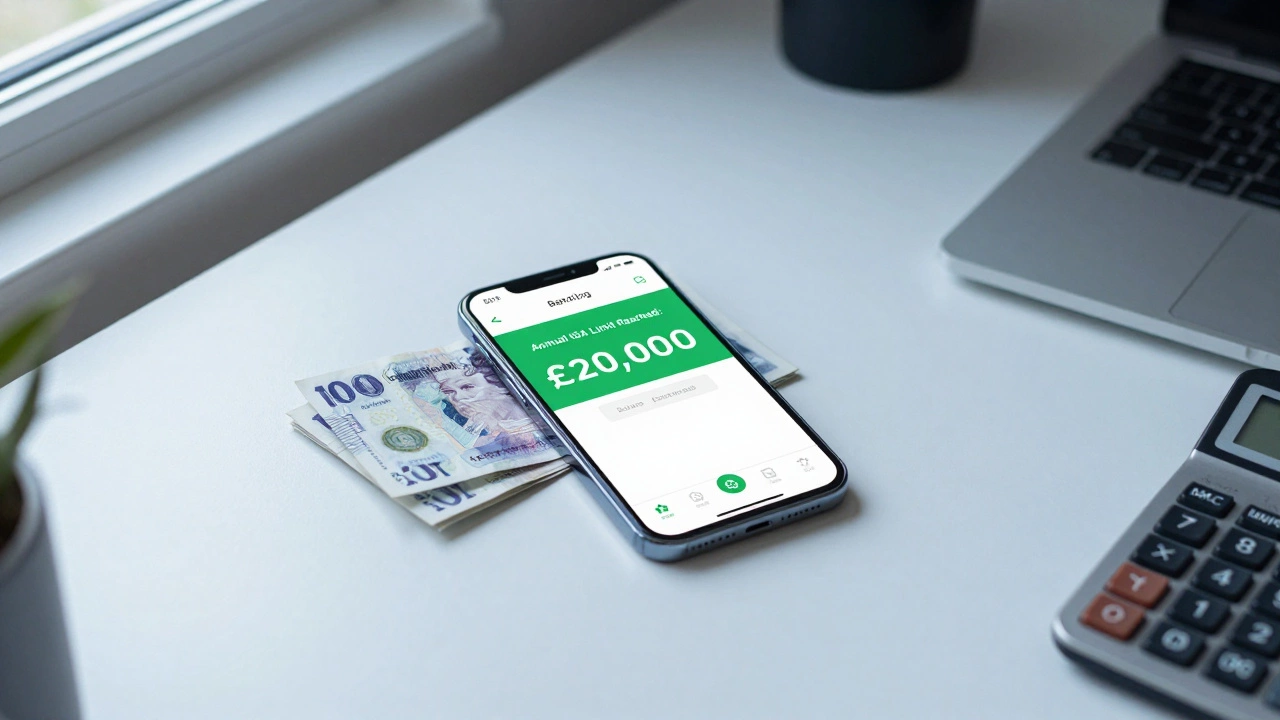
The most important number to know is the annual subscription limit. For the 2025/2026 tax year, the HMRC allows you to put a maximum of £20,000 into all your ISAs combined. This isn't just a suggestion; it’s a legal cap enforced by banks and building societies.
If you try to deposit $50,000 (or its pound sterling equivalent) into a new Cash ISA today, the bank will only accept the first £20,000. Any attempt to push more money in will be rejected. This limit applies across all types of ISAs you might hold. You could split that £20,000 between a Cash ISA, a Stocks and Shares ISA, and a Lifetime ISA, but the total must not exceed the cap.
Why does this matter for your $50,000 goal? Because you cannot achieve it in one go. You have to play the long game. To save $50,000 tax-free using ISAs, you would need to max out your allowance every year for several years, while also accounting for currency exchange rates if you are converting dollars to pounds.
What Happens to Money Already in Your ISA?
Here is where things get interesting. While you can only *add* £20,000 per year, there is no limit on how much money you can *keep* in an ISA. This is the key to reaching your $50,000 target.
Let’s say you opened a Cash ISA five years ago and contributed the maximum £20,000 each year. You now have £100,000 sitting in that account. That entire balance grows tax-free. You can leave it there indefinitely. The interest accumulates, and you never pay income tax on it. The £20,000 limit only restricts new money entering the system, not the existing nest egg growing inside.
This means if you already have a substantial balance, adding another £20,000 this year brings you closer to your goal without breaking any rules. The strategy shifts from "how do I put it all in now" to "how do I consistently top up my allowance."
Residency Rules: Why Location Matters More Than Currency
Before you worry about the numbers, you need to check your address. ISAs are governed by UK tax law. To be eligible, you must be a UK resident for tax purposes. This usually means living in the UK for at least 183 days in a tax year.
If you live in Toronto, Canada, you are likely a Canadian tax resident. Even if you hold British citizenship, you cannot open a new ISA or add funds to an existing one unless you meet specific residency criteria. There are some exceptions for Crown servants working abroad, but for most people, moving to Canada closes the door on new ISA contributions.
However, if you previously lived in the UK and still have an ISA, you can keep it. The money stays tax-free as long as you don’t move it to a non-UK institution. You just can’t add new money. This distinction is crucial for expats managing cross-border finances.
How to Reach Your $50,000 Goal Legally
Since you can’t deposit everything at once, you need a plan. Here is how you can structure your savings to reach a $50,000 equivalent in tax-free assets:
- Max Out Annually: Contribute the full £20,000 every tax year. Over three years, that’s £60,000. Depending on the exchange rate, this easily covers your $50,000 target.
- Use Multiple Accounts Wisely: You can switch providers, but you can only transfer funds from one ISA to another within the same type (e.g., Cash to Cash). You cannot move money from a Cash ISA to a Stocks and Shares ISA directly; you’d have to withdraw it (losing tax benefits) and reinvest it.
- Consider Other Tax-Free Options: If you’re in the UK, look into National Savings & Investments (NS&I) Direct Saver accounts, which offer competitive rates and are government-backed, though they aren’t ISAs.
If you are in Canada, look at the Tax-Free Savings Account (TFSA). It works similarly to an ISA but has different contribution limits and rules. As of 2024, the TFSA limit was $7,000, increasing to $7,000 again in 2025 and 2026. You can carry forward unused room, so if you’ve never contributed, you might have over $90,000 in available room. This is the Canadian equivalent of your ISA strategy.

Common Mistakes to Avoid
People often mess up their ISA strategy by misunderstanding the rules. Here are the biggest pitfalls:
| Mistake | Consequence | Solution |
|---|---|---|
| Over-subscribing (£20,001+) | HMRC may charge Class 4 National Insurance surcharge on excess. | Track contributions carefully; use online tools. |
| Moving money between different ISA types | Tax-free status lost on withdrawn amount. | Use official transfer forms, not withdrawals. |
| Assuming foreign residents can contribute | Account closed or funds frozen. | Check residency status before opening. |
| Ignoring inflation | Real value of savings decreases over time. | Diversify into Stocks and Shares ISA for growth. |
Another frequent error is thinking that withdrawing money resets your allowance. It doesn’t. If you take out £5,000 from your ISA, you still only have £15,000 left of your annual allowance. You can’t put that £5,000 back in later in the same tax year. Once it’s out, it’s gone from the tax-free wrapper.
Should You Choose Cash or Stocks?
A Cash ISA is safe. Your principal is protected, and you earn interest. But interest rates fluctuate. In high-inflation environments, Cash ISAs might not keep pace with the rising cost of living. A Stocks and Shares ISA, on the other hand, offers potential for higher returns through equities and bonds, but comes with market risk.
If your goal is purely capital preservation and you hate risk, stick with Cash. If you’re willing to tolerate volatility for better long-term growth, consider splitting your £20,000 allowance. For example, put £10,000 in a Cash ISA for safety and £10,000 in a Stocks and Shares ISA for growth. Both remain tax-free.
Can I put $50,000 in a Cash ISA if I live in Canada?
No. ISAs are only available to UK tax residents. If you live in Canada, you should look into a Tax-Free Savings Account (TFSA), which serves a similar purpose but follows Canadian tax laws.
What happens if I accidentally deposit more than £20,000?
Your provider should reject the excess payment. If they don’t, HMRC may impose a penalty known as a Class 4 National Insurance surcharge, which is 20% of the excess amount plus interest. Always monitor your contributions closely.
Is there a limit on how much I can withdraw from my ISA?
There is no limit on withdrawals. You can take out as much as you want at any time. However, withdrawing money does not free up additional space in your annual allowance. The £20,000 limit is for new contributions only.
Can I transfer money from a Cash ISA to a Stocks and Shares ISA?
Not directly. You must withdraw the funds from the Cash ISA, which removes them from the tax-free wrapper, and then invest them in a Stocks and Shares ISA. This counts against your current year’s allowance. Use official transfer processes only if moving within the same ISA type.
Does the £20,000 limit include interest earned?
No. The limit applies only to the money you personally deposit. Interest, dividends, and capital gains generated within the ISA do not count toward the £20,000 annual subscription limit.