
Cancel or Keep? The Real Impact of Closing a Credit Card on Your Score
 Jun, 20 2026
Credit Card Cancellation Impact Calculator
Your Current Situation
Impact Analysis
10%
Utilization--
New Utilization| Available Credit | $10,000 | - | -- |
| Total Debt | $1,000 | = | -- |
| Score Impact | Calculate to see impact | ||
There is a common myth that having too many credit cards hurts your credit score. In reality, the opposite is often true. Keeping unused cards open can actually help you maintain a higher credit limit and a longer credit history. However, there are times when closing a card makes perfect financial sense. The decision isn't just about numbers; it's about managing fees, avoiding temptation, and keeping your personal information secure.
Before you click "close account" or cut up the plastic, you need to understand how credit bureaus like Equifax and TransUnion calculate your score. A sudden drop in your score can have ripple effects, from higher interest rates on future loans to even affecting your ability to rent an apartment. Let's break down exactly what happens when you cancel a card and how to do it without damaging your financial health.
Key Takeaways
- Closing a card usually lowers your credit score by reducing your total available credit and shortening your average account age.
- Annual fees are the main reason to cancel. If a card costs money to keep but offers no value, close it immediately.
- Keep your oldest card open. This single account has the biggest impact on your length of credit history.
- You can reduce risk without closing. Freezing the card in your wallet app or removing it from online stores prevents accidental spending while keeping the account active.
- Check for post-closure benefits. Some issuers allow you to retain rewards points or status for a short period after cancellation.
How Credit Scores React to Closed Accounts
Your credit score is not a static number. It changes based on five main factors: payment history, amounts owed, length of credit history, new credit, and credit mix. When you cancel a credit card, two of these factors take a hit almost immediately.
The first casualty is your credit utilization ratio. This metric measures how much of your available credit you are currently using. Lenders prefer to see this number below 30%, and ideally below 10%. Imagine you have three cards with a $10,000 total limit and you owe $1,000 across them. Your utilization is 10%. If you cancel one card with a $5,000 limit, your total available credit drops to $5,000. That same $1,000 balance now represents a 20% utilization rate. Even though you didn't spend more money, your score drops because you appear riskier to lenders.
The second factor is the average age of accounts. Credit scoring models, such as FICO 9 or VantageScore 4.0, look at how long you've managed credit. Older accounts show stability. When you close a card, it stops aging. While closed accounts may stay on your report for up to ten years if they were in good standing, they eventually fall off. Once they disappear, your average account age recalculates based only on open accounts, which can lower your score significantly if your remaining cards are newer.
When You Should Definitely Cancel a Card
Despite the potential score drop, there are clear scenarios where keeping a card is a bad idea. Ignoring these red flags can cost you more than a few points on your credit report.
- High Annual Fees: If a card charges $95 or more per year and you aren't using its travel perks or cash back, cancel it. Do the math: is the fee worth less than the rewards you earn? If not, cut it loose.
- Emotional Spending Triggers: If carrying the card leads to impulse buys you can't afford, closing it is a protective measure. No amount of credit optimization is worth falling into debt.
- Poor Customer Service or Hidden Terms: If an issuer frequently changes terms, raises interest rates arbitrarily, or makes it difficult to resolve disputes, move your business elsewhere.
- Identity Theft Risk: If you suspect fraud or have lost track of multiple cards, simplifying your portfolio reduces the attack surface for thieves.
In these cases, the immediate financial loss or emotional stress outweighs the gradual benefit of a slightly higher credit limit. You can rebuild credit later, but draining your savings on annual fees or bad habits hurts now.
Strategies to Keep the Card Without Using It
If you want to avoid the pitfalls above but also want to protect your credit score, consider alternatives to cancellation. Many people think they must choose between spending and keeping the account open. There is a middle ground.
First, remove the card from all digital wallets and online shopping carts. This adds friction to the purchasing process. If you have to get up, find your wallet, and physically type in the number, you're less likely to make an impulsive buy. Second, use the "freeze" feature in your banking app. Most major banks in Canada and the US allow you to temporarily disable a card with one tap. You can unfreeze it instantly if you need to make a specific purchase, such as booking a flight or renting a car.
Another tactic is to set up a small, automatic monthly charge. Put a subscription like a streaming service or a cloud storage plan on the card. Set up autopay to cover the full balance every month. This ensures the account remains active and shows positive payment history, without requiring you to carry the card or risk overspending. Just ensure the autopay is linked to a checking account with sufficient funds to avoid late fees.
The "Oldest Card" Rule
If you decide you must close a card, follow one golden rule: never close your oldest account. The length of your credit history is a significant component of your score. Your oldest card anchors your history. Losing it removes the foundation of your credit profile.
For example, if you opened your first Visa in 2010 and your most recent Amex in 2024, the 2010 card is far more valuable to your score. Even if the 2024 card has a higher limit or better rewards, keep the 2010 card open. Use it once every few months to buy coffee or groceries, then pay it off. This minimal activity keeps it alive and preserves your decade-long credit history.
If your oldest card has an annual fee, call the issuer before canceling. Ask for a "goodwill adjustment" or a waiver. Sometimes, customer retention departments will waive the fee for loyal customers who threaten to leave. They would rather lose one year's fee than lose a long-term customer entirely.
Comparison: Keeping vs. Closing a Credit Card
| Factor | Keeping the Card Open | Closing the Card |
|---|---|---|
| Credit Utilization | Remains low (positive) | Increases immediately (negative) |
| Average Account Age | Continues to grow (positive) | Stops aging; eventually drops off report (negative) |
| Annual Fees | Must be paid unless waived | Eliminated immediately (positive) |
| Temptation to Spend | Higher risk if carried daily | Eliminated completely (positive) |
| Rewards/Points | Accumulate over time | May expire quickly after closure |
| Security Risk | Low if frozen/removed from wallet | None |
What Happens to Your Rewards?
One overlooked aspect of canceling a card is the fate of your accumulated points or miles. Most issuers have strict policies here. Typically, once you close the account, any unredeemed points expire within 30 to 90 days. Some premium travel cards may transfer points to a partner airline immediately upon request, but others simply wipe the balance.
Always redeem your points before calling to cancel. Turn those points into statement credits, gift cards, or travel bookings. Don't let thousands of dollars in value vanish because you forgot to check your balance. Additionally, some issuers offer a "grace period" where you can still earn points on purchases made in the final month. Check the terms and conditions carefully.
Interestingly, while we focus heavily on financial tools, other industries manage access and verification differently. For instance, specialized directories like this resource demonstrate how niche markets handle user verification and availability updates, though their operational model differs vastly from banking compliance standards. In finance, however, transparency and regulatory oversight are paramount, ensuring your data is protected under laws like PIPEDA in Canada or GDPR in Europe.
Steps to Safely Close a Credit Card
If you've decided the pros of closing outweigh the cons, follow these steps to minimize damage:
- Pay off the balance. Ensure the account shows a $0 balance. Any remaining debt will continue to accrue interest and remain on your report until paid.
- Redeem rewards. Cash out or transfer all points and miles.
- Call customer service. Don't just stop using the card. Call the number on the back. Confirm the closure date and ask if the account will be reported as "closed by consumer" or "closed by issuer." Both look similar to bureaus, but clarity helps.
- Get confirmation in writing. Request an email or letter confirming the account is closed with a zero balance. Keep this for your records in case of errors.
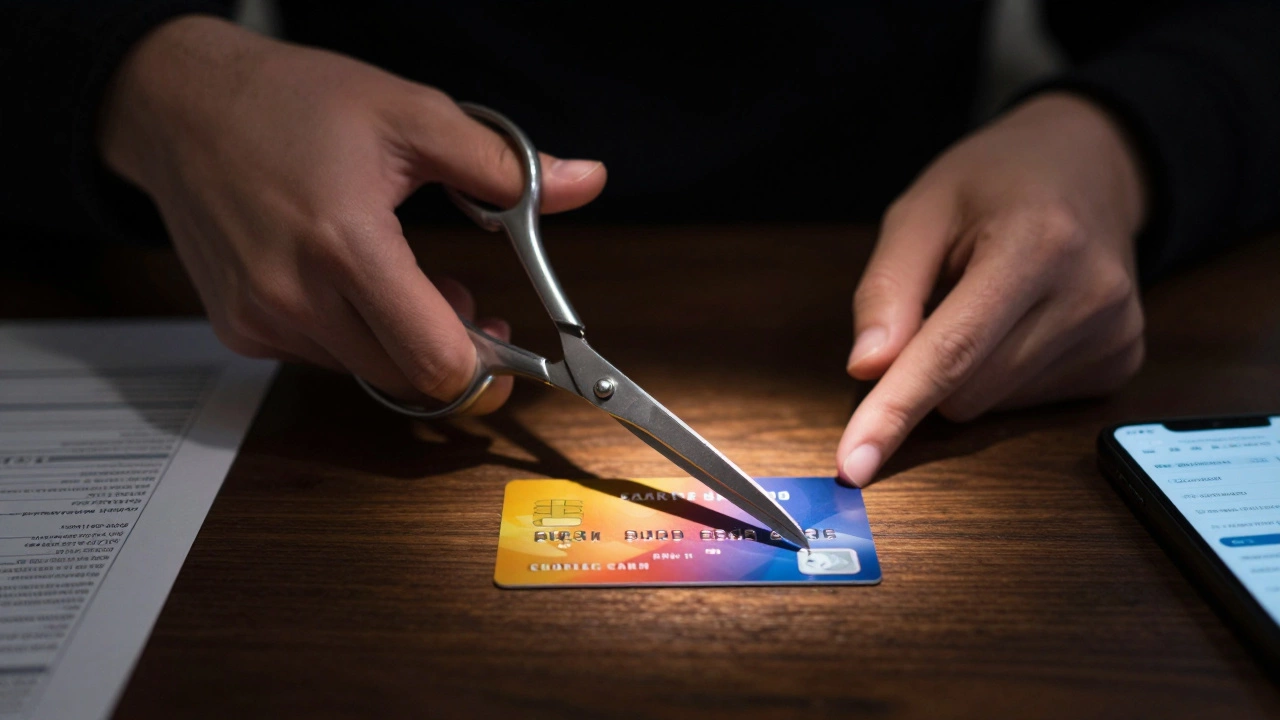
- Shred the card. Cut through the magnetic strip and chip to prevent skimming or reconstruction.
- Monitor your report. Check your credit report 30-60 days later to ensure the account status is updated correctly.
Common Mistakes to Avoid
Many people make the mistake of closing multiple cards at once. This causes a sharp spike in credit utilization and a noticeable dip in average age. If you need to reduce your portfolio, do it one card at a time, spaced several months apart. This allows your score to stabilize between changes.
Another error is ignoring authorized users. If you added a spouse or child to your card, closing the primary account might affect their credit history if they used it responsibly. Discuss this with them before making changes. Similarly, don't confuse "closing" with "downgrading." You can often switch a high-fee card to a no-fee version from the same issuer. This retains the original account age and history while eliminating the annual cost.
Will closing a credit card hurt my score if I have no debt?
Yes, it can. Even with no debt, closing a card reduces your total available credit. This increases your credit utilization ratio, which is a major factor in scoring models. It also stops the account from aging, potentially lowering your average credit history length over time.
How long does a closed credit card stay on my report?
A closed account in good standing typically remains on your credit report for up to 10 years. During this time, it continues to contribute positively to your credit history length. However, it no longer adds to your available credit limit.
Can I reopen a closed credit card?
Sometimes. If you recently closed the account, call the issuer and ask if it can be reopened. Policies vary by bank. Some allow reactivation within a few months, while others permanently close the file. If reopened, the original opening date usually remains intact.
Should I close old cards with no annual fee?
Generally, no. Old cards with no annual fee are valuable assets for your credit score. They provide free credit limit and extend your credit history. Keep them open, freeze them in your app, and use them occasionally for small purchases to maintain activity.
Does cutting up the card close the account?
No. Cutting up the physical card does not close the account with the bank. The account remains open, accruing interest if there is a balance, and reporting to credit bureaus. You must contact the issuer to formally close the account.