
Do Student Loans Affect Buying a House? The Truth About Debt-to-Income Ratios
 Jun, 11 2026
Student Loan Impact Calculator
Results Analysis
Enter your details to see how student loans impact your home buying potential.
You’ve saved for years. You have your down payment ready. But then you check your credit report and see that lingering balance from college. It’s a common panic moment: do student loans affect buying a house? The short answer is yes. They impact how much home you can afford, the interest rate you get, and whether a lender approves your application in the first place.
However, it isn’t an automatic disqualification. Millions of borrowers buy homes every year while carrying student debt. The difference between getting rejected and getting approved usually comes down to one number: your Debt-to-Income (DTI) ratio. Understanding how lenders view this ratio, and how to manage it, is the key to navigating the housing market with student debt.
How Lenders Look at Student Debt
When you apply for a mortgage, lenders don't just look at your income. They look at your monthly obligations. This includes car payments, credit card minimums, child support, and yes, student loan payments. The goal is simple: they want to ensure you have enough money left over each month to pay the new mortgage without risking default.
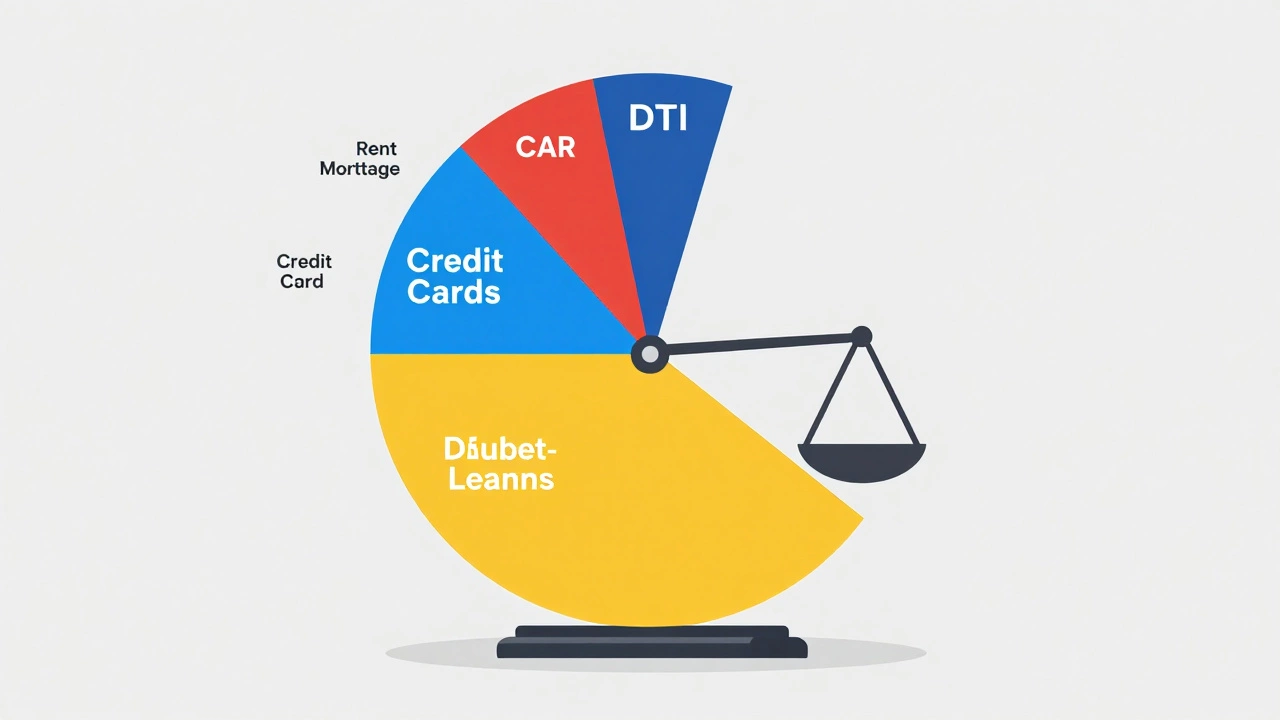
The metric used to measure this is the Debt-to-Income Ratio. This is calculated by dividing your total monthly debt payments by your gross monthly income. For example, if you earn $5,000 before taxes and owe $1,000 in combined debts, your DTI is 20%. Most conventional lenders prefer a DTI below 36%, though some government-backed loans allow up to 43% or even higher in specific cases.
Here is where student loans get tricky. If you are on a repayment plan, the actual payment amount counts toward that ratio. But what if you are still in school or on a deferment? Lenders cannot assume your payment will be zero forever. They must estimate a future payment to calculate your DTI accurately.
The 1% Rule vs. Actual Payments
If your student loans are currently deferred because you are still studying or in a grace period, lenders use a standard formula to estimate your monthly payment. Historically, this was known as the "1% rule." Under this guideline, lenders would estimate your monthly student loan payment as 1% of the outstanding principal balance.
For instance, if you owe $30,000 in student loans, the lender adds $300 per month to your debt obligations for the DTI calculation, regardless of what you actually pay now. This can artificially inflate your DTI and reduce the amount of house you can afford.
However, regulations have shifted slightly in recent years. Many lenders now require documentation of your actual expected monthly payment if it is lower than the 1% estimate. This often happens with Income-Driven Repayment (IDR) plans. If you can provide proof from your servicer that your IDR payment is only $150, the lender may use that $150 figure instead of the $300 estimate. This small change can significantly boost your purchasing power.
Impact on Your Credit Score
Beyond the monthly payment math, student loans affect your credit score, which determines your interest rate. Your credit score is influenced by several factors, but two are heavily tied to student debt:
- Payment History: This makes up about 35% of your FICO score. One late payment on a student loan can drop your score by dozens of points. Consistent, on-time payments build positive history.
- Credit Mix: Having different types of credit (revolving like cards, and installment like loans) can help your score. Student loans count as installment debt, which is generally viewed favorably if managed well.
A lower credit score doesn't just mean a higher interest rate; it can also mean higher upfront costs in the form of private mortgage insurance (PMI). If your score drops below 620 due to missed student loan payments, many conventional lenders will deny your application outright. Keeping your student loans current is non-negotiable for homebuyers.
Strategies to Improve Your Borrowing Power
If your student loans are weighing down your DTI, you aren't stuck. There are practical steps you can take to improve your numbers before applying for a mortgage.
- Refinance Your Student Loans: If you have good credit and stable income, refinancing can lower your interest rate and potentially your monthly payment. A lower payment means a lower DTI. Note that this converts federal loans to private loans, so you lose federal protections like income-driven repayment options.
- Switch to an Income-Driven Plan: As mentioned, providing documentation of a lower IDR payment can help. Ensure you recertify your income annually to keep that payment low.
- Pay Down Other Debts: Sometimes it’s easier to cut credit card balances than to tackle student loans. Lowering revolving debt frees up room in your DTI for the student loan obligation.
- Increase Your Income: Getting a raise, taking on a side hustle, or adding a co-borrower with strong income can offset the impact of student debt.
Federal Loan Forgiveness Programs
What if you expect your loans to be forgiven soon? Programs like Public Service Loan Forgiveness (PSLF) forgive remaining balances after 10 years of qualifying payments. Does this help your mortgage application?
Generally, no. Lenders do not factor in potential future forgiveness when calculating DTI. They must assume you will repay the full balance unless the forgiveness has already occurred. However, if you are on an IDR plan linked to PSLF, using the documented low monthly payment helps, as discussed earlier. Don't rely on the promise of forgiveness to qualify for a larger home today.
| Scenario | Monthly Payment Impact | DTI Effect | Lender View |
|---|---|---|---|
| Standard Repayment | Actual payment amount | High (if payment is large) | Neutral/Negative |
| Income-Driven Repayment | Documented lower amount | Lower | Positive (with proof) |
| Deferred/Grace Period | 1% of balance or actual | Variable | Cautionary |
| Consolidated Loan | New single payment | Simplified | Neutral |

When Student Loans Become a Deal-Breaker
There are limits to how much debt a lender will accept. If your student loan payments consume more than 20-25% of your gross income, finding a mortgage becomes extremely difficult. In these cases, the lender may determine that you lack the residual income to cover unexpected home expenses like repairs or property taxes.
This is particularly true for high-interest private student loans. Unlike federal loans, private loans often lack flexible repayment options. If your payment is high and fixed, it eats into your borrowing capacity aggressively. In such scenarios, paying off the private loan entirely before house hunting might be the most strategic financial move.
Next Steps for Homebuyers with Debt
Before you start touring houses, run the numbers yourself. Calculate your back-end DTI by adding all monthly debts to a hypothetical mortgage payment. If the total exceeds 43% of your gross income, you’ll need to adjust your strategy. Consider waiting six months to a year to pay down balances or increase savings. Use this time to lock in a better credit score. Remember, patience now prevents financial stress later. Talk to a mortgage broker who specializes in borrowers with student debt-they can often find niche programs that big banks overlook.
Can I buy a house if I have student loans?
Yes, you can buy a house with student loans. Millions of homeowners carry student debt. The key is managing your Debt-to-Income (DTI) ratio. As long as your total monthly debts, including the estimated student loan payment, stay within the lender's limits (usually under 43%), you should qualify for a mortgage.
Do lenders count student loans if I am on deferment?
Yes. Even if you aren't making payments now, lenders must estimate a future payment. They typically use 1% of the outstanding balance or your actual expected monthly payment if you provide documentation from your loan servicer. This ensures the DTI calculation reflects your long-term obligation.
Should I pay off student loans before buying a house?
It depends on your interest rates and DTI. If your student loan interest rate is very high or your payments push your DTI above 43%, paying them off can improve your mortgage terms and buying power. However, if your student loan rate is low (e.g., under 4%) and your DTI is healthy, it might make more sense to keep the cash for a larger down payment, which reduces your mortgage interest.
How does refinancing student loans help me buy a home?
Refinancing can lower your monthly payment by securing a lower interest rate. A lower monthly payment reduces your Debt-to-Income ratio, potentially allowing you to qualify for a larger mortgage. Be cautious, however, as refinancing federal loans into private ones removes access to income-driven repayment plans and forgiveness programs.
What is a good DTI ratio for buying a house with student debt?
Aim for a back-end DTI ratio below 36% for the best interest rates and approval odds. Many lenders will approve up to 43%, and some government-backed loans go higher, but staying under 36% gives you more flexibility and better loan terms. Calculate this by dividing your total monthly debt payments by your gross monthly income.