
Does Cancelling a Card Hurt Your Credit Score?
 Jan, 8 2026
Credit Utilization Calculator
Calculate how closing a credit card will impact your credit utilization ratio. Credit utilization accounts for 30% of your credit score.
Canceling a credit card might feel like a simple cleanup - maybe you’re tired of the annual fee, or you’ve switched to a better card. But if you’re worried about your credit score, you’re right to pause. Closing a card doesn’t just disappear from your account list. It can ripple through your credit report in ways you might not expect.
How Credit Scores Are Built
Your credit score isn’t one thing. It’s a mix of five parts: payment history (35%), credit utilization (30%), length of credit history (15%), new credit (10%), and credit mix (10%). When you cancel a card, you’re not just losing a line of credit - you’re changing the math behind those numbers.
Take credit utilization, for example. That’s the percentage of your total credit limit you’re using. If you have two cards, each with a $5,000 limit, and you’re carrying a $1,000 balance on one, your utilization is 10%. Now, cancel the second card. Your total limit drops to $5,000, but your balance is still $1,000. Suddenly, your utilization jumps to 20%. That’s not a big jump on its own, but if you’re already close to your limit, it can push you into a riskier zone. Lenders see utilization above 30% as a red flag. Above 50%, and your score can take a noticeable dip.
Length of Credit History Matters More Than You Think
Your credit history isn’t just about how long you’ve had your current cards - it’s about how long you’ve had credit overall. The average age of your accounts is calculated by adding up the age of every account you’ve ever opened and dividing by the total number. Even if you don’t use an old card anymore, it still counts.
Let’s say you opened your first credit card in 2018. That’s eight years of history. You open another card in 2023. Now your average account age is five years. If you close the 2018 card, your average drops to three years - and that’s a hit to your score. Credit scoring models like FICO and VantageScore reward long-standing accounts. Closing your oldest card can erase years of positive history overnight.
Some people think the account disappears from their report when they close it. That’s not true. Closed accounts with no negative marks stay on your report for up to 10 years. But during those 10 years, they’re no longer helping your average age. And once they fall off, you lose that history completely.
When Closing a Card Might Not Hurt
Not every card cancellation is a credit score disaster. There are situations where the damage is minimal or even nonexistent.
- You have multiple cards with high limits. If you have five cards and you’re closing the one with the lowest limit and lowest usage, your overall utilization barely changes.
- The card has a high annual fee and you’re not using it. If the cost outweighs the benefit, and you’ve got other cards with better rewards or no fees, it’s okay to cut it.
- You’re closing a card you opened recently. If it’s only been open for six months, its impact on your average age is small. Closing it won’t drag your history down much.
- You’re replacing it with a new card. If you apply for a new card with a higher limit before closing the old one, you can offset the lost credit line. Just don’t apply for too many cards at once - that triggers hard inquiries, which can hurt your score.
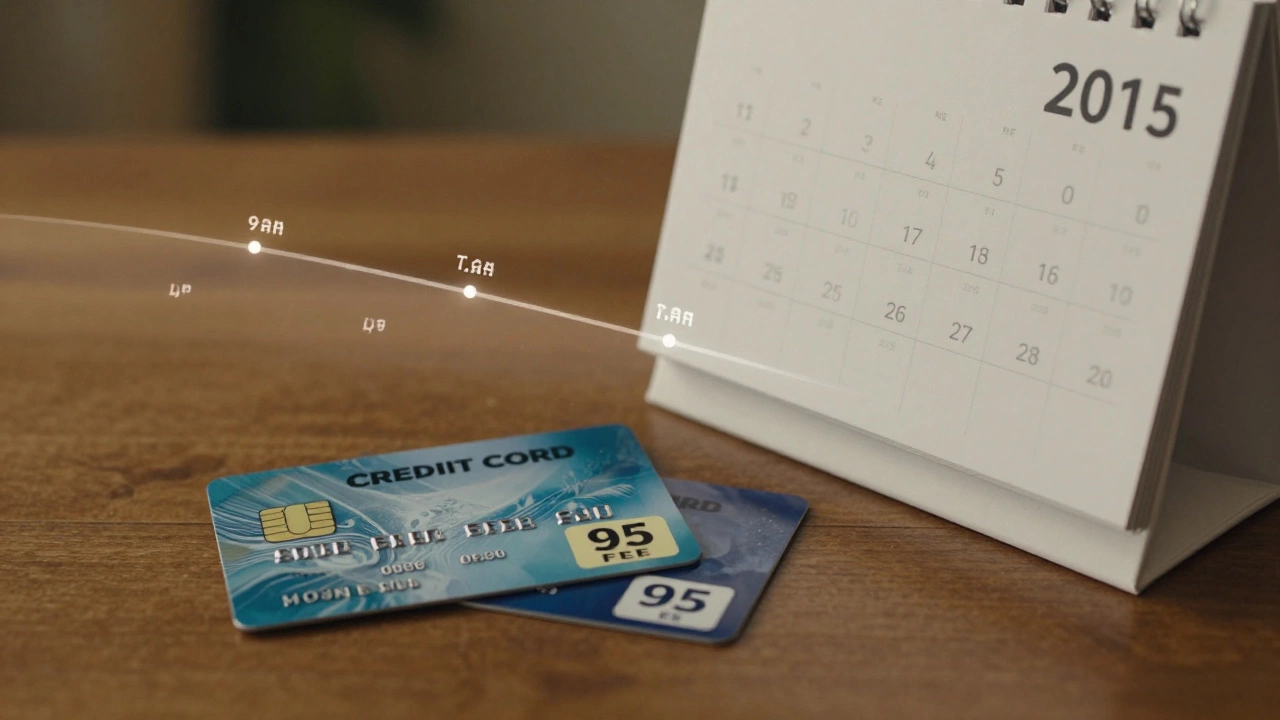
One real-world example: A person with three cards - one from 2015 ($10,000 limit), one from 2020 ($5,000 limit), and one from 2024 ($3,000 limit) - decides to close the 2024 card because it has a $95 annual fee and they rarely use it. Their total limit drops from $18,000 to $15,000. If their total balance is $2,000, utilization goes from 11% to 13%. That’s a tiny change. Their average account age drops from 7.3 years to 8.5 years - wait, no, it actually goes from 7.3 to 8.5? No, that’s wrong. Let’s fix that: before closing, average age = (9 + 6 + 2) / 3 = 5.7 years. After closing, average age = (9 + 6) / 2 = 7.5 years. So closing the newest card actually improves their average age. That’s the key: closing the youngest card can help, not hurt.
What Happens When You Close a Card?
Here’s the step-by-step of what actually happens after you call the issuer and say, “I want to close this card.”
- You pay off any remaining balance. No exceptions. You can’t close a card with a balance.
- The issuer reports the account as “closed by consumer” to the credit bureaus. This note doesn’t hurt your score - it’s neutral.
- The card’s credit limit is removed from your total available credit.
- Your credit utilization ratio recalculates based on your remaining open accounts.
- Over time, the account’s age stops contributing to your average account age.
Some people think closing a card makes the issuer report it as “closed due to delinquency.” That only happens if you defaulted. If you paid everything off and closed it yourself, it’s marked correctly - and that’s fine.
Alternatives to Closing
You don’t have to cancel to get rid of the fee or stop using the card. Try these first:
- Ask for a product change. Many issuers will let you switch your card to a no-fee version of the same product. For example, Chase lets you convert a Sapphire Preferred to a Freedom Unlimited - keeping the account open and preserving your credit history.
- Negotiate the fee away. Call customer service and say, “I’m considering canceling because of the fee. Is there any way you can waive it?” Sometimes they’ll do it just to keep you.
- Use it once every six months. A small purchase, like a coffee or a subscription, keeps the card active. No need to carry a balance - just pay it off immediately.
These moves let you keep the account open without the cost. And keeping it open means your credit utilization stays low, your history stays long, and your score stays stable.

When You Should Definitely Keep the Card
There are times when closing a card is a bad idea - even if you don’t use it.
- It’s your oldest card. That’s your longest credit history. Losing it can drop your average account age significantly.
- It has the highest credit limit. Closing it could spike your utilization, especially if you have other balances.
- You’re planning to apply for a loan soon. If you’re applying for a mortgage or car loan in the next 3-6 months, avoid any changes to your credit profile. Even a small score drop could cost you thousands in interest.
- You have few other credit accounts. If you only have two or three cards total, closing one removes a big chunk of your available credit. That’s risky.
One person I know tried to cancel a card they hadn’t used in two years. They had only two cards total. After closing it, their credit utilization jumped from 18% to 42%. Within weeks, their credit score dropped 47 points. They didn’t realize how much that one card was helping them - until it was gone.
How Long Does the Damage Last?
If your score drops after closing a card, how long does it take to recover?
It depends. If the drop was due to higher utilization, paying down balances can fix it in 30-60 days. Credit bureaus update your report monthly, so once your balance drops, your utilization improves, and your score rebounds.
If the drop came from losing a long-standing account, it takes longer. The average age of your accounts keeps getting younger as new accounts open. The older account won’t come back - but you can rebuild your history over time. The score will recover naturally as your remaining accounts age.
There’s no magic formula. But if you keep your balances low and pay on time, your score will bounce back - usually within a few months.
Final Rule: Don’t Close Unless You Have to
Most people overestimate how much they need to cancel cards. The truth? Keeping unused cards open is often the smarter move. They’re not dead weight - they’re silent helpers in your credit profile.
Only close a card if:
- You’re being charged a fee you can’t justify
- You’re tempted to overspend on it
- You’ve already replaced it with a better card
And even then, ask yourself: Can I switch products instead? Can I negotiate the fee? Can I use it once a year?
Your credit score isn’t something you should tweak on a whim. It’s a long-term asset. Treat it like your savings account - don’t withdraw unless you really need to.
Does closing a credit card hurt your credit score immediately?
Yes, it can - but not always. The impact depends on your credit utilization and how long you’ve had the card. If closing it raises your utilization rate above 30% or removes your oldest account, your score may drop within 30-60 days. If you have many other cards and low balances, the effect might be minimal.
How long does a closed credit card stay on my credit report?
Closed accounts with no negative history stay on your credit report for up to 10 years. During that time, they still count toward your credit history length. Once they fall off, you lose that history entirely, which can lower your average account age.
Should I close a credit card with an annual fee?
Only if you can’t negotiate a fee waiver or switch to a no-fee version of the same card. If it’s your oldest card or has a high credit limit, keeping it open - even with the fee - might be better for your score. Use it once a year to keep it active.
Can I close a card with a balance?
No. You must pay off the entire balance before the issuer will close the account. Even if you plan to close it, you can’t leave a balance behind - the account stays open until it’s paid in full.
Will closing a card affect my ability to get a loan?
Yes, if it causes your credit score to drop or your utilization to rise. Lenders look at both your score and your debt-to-credit ratio. A sudden change right before applying for a mortgage or auto loan could lead to higher interest rates or even denial. Wait at least 3-6 months after closing a card before applying for major credit.
If you’re unsure whether to close a card, check your credit report first. See how many accounts you have, their ages, and your total credit limits. Then ask: Is this card helping me more than it’s costing me? If the answer isn’t clear, leave it open.