
How Many $100k Earners Live Paycheck to Paycheck? The Real Numbers
 May, 17 2026
$100k Paycheck-to-Paycheck Calculator
Enter your details and click "Analyze" to see if you are living paycheck to paycheck.
Living paycheck to paycheck is a financial state where an individual spends their entire net income each pay period, leaving no surplus for savings or emergencies. It’s a term that usually conjures images of minimum-wage workers struggling to buy groceries. But what happens when you make six figures? You might assume that earning $100,000 a year automatically grants financial freedom. The reality is far more complex and, frankly, stressful.
If you’re making $100,000 but still feel like money disappears the moment it hits your bank account, you aren’t alone. In fact, recent data suggests that a significant portion of middle-class earners are trapped in this cycle. This isn’t just about bad math; it’s about lifestyle inflation, hidden costs, and the rising tide of expenses across North America. Let’s look at the numbers, the reasons behind them, and how to break free if you find yourself in this boat.
The Shocking Statistics on High-Income Poverty
So, what percent of people who make $100,000 live paycheck to paycheck? While exact real-time tracking varies by study, surveys from major financial institutions and credit bureaus consistently show that roughly 35% to 40% of households earning between $75,000 and $150,000 report having less than one month of expenses saved. More critically, about 20% to 25% of these earners admit they would struggle to cover an unexpected $1,000 expense without going into debt.
This doesn’t mean they are broke in the traditional sense. They have income. They often have assets. But they lack liquidity. A 2024 survey by Bankrate found that nearly half of Americans with household incomes over $100,000 said they could not afford a surprise expense. When you combine "could not afford" with "living paycheck to paycheck," you get a picture of fragile financial health. These individuals are one car repair or medical bill away from defaulting on loans.
Why does this happen? It’s rarely because they don’t know how to budget. It’s because the cost of maintaining a middle-class lifestyle has outpaced wage growth. If you earn $100,000, your taxes alone can take 20-30% off the top, depending on your location. That leaves you with a take-home pay that feels much smaller than your gross salary suggests.
The Hidden Traps: Why $100k Feels Like Less
Earning $100,000 sounds impressive until you break down the monthly cash flow. Let’s look at a realistic scenario for someone living in a mid-to-high cost area like Toronto, Canada, or Austin, Texas. After federal and provincial/state taxes, plus social security or CPP contributions, your net monthly income might hover around $6,000 to $6,500.
Now, consider the fixed costs:
- Housing: Rent or mortgage payments in desirable areas often exceed $2,500. Add property taxes, insurance, and maintenance, and you’re looking at $3,000+.
- Transportation: Car payments, gas, insurance, and public transit passes can easily consume $800.
- Food & Utilities: Groceries for two people run $1,000+, while utilities and internet add another $300.
- Debt Servicing: Student loans, credit card minimums, and personal loans might take $500-$1,000.
Do the math. $3,000 + $800 + $1,300 + $700 = $5,800. You’re left with $200-$700 for everything else: clothing, entertainment, healthcare co-pays, gifts, and savings. One unexpected vet bill or tire replacement wipes out the buffer. This is the definition of living paycheck to paycheck, even with a six-figure salary.
Lifestyle Inflation: The Silent Budget Killer
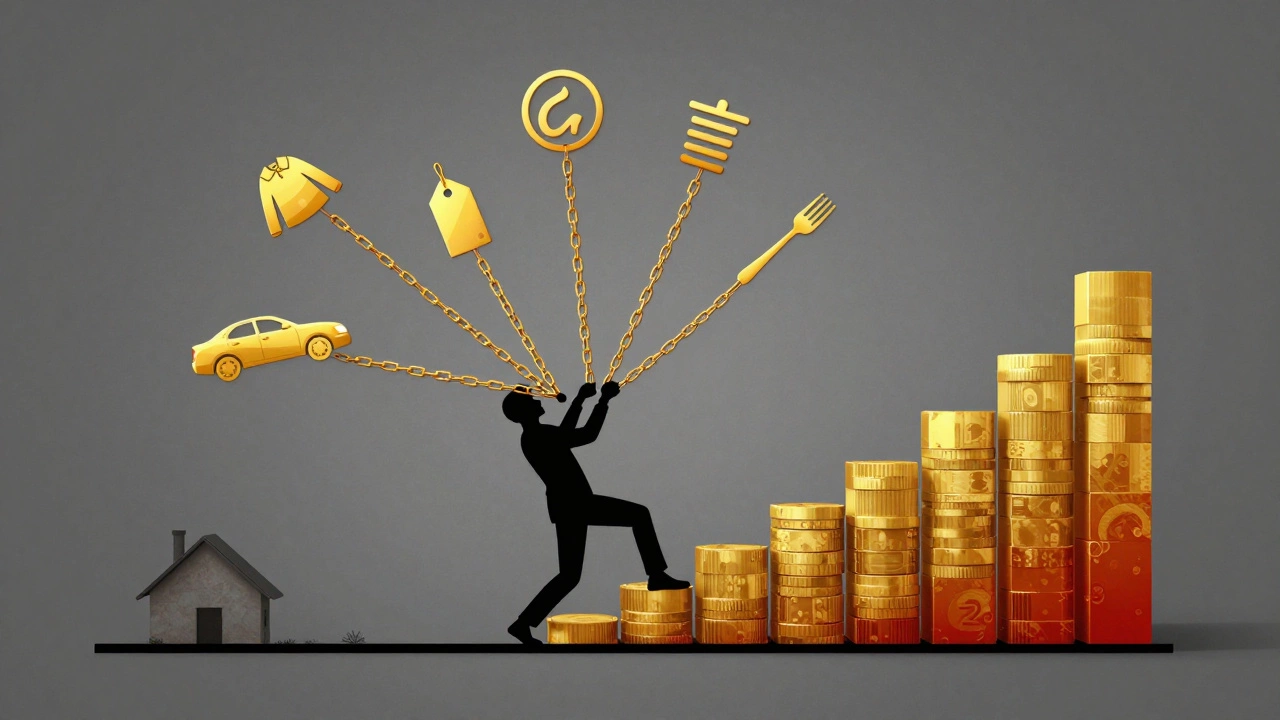
One of the biggest reasons high earners stay stuck is lifestyle inflation, also known as lifestyle creep. As your income rises, your spending rises to match it. You get a raise, so you upgrade your apartment. You get a bonus, so you buy a nicer car. You start dining out more frequently because you “can afford it.”
This isn’t inherently bad, but it becomes dangerous when it consumes all your surplus. Many $100k earners move to neighborhoods that require higher costs just to maintain their standard of living. They subscribe to premium services, join expensive gyms, and travel frequently. The problem is that these expenses are fixed. If you lose your job or get sick, you can’t instantly downgrade your lifestyle. Your rent stays the same. Your car payment stays the same. But your income drops to zero.
To combat this, successful savers practice intentional frugality. They keep their baseline expenses low regardless of income spikes. They treat raises as opportunities to increase savings rates, not spending power. For example, if you get a 10% raise, put 80% of that increase into investments or debt repayment, and only spend 20%.
The Role of Debt in the Paycheck Cycle
Debt is perhaps the single largest factor keeping $100k earners in the paycheck-to-paycheck trap. Unlike lower-income households who might carry debt due to necessity (food, shelter), high earners often carry debt due to convenience or status. Credit card balances for vacations, student loans for advanced degrees, and auto loans for luxury vehicles create a heavy monthly burden.
Consider the interest payments. If you have $20,000 in credit card debt at 20% APR, you’re paying $333 a month in interest alone if you only make minimum payments. That’s $4,000 a year gone forever. This isn’t building wealth; it’s bleeding cash. Many high earners don’t realize how much interest is eating their potential savings. They focus on the principal balance, ignoring the compounding effect of high-interest debt.
This is where debt consolidation becomes critical. By combining multiple high-interest debts into a single loan with a lower interest rate, you can reduce your monthly payment and accelerate payoff. For instance, consolidating three credit cards into a personal loan at 8% APR can save thousands in interest over time. However, this only works if you stop using the credit cards after consolidation. Otherwise, you’ll just dig a deeper hole.
| Strategy | Pros | Cons | Best For |
|---|---|---|---|
| Debt Consolidation Loan | Lower interest rate, single payment | Requires good credit, risk of new debt | Multiple high-interest credit cards |
| Avalanche Method | Saves most on interest | Takes longer to see psychological wins | Mathematically minded savers |
| Snowball Method | Quick wins boost motivation | Pays more interest overall | Those needing behavioral momentum |
| Balance Transfer Card | 0% intro APR periods | Short-term solution, transfer fees | Small debts paid off quickly |
Geographic Disparities: Where You Live Matters
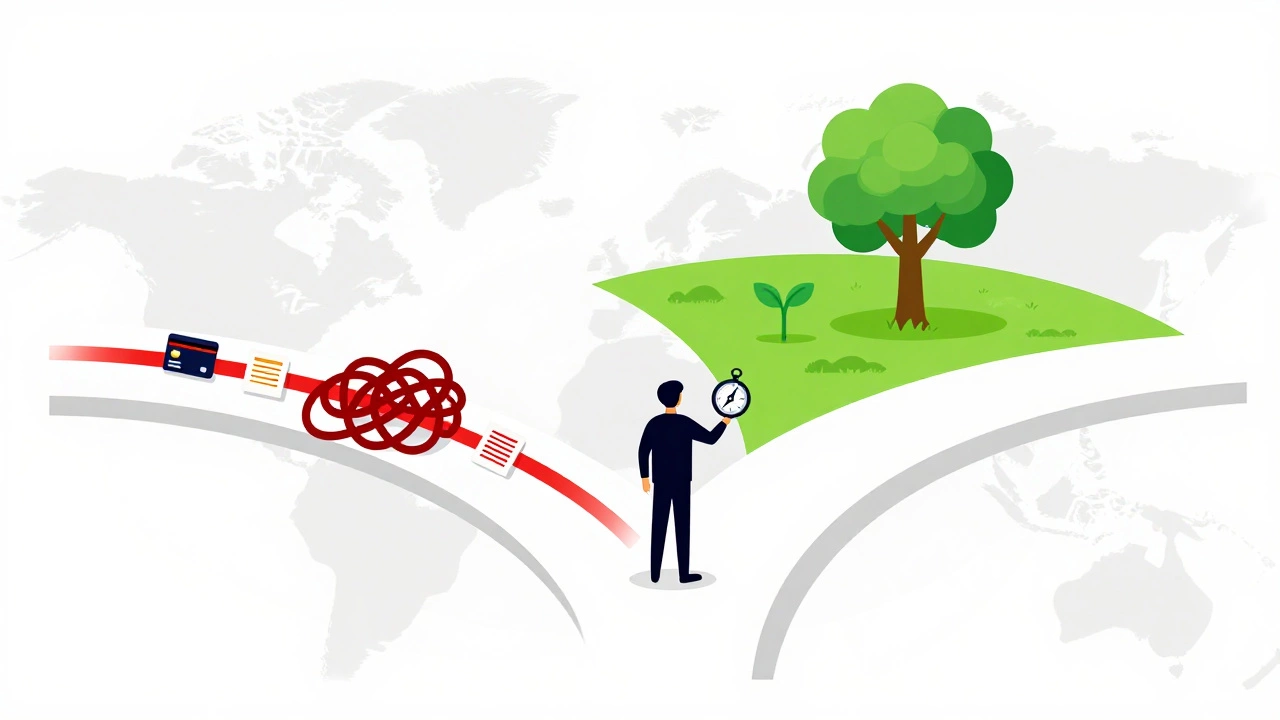
Your zip code plays a huge role in whether $100,000 is enough to live comfortably. In rural parts of the Midwest or South, $100,000 goes a long way. You can own a home, drive a reliable car, and save 20% of your income with ease. But in cities like New York, San Francisco, Vancouver, or Toronto, $100,000 is merely middle-class.
In high-cost-of-living areas, housing alone can consume 40-50% of your take-home pay. This leaves little room for error. A minor medical issue or a car breakdown can derail your finances for months. This geographic disparity explains why national averages can be misleading. A person making $100,000 in Chicago may have a healthy emergency fund, while their peer in Los Angeles may be maxed out on credit cards just to survive.
If you’re in a high-cost area, you need to be more aggressive with your budgeting. Look for ways to reduce housing costs, such as getting a roommate, moving to a slightly further suburb, or refinancing your mortgage. Every dollar saved on fixed costs frees up cash for debt repayment and savings.
Breaking the Cycle: Actionable Steps
Escaping the paycheck-to-paycheck trap requires discipline and strategy. Here’s how $100k earners can regain control:
- Track Every Dollar: Use apps like Mint, YNAB (You Need A Budget), or even a simple spreadsheet. You can’t manage what you don’t measure. Identify where your money is leaking.
- Build a Starter Emergency Fund: Aim for $1,000-$2,000 before tackling debt aggressively. This prevents new debt when small emergencies arise.
- Attack High-Interest Debt: Prioritize credit cards and payday loans. Use debt consolidation if it lowers your interest rate significantly. Negotiate with creditors for lower rates.
- Automate Savings: Set up automatic transfers to your savings account on payday. Treat savings as a non-negotiable bill.
- Review Subscriptions: Cancel unused gym memberships, streaming services, and app subscriptions. These small leaks add up to hundreds per year.
- Increase Income: Side hustles, freelance work, or negotiating a raise can provide extra cash to accelerate debt payoff.
Remember, the goal isn’t to live like a student again. It’s to build a foundation that allows you to enjoy your life without fear. Financial peace comes from knowing you can handle the unexpected.
The Psychological Toll of Financial Stress
Living paycheck to paycheck, regardless of income, takes a mental toll. Studies show that financial stress leads to anxiety, depression, and relationship strain. For high earners, there’s an added layer of shame. They feel they “should” be doing better. They compare themselves to peers who seem to have it all together. This comparison culture fuels impulsive spending and poor financial decisions.
It’s important to recognize that your worth isn’t tied to your net worth. Many successful professionals struggle financially because they prioritize career advancement over financial literacy. Learning to manage money is a skill, not a moral failing. Be kind to yourself as you rebuild your finances. Celebrate small victories, like paying off a credit card or building a $500 emergency fund.
Seek support if needed. Financial counselors, therapists, and online communities can provide guidance and accountability. You don’t have to do this alone.
Is it normal to live paycheck to paycheck making $100,000?
Yes, it is surprisingly common. Due to high housing costs, taxes, and lifestyle inflation, many households earning $100,000 have little disposable income left after bills. It is not a sign of failure, but rather a reflection of modern economic pressures.
How much should I save if I make $100,000?
Financial experts generally recommend saving 20% of your gross income. For a $100,000 salary, this means saving $20,000 a year, or about $1,666 per month. This includes retirement contributions, emergency funds, and other savings goals.
What is the best way to get out of debt on a $100k income?
The best approach combines budgeting with strategic debt repayment. Start by creating a strict budget to identify surplus cash. Then, use the avalanche method (paying highest interest first) or debt consolidation to reduce interest costs. Automate payments to ensure consistency.
Does debt consolidation hurt my credit score?
Initially, applying for a consolidation loan may cause a small dip due to a hard inquiry. However, over time, it can improve your score by lowering your credit utilization ratio and ensuring on-time payments. It depends on your usage habits post-consolidation.
How does location affect my ability to save on $100k?
Location drastically impacts your cost of living. In high-cost cities, housing and taxes consume a larger portion of your income, leaving less for savings. In lower-cost areas, the same income provides more flexibility for building wealth and reducing debt.