
How Much Bitcoin Will $1000 Buy in May 2026? A Realistic Guide
 May, 3 2026
Bitcoin Purchase Calculator
You Will Receive
Fee Breakdown
Adjust Parameters
It’s May 3, 2026. You’ve got a thousand dollars sitting in your account, and you’re staring at the Bitcoin is the world's first decentralized digital currency that operates on a peer-to-peer network without central authority. ticker, wondering what exactly that money can get you. The answer isn’t as simple as dividing 1000 by the current price. While the math seems straightforward, the reality involves exchange rates, transaction fees, network congestion, and the specific platform you choose to use.
If Bitcoin is trading at $85,000 today, your $1000 buys roughly 0.0117 BTC. If it drops to $60,000, you get about 0.0166 BTC. But those numbers are theoretical. In practice, you’ll likely end up with slightly less due to hidden costs. This guide breaks down exactly how much Bitcoin you will actually receive when you spend $1000, where the money goes, and how to maximize your purchase in the current market.
The Math Behind Your Purchase
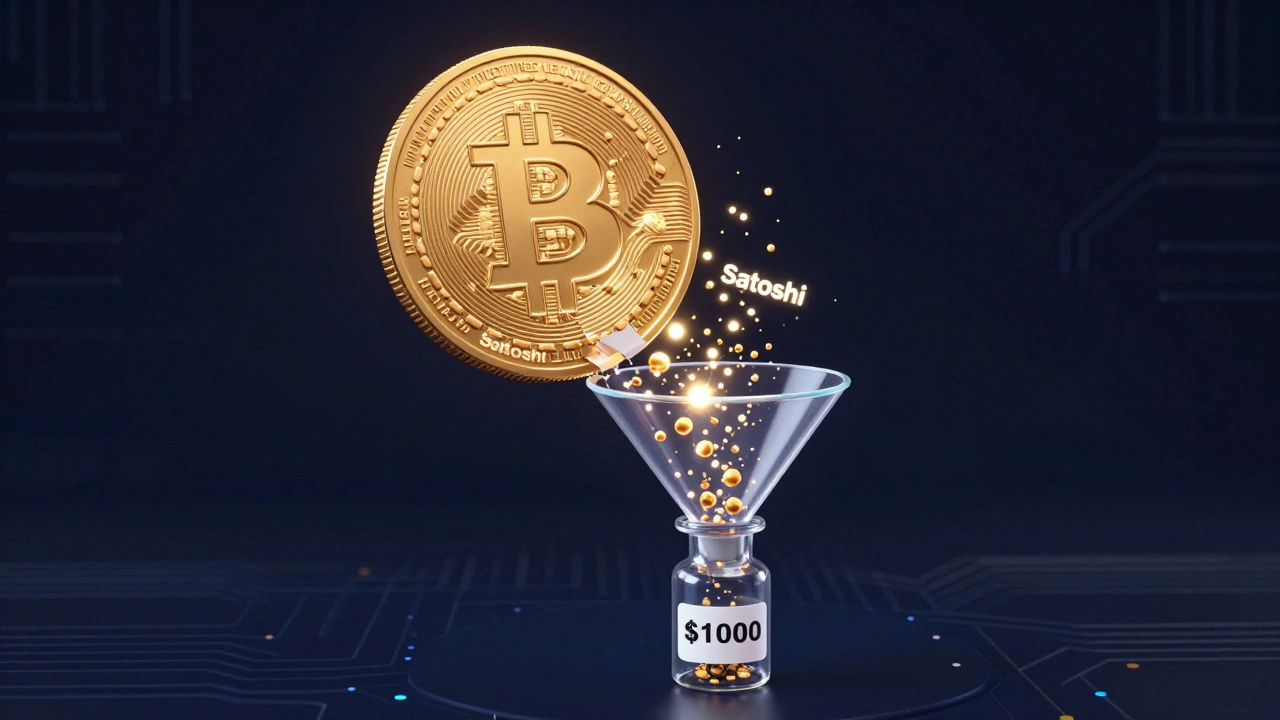
Before clicking "buy," you need to understand the basic conversion. Bitcoin is divisible into 100 million units called Satoshis is the smallest unit of Bitcoin, representing one hundred-millionth of a whole Bitcoin (0.00000001 BTC).. When people talk about buying "whole" Bitcoins, they are usually mistaken. Most retail investors buy fractions. This divisibility is what makes Bitcoin accessible even if the price per coin is high.
To calculate your potential holdings, use this simple formula:
- Check the Current Price: Look up the live price of Bitcoin on a reliable tracker like CoinMarketCap or Coinbase.
- Subtract Fees: Determine the total cost of the transaction (deposit fee + trading fee).
- Divide Net Amount by Price: Take your remaining cash and divide it by the Bitcoin price.
For example, if Bitcoin is priced at $90,000 and you pay a $15 total fee, you have $985 left to invest. Dividing $985 by $90,000 gives you approximately 0.01094 BTC. That might sound small, but remember: value comes from the percentage of the total supply you own, not just the number of digits before the decimal point.
Where Your Money Goes: Hidden Fees Explained
This is where most beginners lose out. You don’t just hand over $1000 and get $1000 worth of Bitcoin. Every platform takes a cut. These fees fall into three main categories: deposit fees, trading spreads, and withdrawal fees.
| Fee Type | Description | Estimated Cost ($) | Impact on Purchase |
|---|---|---|---|
| Deposit Fee | Cost to transfer fiat currency (USD/CAD) to the exchange | $0 - $5 | Reduces initial capital available for trade |
| Trading Spread | Difference between the buy and sell price set by the exchange | $10 - $30 | You buy at a higher price than the market average |
| Platform Commission | Percentage fee charged by the broker for executing the order | $5 - $25 | Direct reduction of purchased amount |
| Network Gas Fee | Cost to move Bitcoin from exchange to personal wallet | $2 - $15 | Only applies if you withdraw immediately |
Crypto exchanges often hide the spread. They might show you the market price is $85,000, but execute your buy order at $85,500. On a $1000 investment, that $500 difference in price represents a significant percentage loss in potential gains. Always look for platforms that disclose their "spread" or offer "limit orders" which let you set the exact price you are willing to pay.
Exchange vs. Peer-to-Peer: How It Changes Your Yield
Where you buy matters just as much as when you buy. There are two primary ways to convert your $1000 into Bitcoin, and each yields different results.
Centralized Exchanges (CEX): Platforms like Coinbase, Kraken, or Binance are the easiest route. They handle the legal compliance and security for you. However, they charge higher fees. For a $1000 purchase, you might lose 1% to 3% in fees. This means you effectively start your investment journey with a 1-3% deficit. To break even, Bitcoin needs to rise by that percentage before you see any profit.
Peer-to-Peer (P2P) Marketplaces: Services like LocalBitcoins is a peer-to-peer marketplace that allows users to buy and sell Bitcoin directly with each other using various payment methods. or Bisq is an open-source, decentralized Bitcoin exchange application that enables trustless transactions without intermediaries. connect buyers and sellers directly. You can sometimes find sellers offering better rates than exchanges, especially if you pay via bank transfer. However, P2P requires more effort. You must verify the seller’s reputation, manage escrow accounts, and be wary of scams. For a beginner with only $1000, the risk/reward ratio often favors the safety of a regulated exchange.
The Impact of Volatility on Small Purchases
Bitcoin is known for its volatility. In 2026, the market has matured, but swings of 5-10% in a single week are still common. When you buy with a fixed amount like $1000, you are practicing "dollar-cost averaging" manually. If you buy when the price is high, you get less Bitcoin. If you wait for a dip, you get more.
Consider this scenario:
- Scenario A: You buy $1000 worth of Bitcoin at $90,000. You receive ~0.0111 BTC.
- Scenario B: You wait two weeks, the price drops to $80,000. You buy $1000. You receive ~0.0125 BTC.
In Scenario B, you acquired 12.6% more Bitcoin for the same dollar amount simply by timing the entry. However, trying to time the market is risky. What if the price went to $100,000 instead? You would have missed out entirely. Many experienced investors suggest splitting your $1000 into four $250 purchases over a month. This smooths out the average entry price and reduces the stress of watching the ticker every hour.
Security: Protecting Your $1000 Investment
Once you’ve bought your Bitcoin, keeping it safe is crucial. Leaving your coins on an exchange is convenient but risky. If the exchange gets hacked or goes bankrupt (as seen with past failures like FTX), your funds could be lost. For a $1000 investment, the cost of a hardware wallet might seem steep relative to the asset value, but it sets good habits early.
A Hardware Wallet is a physical device designed to store cryptocurrency private keys offline, providing enhanced security against online hacks and malware. like a Ledger or Trezor costs around $60-$100. That leaves you with $900-$940 for the actual Bitcoin purchase. Is it worth it? If you plan to hold this Bitcoin for years (HODLing), yes. If you plan to trade it frequently, a reputable exchange with insurance coverage might be sufficient for now. Just ensure you enable two-factor authentication (2FA) using an authenticator app, not SMS, which is vulnerable to SIM-swapping attacks.
Tax Implications in Canada and the US
Buying Bitcoin is generally not a taxable event. However, selling or spending it later is. Since you are reading this from Toronto, you should know that the Canada Revenue Agency (CRA) treats cryptocurrency as a commodity. If you buy Bitcoin as an investment, 50% of any capital gain is taxable. If you trade it frequently, the CRA may view it as business income, meaning 100% of profits are taxed.
Keep records of your $1000 purchase date, the exact amount of Bitcoin received, and the price paid. Tools like Koinly or CoinTracker can automate this, but for a single $1000 transaction, a simple spreadsheet works fine. Ignoring tax laws can lead to penalties later, so treat your crypto purchases with the same seriousness as stock trades.
Should You Buy All at Once or Drip Feed?
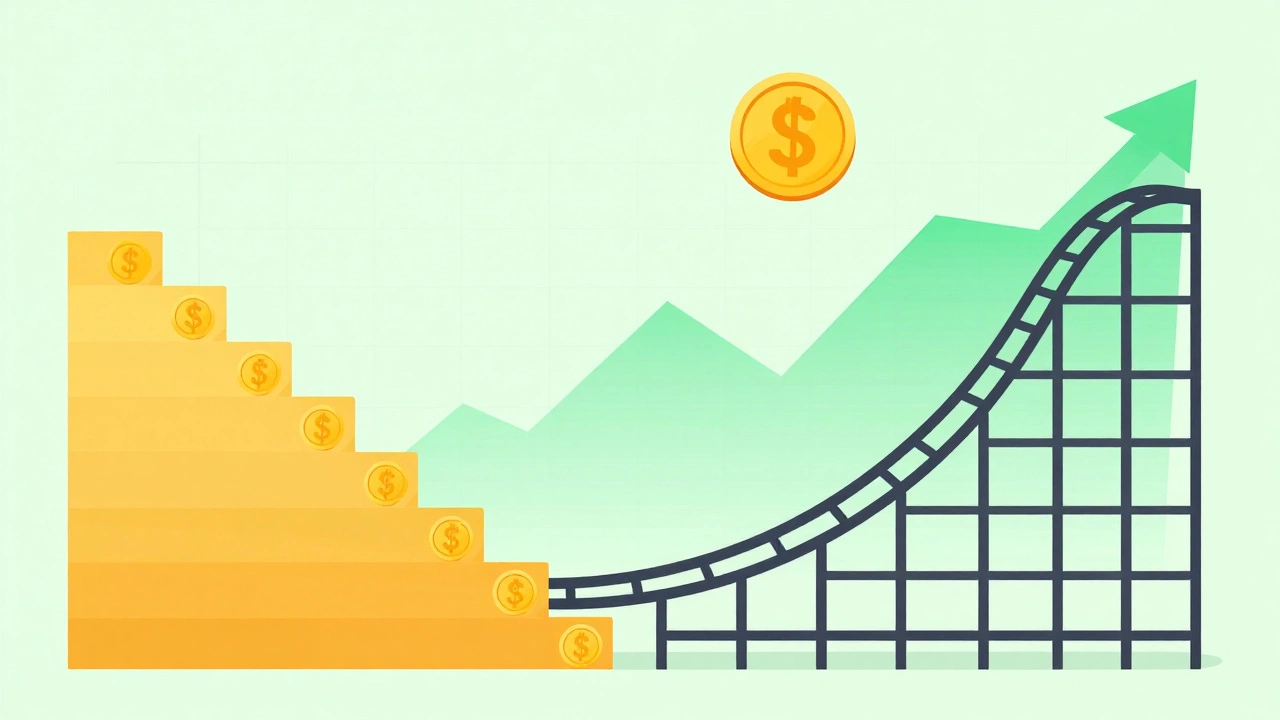
This is the biggest decision you face with your $1000. Lump-sum investing puts all your eggs in one basket at one specific price point. Dollar-cost averaging (DCA) spreads the risk.
If you believe Bitcoin is undervalued and will only go up, buying all $1000 at once maximizes your exposure to future gains. If you are unsure or fear a market correction, DCA is safer. For instance, buying $250 every week for four weeks ensures you don’t buy at the absolute peak. Historically, DCA has performed nearly as well as lump-sum investing while significantly reducing emotional stress during market downturns. For a beginner, DCA is often the recommended path because it builds discipline and removes the pressure of perfect timing.
How much Bitcoin does $1000 buy exactly today?
The exact amount depends on the live price of Bitcoin at the moment of purchase. As of May 2026, if Bitcoin is trading near $85,000-$90,000, $1000 will buy approximately 0.011 to 0.012 BTC. After accounting for typical exchange fees of 1-2%, you might receive slightly less, around 0.0108 to 0.0118 BTC. Check a live calculator on your chosen exchange for the precise figure.
Is $1000 enough to start investing in Bitcoin?
Yes, absolutely. Bitcoin is highly divisible, so you do not need thousands of dollars to buy a "whole" coin. $1000 is a solid starting amount that allows you to experience market volatility, learn about wallets, and understand the buying process without risking life-changing sums of money. It is enough to make meaningful gains if the market appreciates significantly.
What are the best places to buy Bitcoin with $1000 in 2026?
For beginners, regulated centralized exchanges like Coinbase, Kraken, or eToro are recommended due to their user-friendly interfaces and strong security measures. If you are in Canada, platforms like Newton or Shakepay may offer lower fees for CAD deposits. Avoid unregulated peer-to-peer sites unless you have experience verifying seller reputations.
Do I need a wallet to buy Bitcoin?
No, you do not need a separate wallet to buy Bitcoin. Most exchanges provide a built-in custodial wallet where your coins are stored after purchase. However, for long-term security, it is advisable to transfer your Bitcoin to a personal software or hardware wallet once the purchase is complete. This gives you full control over your private keys.
Will my $1000 Bitcoin investment be taxed immediately?
No, buying Bitcoin is not a taxable event. Taxes are triggered only when you sell, trade, or spend your Bitcoin for goods or services. In Canada, capital gains tax applies to 50% of any profit made when you dispose of the asset. Keep detailed records of your purchase price and date for future tax reporting.