
How to Lower Your Car Loan Interest Rate in 2026: Refinance or Renegotiate?
 Jul, 23 2026
Car Loan Refinance Calculator
Loan Details
Analysis Results
Enter your loan details to see if refinancing makes sense.
Compare monthly payments, total interest, and break-even time.Can You Actually Get a Lower Rate on Your Existing Car Loan?
You signed the papers. You drove off the lot. And now, every time you check your bank account after the payment hits, you wonder if you’re overpaying. It’s a nagging feeling that doesn’t go away. The short answer is yes, you can often lower your car loan interest rate, but it rarely happens with a simple phone call to your current lender asking for a favor. Lenders are businesses; they don’t lower rates out of kindness. They do it when it makes financial sense for them.
In the current 2026 market, where central banks have stabilized rates after years of volatility, there are two main paths to save money: refinancing with a new lender or negotiating a modification with your current one. Most people find success through refinancing, which involves taking out a new loan to pay off the old one. This process requires understanding your credit profile, the value of your vehicle, and the terms of your original contract.
Key Takeaways
- Refinancing is the standard route: Switching lenders usually yields better savings than asking your current lender to drop their rate.
- Credit score matters most: If your score has improved since you bought the car, you qualify for better tiers.
- Avoid prepayment penalties: Check your original contract before applying anywhere else.
- The "break-even" point: Ensure the monthly savings outweigh any closing costs associated with the new loan.
Why Your Current Lender Probably Won’t Budge
It feels natural to call the person who sold you the car or the finance company holding the note and say, "Hey, rates are down, can you match this?" In mortgage lending, this is common. In auto lending, it’s rare. Why? Because auto loans are typically non-recourse and fixed-term products. Once the deal is done, the paperwork is filed, and the profit margin is locked in, there is little incentive for the lender to revisit it unless you are struggling to make payments (which leads to hardship programs, not rate cuts).
Furthermore, many dealerships sell your loan immediately to a third-party bank or credit union. You might be paying a dealer-installed insurance product or a high-interest mark-up from the dealership’s captive finance arm. That original entity no longer holds your debt. Even if they did, their systems are often automated for collections, not renegotiation. Don’t waste weeks begging your current lender. Instead, look outward.
The Power of Refinancing: How It Works
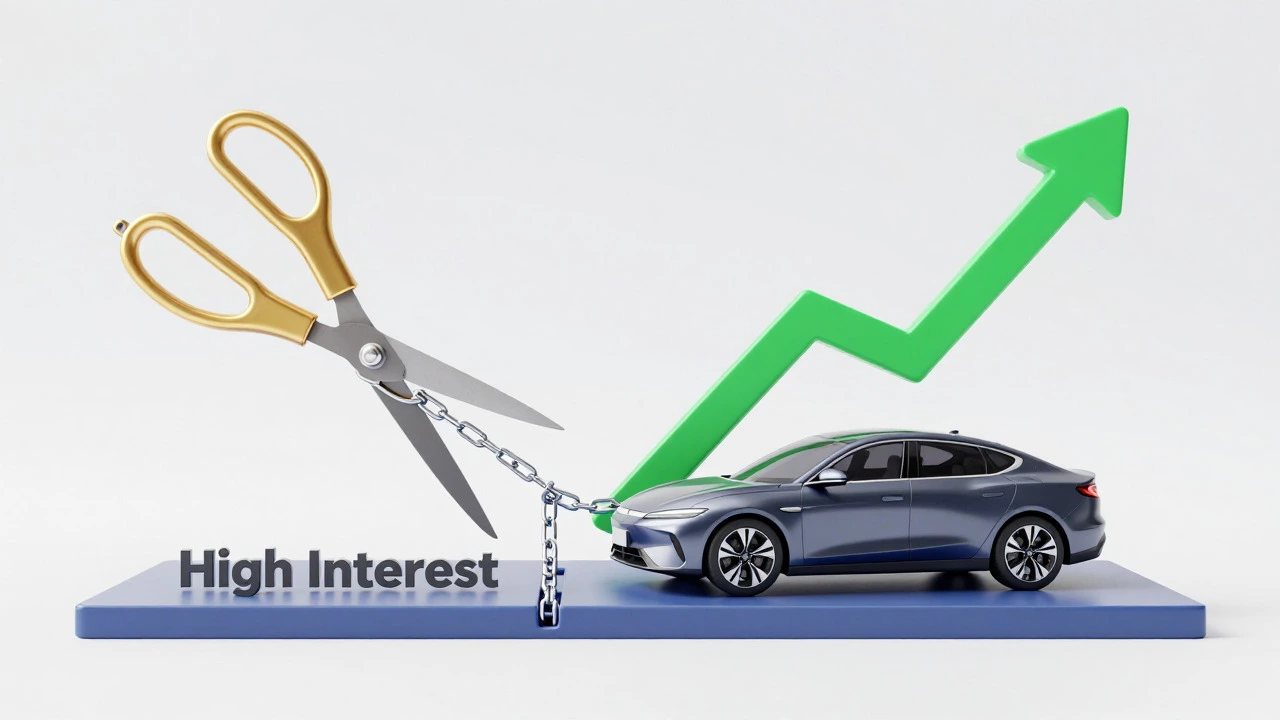
Auto loan refinancing is the process of replacing your existing car loan with a new one that has better terms. Think of it like a cash-out refinance on a house, but simpler. A new lender pays off your old balance in full, and you start making payments to them instead. If the new interest rate is lower, your monthly payment drops, or you keep the payment the same and pay off the loan faster.
To succeed here, you need leverage. Leverage comes from three things:
- An improved credit score: Did you miss payments last year? Have you paid them off? Is your utilization on credit cards lower? Every point counts.
- Equity in your vehicle: Lenders love collateral. If your car is worth more than you owe, you are a low-risk borrower.
- A shorter remaining term: Loans with less than 5 years left are attractive because the risk of default is lower.
In 2026, credit unions in Canada and competitive online lenders are aggressively targeting borrowers with scores above 700. They know banks are sticky. By shopping around, you force the market to compete for your business.
Step-by-Step: How to Lower Your Rate
Don’t just apply blindly. Each hard inquiry on your credit report can dip your score by a few points. If you apply to five lenders at once, that damage compounds. Follow this sequence to minimize harm and maximize results.
1. Check Your Credit Report First
Get your free credit report from Equifax or TransUnion. Look for errors. A missed payment reported incorrectly could be costing you hundreds of dollars in interest. Dispute anything inaccurate before you talk to a lender. Also, calculate your exact debt-to-income ratio. Lenders want to see that your monthly obligations don’t exceed 40% of your gross income.
2. Determine Your Car’s Actual Value
Use resources like Kelley Blue Book (KBB) or Black Book to find the wholesale and retail value of your specific trim and mileage. If you owe $20,000 but the car is only worth $18,000, you are "upside-down." Refinancing will be difficult. Most lenders require you to have at least 10-20% equity to approve a refinance easily.
3. Shop Within a Two-Week Window
Here is a pro tip: Credit scoring models (FICO and VantageScore) treat multiple inquiries for the same type of loan within a short window as a single inquiry. In Canada, this window is typically 14 days. Apply to three to five lenders-credit unions, online banks, and traditional banks-within those 14 days. This lets you compare offers without tanking your score.
4. Calculate the Break-Even Point
Some refinances come with origination fees or administrative costs. Let’s say the new loan saves you $50 a month, but there is a $300 processing fee. It will take six months ($300 / $50) to break even. If you plan to sell the car in four months, refinancing is a net loss. Only proceed if you’ll own the car long enough to recoup the costs.
Comparison: Refinancing vs. Negotiating
| Strategy | Success Rate | Time Required | Impact on Credit Score |
|---|---|---|---|
| Refinancing | High (if credit improved) | 1-2 weeks | Temporary dip (hard inquiry) |
| Negotiating with Current Lender | Very Low | Hours to Days | None |
| Selling & Buying New | Variable | Weeks | Major impact (new loan) |
| Hardship Modification | Medium (if behind on payments) | Days | Potential negative marks |

When Refinancing Might Backfire
Not every situation calls for a new loan. Be wary of these traps:
- Extending the Term: Some lenders will offer you a much lower monthly payment by stretching your loan from 36 months to 72 months. While the payment looks smaller, you’ll pay significantly more interest over the life of the loan. Always aim to keep the term similar or shorter.
- Adding Fees: Watch out for "packaged" loans that include GAP insurance or extended warranties bundled into the principal. These increase the amount you borrow, negating the benefit of a lower rate.
- Prepayment Penalties: Read your original contract. Some loans charge a fee if you pay off the balance early (usually within the first 1-2 years). If this fee is higher than your potential savings, stay put.
Special Cases: Subprime and Bad Credit
If your credit score is below 600, options are limited. Traditional banks may ignore you. However, specialized subprime lenders exist. They charge higher rates, but sometimes they can still beat a predatory dealership markup. If you’re in this boat, focus on building equity and perfect payment history for six months before attempting to refinance. Consistency is your only currency here.
Another option for those with poor credit is a co-signer. If a parent or partner with strong credit agrees to co-sign the new loan, you may qualify for prime rates. Just remember: their credit is on the line too. Miss a payment, and you damage their financial health.
Next Steps and Troubleshooting
If you’ve been denied refinancing, ask why. Was it the loan-to-value ratio? Your employment history? Address the root cause. If it’s equity, wait until you pay down more principal. If it’s income stability, provide additional proof of assets.
For most drivers in Toronto and across Canada, the best move right now is to gather your documents-pay stubs, insurance proof, and vehicle registration-and submit soft-prequalification checks online. These checks don’t hurt your credit. Once you have a real offer, decide if the math works. If the new rate is at least 0.5% to 1% lower than your current rate, it’s usually worth the effort.
Will refinancing my car loan affect my credit score?
Yes, temporarily. Applying for a new loan triggers a hard inquiry, which can lower your score by 5-10 points. However, if you consistently make payments on the new loan, your score will recover and potentially improve over time due to reduced debt utilization.
How much does my credit score need to improve to refinance?
There is no magic number, but generally, an improvement of 50+ points from your original application date can move you into a better interest tier. For example, moving from "subprime" to "near-prime" status can save you thousands in interest.
Can I refinance if I’m upside-down on my car loan?
It is difficult. Most lenders require positive equity. If you are upside-down, you may need to pay cash to bring the loan balance down to the car's value before refinancing, or wait until you build enough equity through regular payments.
What documents do I need to refinance a car loan?
You will typically need proof of income (recent pay stubs or tax returns), proof of insurance, your driver’s license, and details about the vehicle (VIN, mileage, and title information).
Is it worth refinancing if I only have a few payments left?
Usually not. The administrative hassle and potential fees often outweigh the small amount of interest saved in the final months of a loan. Focus on refinancing when you have at least 12-24 months remaining.