
How to Pay Off $30,000 Debt in One Year
 Jan, 22 2026
Debt Payoff Calculator
Calculate how much you need to pay each month to pay off your debts in 12 months. Enter your debts and see how the avalanche method saves you money compared to minimum payments.
No debts added yet. Add your first debt to see the breakdown.
Getting out of $30,000 in debt in one year sounds impossible if you’re only making minimum payments. But it’s not. People do it every day-often with less income than you think. The key isn’t luck or a windfall. It’s a plan, discipline, and a few smart moves most people ignore.
Know exactly what you owe
Start by listing every debt. Not just the balances. Include the interest rate, minimum payment, and creditor. Credit cards, personal loans, medical bills, even that $2,000 you borrowed from a friend-all of it. Most people skip this step and guess. That’s how they end up paying more in interest and losing months.Let’s say you have:
- $12,000 on a credit card at 22% APR, $360/month minimum
- $8,000 on a personal loan at 11% APR, $250/month minimum
- $6,000 in medical debt at 0% interest, $150/month minimum
- $4,000 on another card at 24% APR, $120/month minimum
Your total minimum payments: $880/month. But you’re paying over $3,500 a year in interest alone. That’s money burning. Your goal isn’t just to pay $30,000. It’s to pay it off without losing half of it to fees and interest.
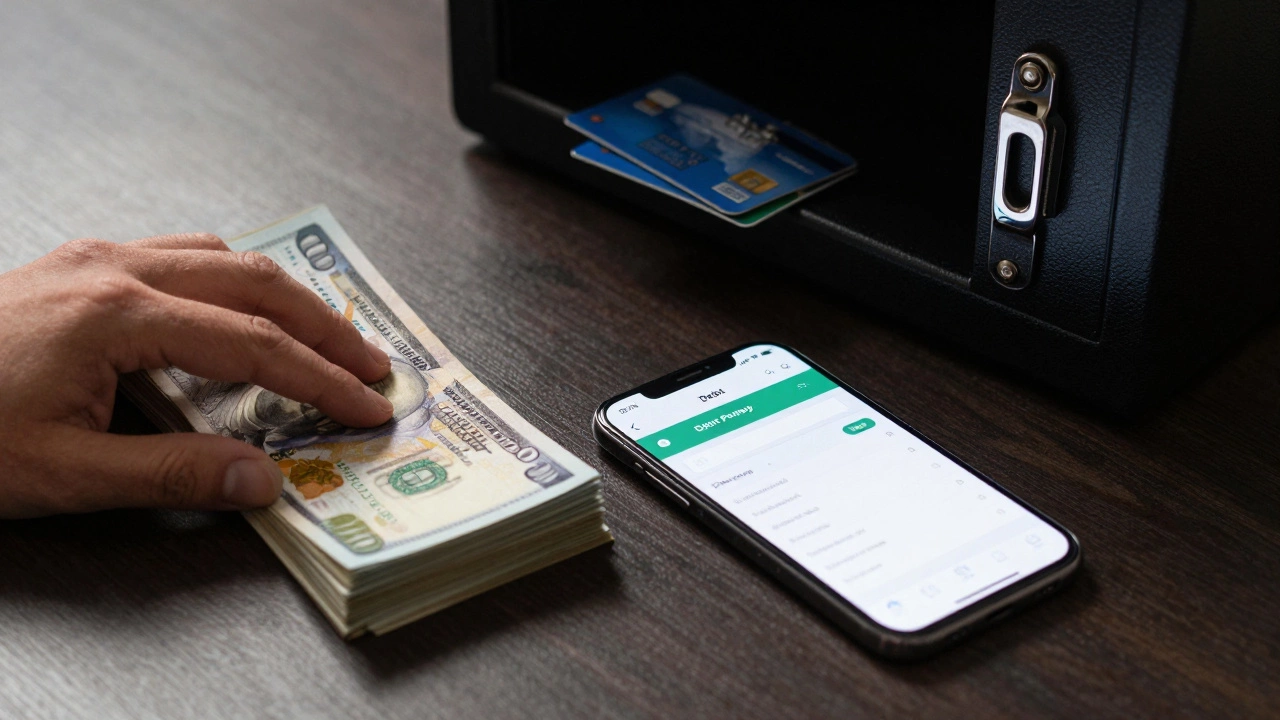
Stop adding to the debt
This is non-negotiable. If you keep charging $500 a month to your cards while trying to pay them off, you’re running in place. Close the cards. Not because you’re bad with money, but because your brain can’t handle temptation. You don’t need them. Use cash or a debit card. Set up automatic transfers to a savings account so you’re not tempted to spend it.Cancel subscriptions you don’t use. Gym memberships, streaming services, apps you forgot about. The average Canadian spends $112 a month on unused subscriptions. That’s $1,344 a year you can redirect to debt.
Make a realistic budget-then break it
You need to free up $2,500 a month to pay off $30,000 in 12 months. That’s $30,000 ÷ 12. But you also have to cover rent, groceries, utilities, and transportation. So how do you get there?Start with your take-home pay. Subtract essentials: rent, groceries, gas, insurance, phone. What’s left? That’s your debt payment pool. If it’s $1,200, you’re short $1,300. Now, look for areas to cut:
- Switch to a cheaper phone plan (save $40/month)
- Cook at home instead of eating out (save $300/month)
- Use public transit or carpool instead of driving (save $150/month)
- Sell unused gear-electronics, tools, clothes (one-time $800)
- Pick up a side gig-delivery, tutoring, freelance work (add $600/month)
That’s $1,130 extra. Add your $1,200, and you’re at $2,330. Close. Now, sell that old TV or bike. Pick up one extra shift a week. You’ll hit $2,500. It’s not easy. But it’s possible.
Use the avalanche method-not snowball
There are two popular ways to pay debt: avalanche and snowball. Snowball says pay off the smallest balance first for quick wins. Avalanche says pay off the highest interest rate first to save money.For $30,000 in one year, avalanche wins. Every dollar you save on interest is a dollar you can put toward the next debt. Here’s how it works:
- List debts by interest rate, highest to lowest.
- Pay minimums on all debts except the one with the highest rate.
- Pour every extra dollar into that highest-rate debt.
- When it’s gone, roll that payment into the next highest-rate debt.
In our example:
- First: $4,000 card at 24% → pay $2,500/month until gone (about 1.6 months)
- Then: $12,000 card at 22% → now pay $2,500 + $120 = $2,620/month (about 4.6 months)
- Then: $8,000 loan at 11% → pay $2,500 + $250 = $2,750/month (about 2.9 months)
- Last: $6,000 medical debt at 0% → pay $2,500 + $150 = $2,650/month (about 2.3 months)
Total time: 11.4 months. You’ll save over $4,000 in interest compared to paying minimums. And you’ll be debt-free before year’s end.
Consolidate if it lowers your rate
If you have good credit (680+), a debt consolidation loan could help. You combine all debts into one loan with a lower interest rate. But only do this if the rate is at least 3-5% lower than your average current rate.For example, if you qualify for a 9% personal loan for $30,000 over 12 months, your monthly payment would be $2,600. That’s less than the $2,750 you’d pay on the 24% card alone. And you’d cut your interest from over $5,000 to just $1,400.
But here’s the trap: if you consolidate but keep using your credit cards, you’ll end up with $60,000 in debt. That’s why consolidation only works if you close the accounts. And if your credit score is below 650, you won’t qualify for a good rate. In that case, skip it.
Use windfalls wisely
Tax refunds, bonuses, rebates, gifts-any extra cash goes straight to debt. No exceptions. If you get a $2,000 tax refund? Apply it to the highest-rate debt. Got a $500 birthday check? Same thing. Even $100 from selling old books adds up. Over a year, those add up to $3,000-$5,000. That’s 10-15% of your goal.Track progress weekly
You don’t need fancy apps. Just a notebook or spreadsheet. Every Sunday, write down:- How much you paid this week
- What your balance is now
- How much you saved in interest this week
Seeing the numbers drop is motivation. It’s not about being perfect. It’s about being consistent. Miss a week? Pay double next week. Don’t quit.
What if you can’t afford ,500/month?
If your income is too low to hit $2,500, you need to increase it. There’s no shortcut. Work more hours. Get a second job. Rent out a room. Start a side hustle. Even $500 extra a month cuts your timeline from 12 to 18 months. That’s still better than dragging it out for five years.And if you’re truly stuck? Talk to a nonprofit credit counsellor. In Canada, organizations like Credit Canada or Debt Help Canada offer free advice. They can help you set up a Debt Management Plan (DMP). That’s not bankruptcy. It’s a negotiated plan where creditors lower your interest rates so you can pay off faster. You pay one monthly payment to them, and they distribute it. Fees are low-usually $25-$50/month. And they stop collection calls.
What happens if you fail?
If you miss a payment or fall behind, don’t panic. Don’t ignore it. Call your creditor. Most will work with you if you reach out early. Ask for a hardship plan. Even a 3-month pause or reduced payment can keep you on track without wrecking your credit.And if you’re thinking about bankruptcy? It’s an option-but it’s a last resort. It stays on your credit report for 6-7 years. You’ll lose access to credit cards, mortgages, even some jobs. It’s not a reset button. It’s a scar.
You can do this
$30,000 in one year isn’t about being rich. It’s about being relentless. It’s about choosing your future over your comfort today. You won’t go out to dinner. You won’t buy new clothes. You’ll skip the vacation. But in 12 months, you’ll own your money. No more stress. No more calls from collectors. No more waking up dreading your balance.Start today. List your debts. Close one card. Cut one expense. Make one extra dollar. That’s how it begins.
Can I pay off $30,000 debt in one year with minimum payments?
No. Minimum payments on $30,000 of high-interest debt would take 10-15 years to pay off and cost over $20,000 in interest. You need to pay significantly more than the minimum-usually $2,500 or more per month-to clear it in 12 months.
Is debt consolidation a good idea for $30,000?
Only if you qualify for a loan with a rate at least 3-5% lower than your current average interest. A 9% consolidation loan can save you thousands. But if you keep using your credit cards after consolidating, you’ll end up deeper in debt. Consolidation works only if you change your spending habits.
What’s the fastest way to pay off debt?
The avalanche method: pay off the debt with the highest interest rate first while making minimum payments on the rest. This saves the most money on interest. For $30,000 in high-interest debt, this method can cut your payoff time to under a year and save you over $4,000 compared to paying minimums.
How do I find extra money to pay debt?
Cut unnecessary spending-subscriptions, dining out, impulse buys. Sell unused items like electronics, tools, or clothes. Pick up a side gig-delivery, tutoring, freelance work. Even $500 a month extra can make the difference between failing and succeeding. Budgeting apps like YNAB or Mint can help track where your money goes.
Should I use my savings to pay off debt?
If you have emergency savings under $1,000, don’t touch it. But if you have $3,000-$5,000 sitting in a low-interest account, using part of it to pay off high-interest debt makes sense. For example, paying off a 22% credit card with $3,000 in savings saves you $660 a year in interest. That’s a 22% guaranteed return-better than any investment.
What if I lose my job while paying off debt?
Contact your creditors immediately. Most offer hardship programs: reduced payments, temporary pauses, or lower interest. Don’t wait until you miss a payment. Also, apply for Employment Insurance (EI) if you’re eligible. Use your emergency fund if you have one. Your priority is to avoid defaulting, which hurts your credit for years.
Will paying off $30,000 debt improve my credit score?
Yes-significantly. Paying off credit card debt lowers your credit utilization ratio, which makes up 30% of your score. Once you’re at 0% utilization, your score can jump 50-100 points. On-time payments also help. The effect is immediate once the balance is reported as paid in full.
Can I do this without a side job?
It’s extremely difficult. To pay $30,000 in 12 months, you need to pay $2,500 a month. If your expenses are $2,000 and your income is $3,000, you have $1,000 left. That’s not enough. You need to either increase your income or cut expenses drastically. Most people who succeed have a side hustle or sell assets. It’s not about being lucky-it’s about being resourceful.
How do I avoid falling back into debt after paying it off?
Keep your budget. Build a $1,000-$2,000 emergency fund. Use cash or debit for daily spending. Only use credit cards if you pay them off in full every month. Treat your money like a tool-not a toy. Debt isn’t a one-time problem-it’s a habit. Break the habit, and you’ll stay free.
Are there government programs to help pay off debt in Canada?
No direct grants or forgiveness programs exist for personal debt. But nonprofit credit counsellors offer free Debt Management Plans (DMPs) that negotiate lower rates with creditors. Some provinces offer financial literacy programs or small grants for low-income residents. Check with your local community centre or non-profit agencies like Credit Canada or the Financial Consumer Agency of Canada.