
Is Crypto Good for the Poor? A Realistic Guide to Financial Freedom
 Nov, 15 2026
Crypto Affordability & Risk Calculator
Enter your monthly financial details to see if you are ready to allocate funds to high-risk assets like cryptocurrency.
Your Financial Snapshot
Fill out the form to calculate your safe crypto allocation.
$0
Recommended Monthly Crypto Allocation
Why This Matters
According to financial best practices, speculative assets like cryptocurrency should only be purchased with money you can afford to lose completely. This tool prioritizes building an emergency fund (3-6 months of expenses) before allocating 1-5% of disposable income to high-risk investments.
You’ve heard the stories. Someone bought a slice of pizza for 10,000 Bitcoin in 2010, and today that same amount could buy them a small island. It’s tempting to think that cryptocurrency is the great equalizer, the one asset class where someone with $50 can compete with Wall Street. But here’s the uncomfortable truth: while crypto offers high potential returns, it also carries risks that can wipe out savings faster than you can blink. For people with limited disposable income, the question isn’t just "can I get rich?" but "can I afford to be wrong?"
This guide breaks down whether digital assets make sense when every dollar counts. We’ll look at accessibility, volatility, and the hidden costs that often get overlooked in the hype cycle.
The Promise of Financial Inclusion
Traditional banking has a reputation problem, especially among lower-income communities. High fees, minimum balance requirements, and lack of access to branches create barriers. This is where Bitcoin was born. The original whitepaper by Satoshi Nakamoto explicitly mentioned solving issues related to trust and intermediaries. For many, crypto represents a decentralized financial system that requires nothing more than a smartphone and an internet connection.
If you live in a rural area or a neighborhood without bank branches, opening a brokerage account might take weeks. Downloading a wallet app takes minutes. This speed matters. If you’re paid weekly and need to move money immediately to avoid overdraft fees, the ability to send value globally without waiting three business days is a genuine utility. However, utility doesn’t always equal investment return. You have to separate the tool from the speculation.
Volatility: The Double-Edged Sword
Let’s talk about the elephant in the room: price swings. Ethereum, the second-largest cryptocurrency, has seen drops of over 80% within a single year multiple times since its launch. Imagine putting your rent money into an asset, and two months later, half of it is gone because of a regulatory rumor or a tech glitch.
For wealthy investors, a 50% drop is a tax-loss harvesting opportunity or a chance to buy more. For someone living paycheck to paycheck, a 50% drop is a crisis. It means skipping meals, delaying car repairs, or borrowing from friends. The psychological toll of watching your net worth fluctuate wildly can lead to panic selling, which locks in losses. If you cannot stomach seeing your account balance cut in half without losing sleep, crypto is likely not the right vehicle for your emergency fund.
The Cost of Entry and Hidden Fees
Many beginners think buying crypto is free. It’s not. When you use centralized exchanges like Coinbase or Binance, you pay trading fees. More importantly, if you want to move your coins off the exchange to secure them yourself, you pay network fees (gas fees). On Ethereum, these fees can spike to $20-$50 per transaction during busy periods. If you are investing $50, a $20 fee eats up 40% of your capital instantly. You start deep in the red before the market even moves.
There is also the spread-the difference between the buy and sell price. Exchanges profit from this gap. For small investors, frequent trading amplifies these costs. If you try to "time the market" with small amounts, you might find yourself working for the exchange rather than growing your own wealth. Dollar-cost averaging (buying a fixed amount regularly) helps mitigate timing risk but doesn’t eliminate fee drag.

Accessibility vs. Literacy
Having access to a tool doesn’t mean you know how to use it safely. Crypto literacy is low among the general population, let alone those focused on survival economics. Scams thrive in confusion. Phishing attacks, fake giveaways, and "rug pulls" (where developers abandon a project and run with investors' money) disproportionately target newcomers who don’t understand private keys or smart contracts.
Consider the concept of self-custody. "Not your keys, not your coins" is a popular mantra. It means if you leave your crypto on an exchange, you don’t truly own it; the exchange does. If they go bankrupt (like FTX did in 2022), you become an unsecured creditor. Recovering funds took years for many users. For a low-income investor, losing access to their entire savings due to a third-party failure is a catastrophic event. Traditional banks offer FDIC insurance (in the US) or CDIC protection (in Canada) up to certain limits. Most crypto platforms do not offer equivalent guarantees.
Comparing Investment Vehicles for Low-Income Investors
To make a clear decision, let’s compare crypto against other common options available to someone with limited capital. This table highlights key attributes relevant to financial stability.
| Feature | Cryptocurrency | S&P 500 Index Fund | High-Yield Savings |
|---|---|---|---|
| Minimum Investment | $1 - $10 | $1 - $100 (depending on platform) | $0 - $100 |
| Volatility Risk | Very High | Moderate | None |
| Liquidity | Instant (but fees apply) | 1-3 Days | Immediate |
| Insurance/Protection | Rarely Insured | SIPC Protection (brokerage) | FDIC/CDIC Insured |
| Historical Return Potential | Extremely Variable | ~10% Annual Average | Current Interest Rates |
Notice the pattern? Crypto offers the lowest barrier to entry and potentially highest rewards, but it lacks the safety nets that protect vulnerable savers. Index funds require slightly more patience and sometimes higher initial deposits, but they come with institutional protections and a long track record of growth tied to corporate earnings, not just sentiment.
When Crypto Might Actually Help
It’s not all doom and gloom. There are specific scenarios where crypto serves a functional purpose for lower-income individuals beyond speculation.
- Remittances: If you send money home to family in another country, traditional wire services charge 5-10% fees. Stablecoins (cryptocurrencies pegged to the US dollar) can reduce these costs significantly, though you still need to navigate local exchange rates upon receipt.
- Unbanked Populations: For those who cannot pass credit checks or open bank accounts due to past debt issues, crypto provides a way to store value digitally without a gatekeeper.
- Micro-Investing: Apps now allow you to buy fractions of Bitcoin with spare change. If you treat this as "funny money"-money you would otherwise spend on coffee-it can build a small portfolio without impacting your budget.
The key word here is allocation. Never put your rent money into crypto. Put your "coffee money" in. If you lose it, life goes on. If you win, you have a bonus. This mindset shift protects your financial foundation while allowing for upside participation.
Tax Implications You Can’t Ignore
Many people forget that taxes apply to crypto gains. In Canada and the US, selling crypto for a profit triggers a taxable event. Even swapping one coin for another can count as a sale. If you trade frequently trying to catch small movements, you might end up with a tax bill larger than your actual cash gain. For low-income earners, navigating complex tax forms can be stressful and costly if you need professional help. Keep simple records. Use software designed for crypto tracking, or stick to a "buy and hold" strategy to minimize taxable events.
The Verdict: Is It Worth It?
So, is crypto good for the poor? The answer depends entirely on your definition of "good." If "good" means "guaranteed safety," then no. Traditional savings accounts and diversified index funds are superior for preserving capital. If "good" means "high-risk/high-reward lottery ticket with low entry cost," then yes, it has merit.
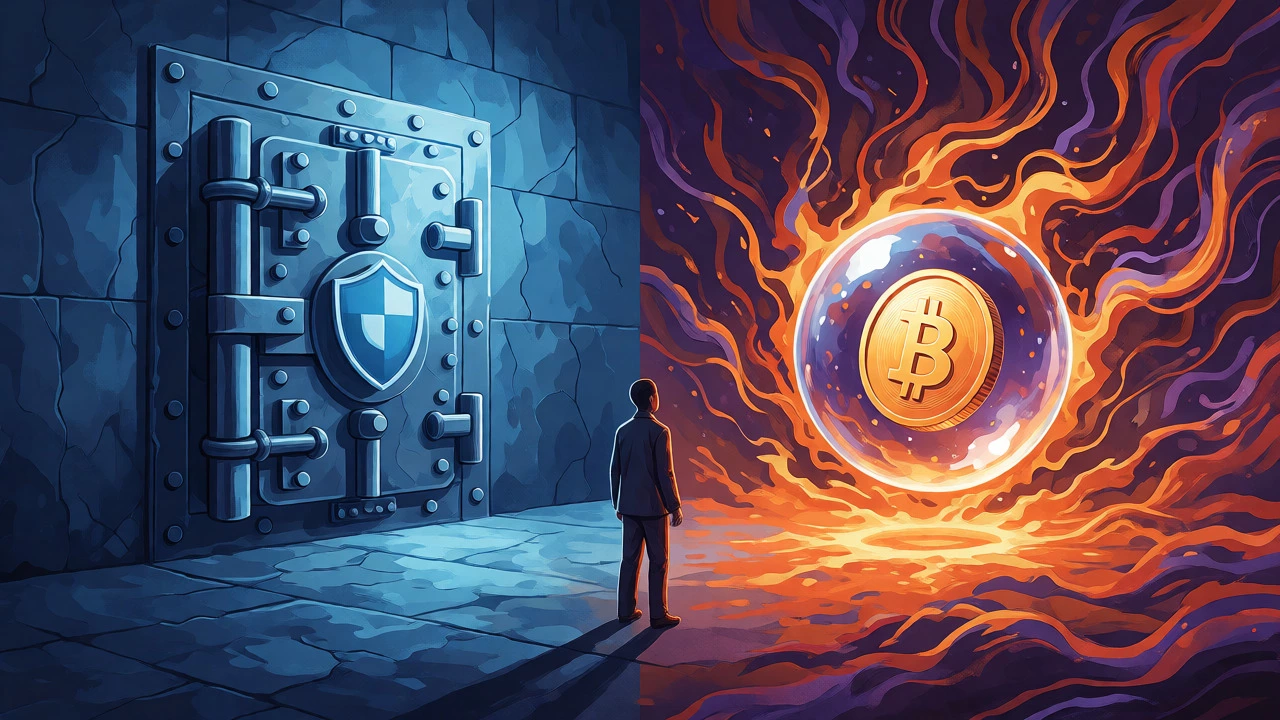
But here is the practical advice: Before you buy any cryptocurrency, ensure you have three months of basic expenses saved in a regular bank account. That is your shield. Only after that shield is built should you consider allocating a tiny percentage (1-5%) of your remaining disposable income to digital assets. Treat it as an experiment, not a retirement plan. The goal for low-income investors should first be stability, then growth. Crypto disrupts the former to chase the latter. Proceed with caution, keep your expectations realistic, and never invest money you need to survive.
Can I lose all my money in crypto?
Yes. Unlike stocks, which represent ownership in a company with assets, cryptocurrencies can theoretically go to zero if the network fails, loses relevance, or faces severe regulatory bans. Additionally, if you leave funds on an uninsured exchange that goes bankrupt, you may lose everything.
How much should a beginner with low income invest in crypto?
Financial experts generally recommend limiting speculative investments to 1-5% of your total portfolio. For someone with very little disposable income, this might mean $10-$50 a month. The critical rule is that this money must be surplus-funds you can afford to lose completely without affecting your bills or food budget.
Is Bitcoin safer than altcoins for poor investors?
Relatively speaking, yes. Bitcoin has the largest market cap, most liquidity, and longest history, making it less prone to sudden disappearance compared to smaller "altcoins." However, it is still highly volatile. Smaller coins offer higher potential returns but carry significantly higher risk of going to zero.
Do I need a computer to buy crypto?
No. Most major exchanges have mobile apps that allow you to buy, sell, and store crypto using just a smartphone. Some platforms even allow purchases via debit card directly in the app, making it accessible to those without desktop computers.
What are stablecoins and why do they matter?
Stablecoins are cryptocurrencies designed to maintain a stable value, usually pegged 1:1 to the US dollar. They matter for low-income users because they allow you to sit out market volatility without leaving the crypto ecosystem. You can park profits in stablecoins to avoid selling back to fiat currency and paying withdrawal fees.