
Understanding the 80 Percent Rule in Homeowners Insurance
 Apr, 16 2026
Homeowners Insurance 80% Rule Calculator
Quick Takeaways
- The 80 percent rule requires you to insure your home for at least 80% of its full replacement cost.
- If you fall below this threshold, the insurer can apply a "coinsurance penalty," paying only a fraction of your claim.
- Replacement cost is different from market value; it's what it costs to rebuild from scratch.
- Updating your policy as construction costs rise is the only way to avoid underinsurance.
What Exactly Is the 80 Percent Rule?
In the world of home insurance, 80 rule homeowners insurance is a coinsurance clause that mandates homeowners maintain dwelling coverage equal to at least 80% of the home's total replacement cost. It's designed to encourage people to insure their homes for a realistic amount, preventing the insurance company from taking on massive risks when a total loss occurs.
Now, here is where it gets tricky. Most people confuse "replacement cost" with "market value." Your market value includes the land, the neighborhood's popularity, and the current real estate bubble. Replacement cost, however, is strictly the price of labor and materials to rebuild your house on the same plot of land. If your house is worth $500,000 because it's in a trendy area, but it only costs $300,000 to actually build the structure, your 80% requirement is based on that $300,000 figure.
How the Coinsurance Penalty Works
If you meet the 80% threshold, the insurance company usually pays your partial losses in full (up to your policy limit). But if you drop below that 80% mark, you enter the danger zone of the Coinsurance Clause is a provision that penalizes policyholders who underinsure their property by paying a proportional percentage of the loss.
The formula they use is simple but brutal: (Amount of Insurance Carried / Amount of Insurance Required) x Amount of Loss = Payment.
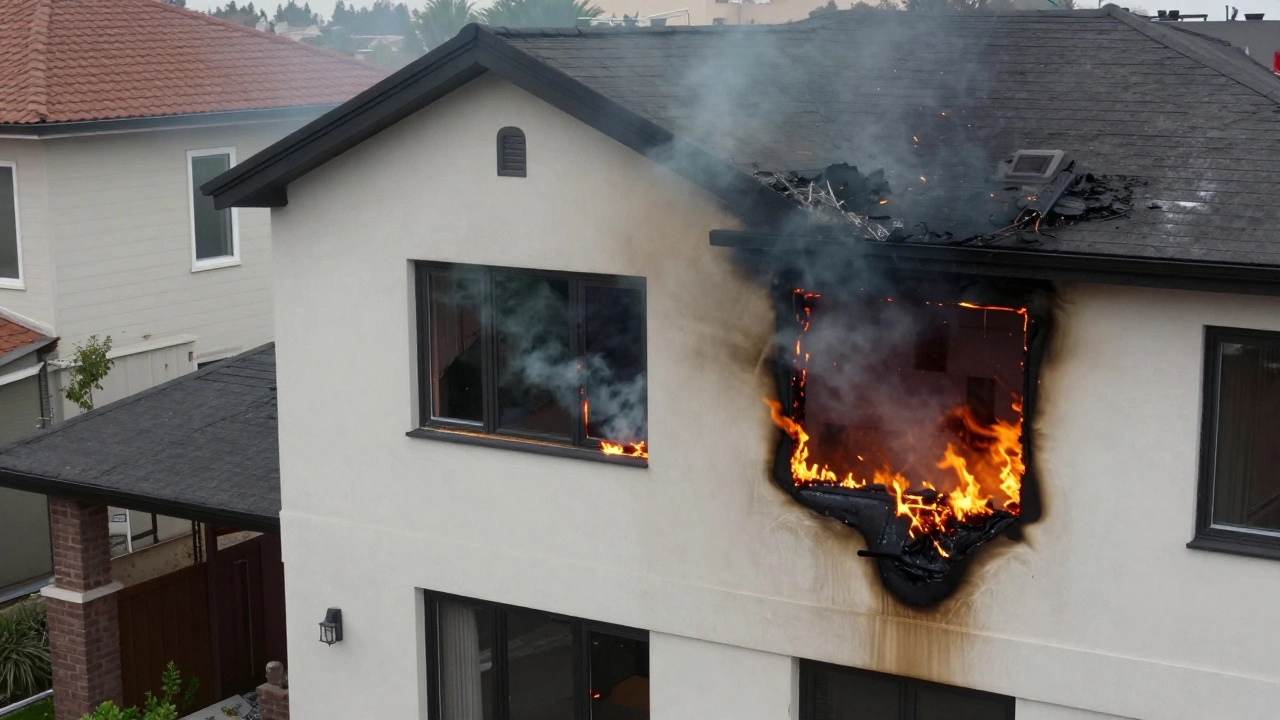
Let's look at a real-world scenario. Suppose your home costs $200,000 to replace. To satisfy the 80% rule, you need $160,000 in coverage. If you only carry $100,000 in insurance and suffer a $20,000 fire loss, the math looks like this: ($100,000 / $160,000) = 0.625. Then, 0.625 x $20,000 = $12,500. Despite having a $100,000 policy, you only get $12,500 for a $20,000 problem. You're eating $7,500 of the cost simply because you were underinsured.
| Coverage Amount | % of Replacement Cost | Rule Status | Payout on $20k Loss |
|---|---|---|---|
| $160,000 | 80% | Compliant | $20,000 |
| $120,000 | 60% | Non-Compliant | $15,000 |
| $80,000 | 40% | Non-Compliant | $10,000 |

The Danger of Underinsurance in a Changing Market
You might have been compliant when you signed your policy five years ago, but the world changes. Inflation is the general increase in prices and fall in the purchasing value of money, and it hits the construction industry hard. When the price of lumber, copper piping, and skilled electrical labor spikes, your replacement cost climbs.
If you haven't updated your Dwelling Coverage is the part of a homeowners insurance policy that covers the structure of the home and other permanent structures on the property , you might be slipping below that 80% mark without even knowing it. This is especially common for people who have added a deck, finished a basement, or upgraded to high-end quartz countertops. These improvements increase the cost to rebuild, meaning you need more insurance to stay compliant with the rule.
How to Protect Yourself from the Coinsurance Trap
Avoiding the 80% penalty isn't about guessing; it's about data. You shouldn't rely on your mortgage balance to determine your coverage. Your bank cares that the loan is covered, but that doesn't mean you're protected against the coinsurance penalty.
- Request a Replacement Cost Estimator (RCE): Ask your agent for a detailed RCE. This tool looks at local building codes, material costs in your specific zip code, and the square footage of your home to give a realistic rebuild price.
- Review After Major Renovations: Every time you add a room or upgrade your roof, call your agent. A new $20,000 roof increases the replacement cost of your home, which in turn raises the 80% threshold.
- Consider Extended Replacement Cost: Some policies offer an "extended" version that provides an extra 20% to 50% of coverage above the policy limit if costs skyrocket after a disaster. This acts as a safety net.
- Check the Policy Form: Ensure you have a "Replacement Cost" policy rather than an "Actual Cash Value" (ACV) policy. ACV subtracts depreciation, which can leave you even more short-handed during a rebuild.

Comparing Policy Types: Replacement Cost vs. Actual Cash Value
The 80% rule is most relevant when you're dealing with replacement cost. However, understanding the difference between these two models is critical for any homeowner.
Actual Cash Value is a valuation method that calculates the cost of an item minus depreciation based on its age and condition. If your 15-year-old roof is destroyed, an ACV policy pays what a 15-year-old roof is worth today-which isn't much. A replacement cost policy, however, pays to put a brand-new roof on your house, regardless of the old one's age. When you combine a replacement cost policy with a high enough coverage limit to satisfy the 80% rule, you have the strongest possible financial protection.
Does the 80 percent rule apply to the land value?
No, it does not. The 80 percent rule applies strictly to the dwelling-the physical structure of the home. Land cannot be "destroyed" by a fire or storm, so insurance companies do not include the market value of the land when calculating replacement costs.
What happens if my house is a total loss?
In the event of a total loss, the coinsurance penalty typically doesn't apply in the same way as a partial loss. The insurer will generally pay out the full limit of your policy, up to the replacement cost of the home. The "penalty" is most dangerous during partial losses, where you might expect a full payout for a small claim but receive a fraction instead.
Can I just insure my home for 100% to be safe?
Yes, and it's often the smartest move. Insuring for 100% of the replacement cost completely eliminates the risk of the coinsurance penalty. While your premium will be slightly higher, it's a small price to pay compared to the risk of losing thousands of dollars during a partial claim.
How often should I update my home's insurance valuation?
Ideally, you should review your coverage every 1 to 3 years. Construction costs can fluctuate wildly based on economic conditions. If you've done any significant home improvements, you should update your policy immediately.
Is the 80 percent rule standard across all insurance companies?
While it is extremely common in standard homeowners policies (like HO-3 policies), not every single company uses the exact same percentage. Some might have different coinsurance triggers. Always check your policy's "Conditions" section to see your specific requirement.
Next Steps for Homeowners
If you're worried about whether you're meeting the 80% threshold, don't wait for a disaster to find out. Your first move should be to gather your most recent policy declaration page and look for the "Dwelling Coverage" amount. Compare that number to the current cost of building a similar home in your neighborhood. If you're unsure, call your agent and specifically ask: "Am I carrying at least 80% of the current replacement cost of my home?" If the answer is no, or if they can't give you a straight answer, it's time to run a new Replacement Cost Estimator and bump up your coverage.