
What is a Credit Trap? How to Spot and Escape Debt Cycles
 Apr, 19 2026
Credit Trap Visualizer & Payoff Estimator
Analysis
Enter your details to see how the math works against you.
To understand this, we need to look at credit trap is a financial situation where a borrower is unable to pay off the principal balance of a loan or credit card because the interest charges and fees accrue faster than the payments can reduce the debt. When you're in this cycle, you're essentially paying for the privilege of staying in debt. It's a common feature of high-interest lending and often catches people who think they are doing the right thing by making the "minimum payment" every month.
The Math That Keeps You Stuck
Most people think that as long as they pay the minimum amount requested by the bank, they are in good standing. In reality, the minimum payment is often calculated to be just barely above the monthly interest charge. If your card has an Annual Percentage Rate ( APR ) of 24%, and you owe $5,000, your monthly interest is roughly $100. If your minimum payment is $110, you've only reduced your actual debt by $10. At that rate, it would take you decades to pay off the balance, and you'd end up paying thousands more than you originally borrowed.
This is where Compound Interest works against you. While compounding is great for a savings account, in a credit trap, it means you're paying interest on the interest that was added to your balance last month. If you miss a payment or add a small purchase to the card, the math shifts even further in the bank's favor, making the climb out of the hole even steeper.
Common Types of Credit Traps
Not all traps look the same. Some are obvious, while others are hidden in the fine print of a flashy offer. Here are the most frequent ways people get lured in:
- The Minimum Payment Loop: This is the classic version. You pay the minimum, the balance stays flat, and you feel like you're managing your money when you're actually just treading water.
- The 0% Intro Tease: You get a card with 0% interest for 12 months. You move a large balance there, but because there's no "pressure" to pay it off, you only pay small amounts. Once the promo ends, the rate jumps to 29%, and suddenly your monthly interest charge exceeds your usual payment.
- The Credit Limit Increase Trap: The bank offers you a higher limit. You feel wealthier, so you spend more. But as your Credit Utilization Ratio (the percentage of your available credit that you actually use) rises, you become more dependent on the card to cover basic expenses.
- Payday Loan Spirals: These are high-cost, short-term loans. Because the repayment is so aggressive (often the full amount plus a huge fee in two weeks), borrowers often take out a second loan to pay off the first one, creating a rapid downward spiral.
| Payment Strategy | Monthly Payment | Amount hitting Principal | Time to Pay Off | Total Interest Paid |
|---|---|---|---|---|
| Minimum Payment Only | ~$125 | ~$25 | 20+ Years | $10,000+ |
| Fixed Payment | $250 | ~$150 | ~2 Years | ~$1,300 |
How to Spot the Warning Signs
You might already be in a trap without realizing it. Look for these red flags in your monthly habits. First, check your statement. If the "Interest Charged" line is nearly the same as your "Minimum Payment Due," you're in the danger zone. Second, notice if you're using your credit card to pay for things you could never afford in cash, like groceries or gas, and then using the next month's credit limit to cover the gap.
Another sign is the "emotional relief" of a credit limit increase. When a bank gives you more room to spend, it's rarely a gift; it's an invitation to increase your debt load. If you find yourself thinking, "I have $2,000 more in available credit, so I can afford this new gadget," you're ignoring the fact that you're just borrowing more money at a high cost.
Proven Strategies to Break the Cycle
Getting out of a credit trap requires a shift from "managing" the debt to "attacking" it. You can't wish your way out of this; you need a mathematical plan. Here are the most effective methods:
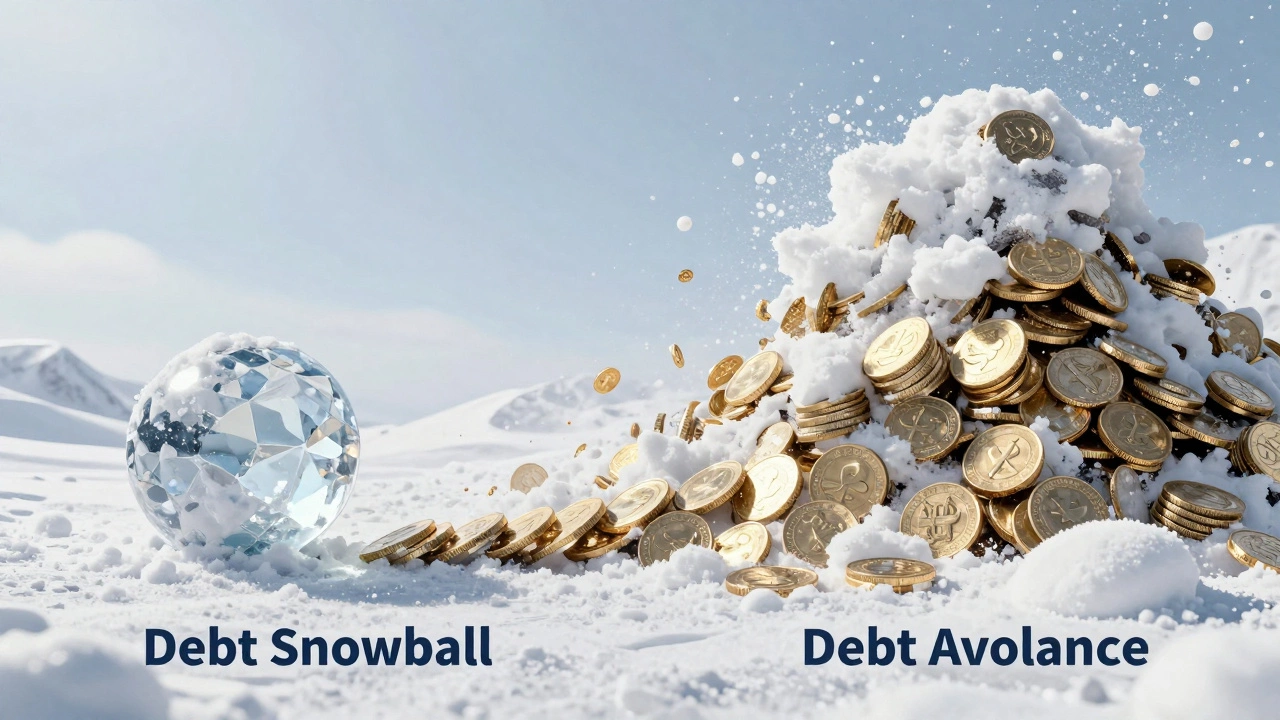
The Debt Avalanche Method
This is the most mathematically efficient way. You list all your debts and their interest rates. You pay the minimum on everything except the account with the highest interest rate. Every extra dollar you have goes toward that high-interest debt. Once that's gone, you move to the next highest. This minimizes the total amount of interest you pay over time.
The Debt Snowball Method
If you struggle with motivation, try this. Focus on the smallest balance first, regardless of the interest rate. Paying off a small $300 card quickly gives you a psychological win. That feeling of success fuels you to tackle the next larger balance. While it costs slightly more in interest, the momentum often prevents people from giving up.
Consolidation via Personal Loans
If you have a decent credit score but are trapped by 25% APR cards, a Personal Loan can be a lifeline. You take out one loan at, say, 10% APR to pay off all your cards. Now you have one fixed monthly payment that actually reduces the principal, and you've effectively cut your interest cost in half.

Avoiding Future Traps
Once you're free, the goal is to stay that way. This starts with changing your relationship with the "minimum payment." Treat that number as a trap, not a target. Always aim to pay the full balance. If you can't, pay as much as possible. If you only pay the minimum, you aren't using credit; you're renting money at an exorbitant price.
Also, be wary of Balance Transfers. While transferring a balance to a 0% card can help, it only works if you have a strict repayment plan. If you use a balance transfer to "hide" the debt while continuing to spend on the old cards, you've just created a bigger, more complex trap.
Finally, build an emergency fund. Most people fall into credit traps because a sudden car repair or medical bill forces them to rely on credit. Even a small savings cushion of $1,000 can prevent a temporary crisis from becoming a permanent debt cycle.
Is a credit trap the same as being bankrupt?
No. Being in a credit trap means you are struggling to make progress on your debt, but you are still making payments. Bankruptcy is a legal process used when you can no longer make those payments and need your debts discharged or restructured. A credit trap is the stage that often leads to bankruptcy if left unchecked.
Can I get out of a credit trap without a loan?
Absolutely. Using the Debt Avalanche or Snowball methods allows you to pay off debt using your own income. The key is to stop adding new charges to the cards and commit every extra cent to the principal balance.
Why do banks set minimum payments so low?
Banks make money from interest. By setting a low minimum payment, they ensure you stay in debt longer, which maximizes the amount of interest they collect from you over the life of the loan.
Does paying only the minimum affect my credit score?
Making minimum payments prevents you from defaulting, so your score won't tank like it would if you missed a payment. However, your Credit Utilization Ratio will remain high because your balance isn't decreasing, which can actually lower your overall credit score.
What is the fastest way to break a credit trap?
The fastest way is usually a combination of cutting all unnecessary spending, using the Debt Avalanche method to target high-interest rates, and potentially consolidating high-interest debt into a lower-interest personal loan.
Next Steps for Your Recovery
If you're feeling overwhelmed, start by listing every single debt you owe, the current balance, and the APR. Once the numbers are on paper, the "trap" becomes a math problem that can be solved. If you find that your income simply isn't enough to cover the minimums, consider speaking with a non-profit credit counseling agency. They can often negotiate lower rates with your creditors on your behalf.
For those who have already cleared their debt, the next step is creating a "buffer." Instead of putting that extra payment money back into your spending budget, move it into a high-yield savings account. The goal is to reach a point where you never have to rely on high-interest credit for an emergency ever again.