
What is the #1 Rule of Budgeting? The Truth About Tracking Every Penny
 Jul, 9 2026
Zero-Based Budget Planner
Income & Expenses
Enter your details on the left and click 'Calculate Budget' to see your zero-based budget analysis.
Most people think the secret to getting rich is earning more money. They chase promotions, side hustles, and investment tips while their bank accounts stay stubbornly flat. But here is the uncomfortable truth: you cannot manage what you do not measure. If you are looking for a single, golden rule that fixes broken finances, it isn't about cutting out coffee or selling your car. It is this: track every single dollar.
It sounds boring. It sounds tedious. And honestly, it is. But tracking your spending is the only way to bridge the gap between your income and your actual lifestyle. Without this data, you are just guessing where your money goes. With it, you gain control.
The Myth of the 'Perfect' Budget
We have all seen the pie charts online. Thirty percent for housing, twenty percent for food, ten percent for fun. These rules look clean on paper, but they fall apart in real life. Why? Because they assume everyone earns enough to fit into those boxes. If you make $40,000 a year in Toronto, paying 30% for rent leaves you with almost nothing for groceries, let alone savings.
The problem with rigid percentage rules is that they focus on allocation before awareness. You might decide to save 10%, but if you don't know that you spent $600 on takeout last month, that 10% comes from thin air. The first step isn't deciding where money should go; it is finding out where it actually went. This is why tracking is the foundational layer of any successful financial plan.
Why Awareness Changes Behavior
Human brains are wired for short-term gratification. We buy the snack now because it tastes good. We ignore the bill later because it hurts to pay. This disconnect is called the 'pain of paying,' and it gets worse when we use credit cards or digital wallets. Swiping a card feels like free money until the statement arrives.
When you start tracking every expense, you reconnect the action with the consequence. Writing down that $5 latte makes you feel the loss immediately. Studies in behavioral economics show that people who manually log expenses spend significantly less on discretionary items than those who rely on memory or automated apps alone. It’s not about punishment; it’s about visibility. You can’t fix a leaky pipe if you can’t see the water dripping.
How to Track Without Losing Your Mind
You do not need to become an accountant to follow the number one rule of budgeting. In fact, over-complicating it is the fastest way to quit. Here is how to build a system that sticks:
- Start with a simple tool. A notebook, a spreadsheet, or a basic app works fine. Do not spend weeks setting up complex categories. Just get started.
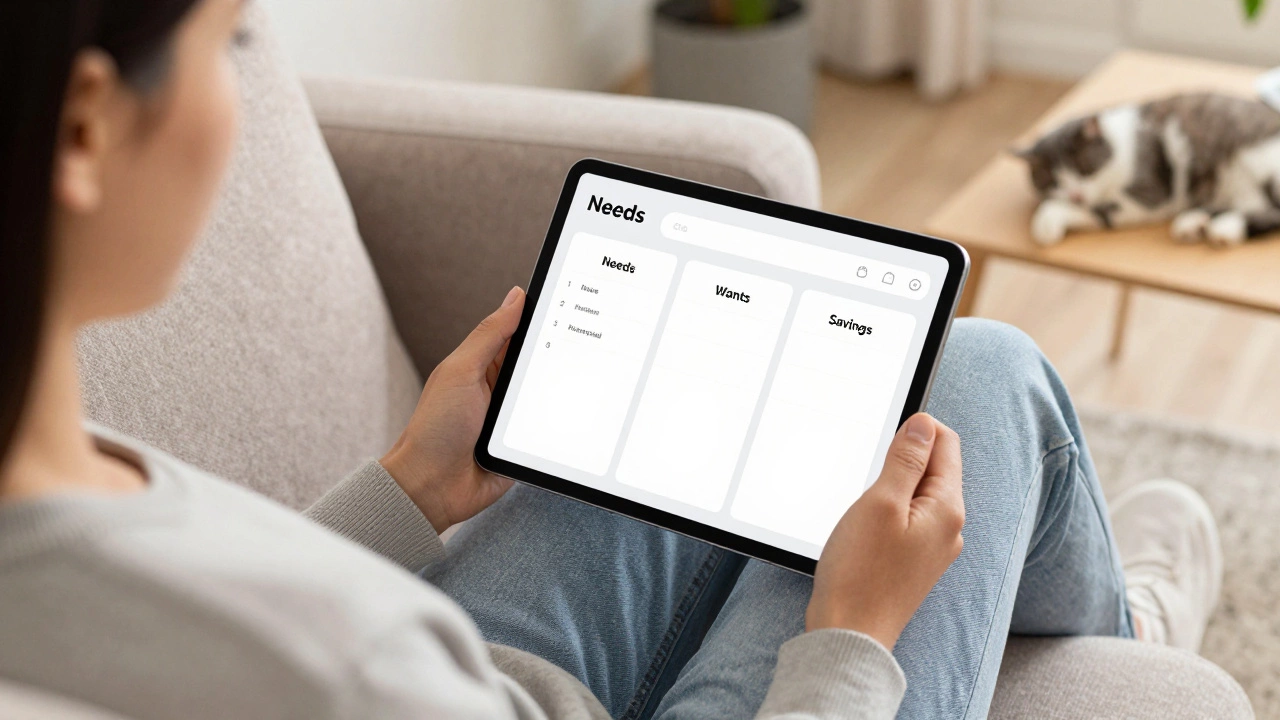
- Categorize broadly at first. Use three buckets: Needs (rent, utilities, groceries), Wants (dining out, entertainment), and Savings/Debt Repayment. You can split these later once you have data.
- Review weekly, not monthly. Waiting 30 days to check your spending allows small leaks to become floods. Ten minutes every Sunday night to review the past week keeps you honest.
- Be brutally honest. Did you buy alcohol? Log it. Did you impulse-buy shoes? Log it. Hiding transactions defeats the purpose entirely.
The goal is consistency, not perfection. If you miss a day, just log it the next morning. The habit matters more than the precision.

From Tracking to Zero-Based Budgeting
Once you have tracked your spending for two or three months, you will notice patterns. Maybe you spend more on subscriptions than you thought. Maybe dining out costs twice as much as cooking at home. This data allows you to move from passive tracking to active planning.
This is where Zero-Based Budgeting comes in. Unlike traditional budgeting, which sets aside money for bills and saves whatever is left, zero-based budgeting gives every dollar a job before the month begins. Income minus expenses equals zero. If you earn $3,000, you allocate exactly $3,000 across bills, savings, and fun. Nothing is left floating in checking account limbo.
But you cannot do zero-based budgeting effectively without the historical data from your tracking phase. You need to know your average grocery bill to allocate realistically. You need to know your true utility costs to avoid shortfalls. Tracking provides the accuracy; zero-based budgeting provides the structure.
Common Pitfalls That Kill Budgets
Even with the best intentions, most budgets fail within six months. Here is why:
| Pitfall | Why It Happens | Solution |
|---|---|---|
| Underestimating variable costs | Using last month's low numbers as a baseline | Use a 3-month average for volatile expenses |
| No fun money | Feeling deprived leads to binge spending | Allocate 5-10% strictly for guilt-free spending |
| Ignoring irregular bills | Car insurance or holidays appear unexpectedly | Create sinking funds for annual/quarterly costs |
| Over-categorization | Spending more time logging than living | Keep categories broad; merge similar items |
The biggest mistake is treating a budget as a prison. It should be a permission slip. When you know you have $50 allocated for dining out, you can enjoy that dinner without anxiety. When you hit the limit, you stop. This clarity reduces stress rather than increasing it.
The Role of Automation in Modern Budgeting
In 2026, technology has made tracking easier than ever. Apps like Mint, YNAB (You Need A Budget), and Monarch Money connect directly to your bank accounts. They categorize transactions automatically and send alerts when you exceed limits. This removes the friction of manual entry.
However, automation has a downside: complacency. If the app does the work, you might stop paying attention. You still need to review the categories. Was that $80 charge really 'groceries' or was it a mix of wine and snacks? Automated tags are often wrong. The human eye must verify the data. Use tech as a tool, not a replacement for mindfulness.
Building Long-Term Financial Health
Tracking every dollar is not forever. It is a diagnostic phase. Once you have controlled your spending habits and built an emergency fund, you can relax the intensity. You might switch to monthly reviews instead of daily logs. You might automate transfers to savings so you never see the money.
But the foundation remains the same: awareness. Even wealthy individuals track their net worth and cash flow. The difference is scale. For most of us, mastering the small dollars builds the discipline needed to manage the large ones. Whether you are paying off student loans, saving for a house in Canada, or planning for retirement, the journey starts with knowing exactly where your money is today.
Is it really necessary to track every single purchase?
Yes, especially when you are starting out. Tracking every purchase reveals hidden spending habits and helps you understand your true financial behavior. Over time, you can reduce the frequency, but initial strictness builds lasting discipline.
What is the best app for budgeting in 2026?
Popular options include YNAB for proactive zero-based budgeting, Monarch Money for detailed analytics, and Simplifi by Quicken for simplicity. The best app is the one you will actually use consistently.
How long does it take to see results from tracking spending?
Most people see immediate awareness changes within the first week. Significant spending reductions typically appear after one to three months of consistent tracking and adjustment.
Can I budget if I have an irregular income?
Yes. Freelancers and gig workers should base their budget on their lowest expected monthly income. Any extra earnings go directly to debt repayment or savings. Tracking is even more critical for irregular incomes to smooth out cash flow fluctuations.
What should I do if I overspend in a category?
Don't panic. Adjust other flexible categories to cover the shortfall, or accept that you will have less for another area this month. Use it as learning data to adjust next month's allocations rather than quitting the budget entirely.