
What Is the Best Time of Year to Buy a Car in 2026?
 Feb, 8 2026
Car Purchase Savings Calculator
Based on the article's analysis, timing your car purchase can save you significant money. Calculate your potential savings below.
Potential Savings
Buying a car isn't just about finding the right model-it's about timing. If you're planning to buy a car in 2026, waiting for the right moment can save you thousands. It's not magic. It's numbers. Dealerships have quotas, inventory limits, and year-end targets. And when those deadlines loom, prices drop. Here’s exactly when to pull the trigger.
December is the best month to buy a car
Every year, dealerships are under pressure to hit their sales targets before December 31. That pressure doesn't come from managers-it comes from corporate headquarters. If a dealership misses its annual quota, they lose bonuses, incentives, and sometimes even floor plan financing. That means they'll do almost anything to move inventory.
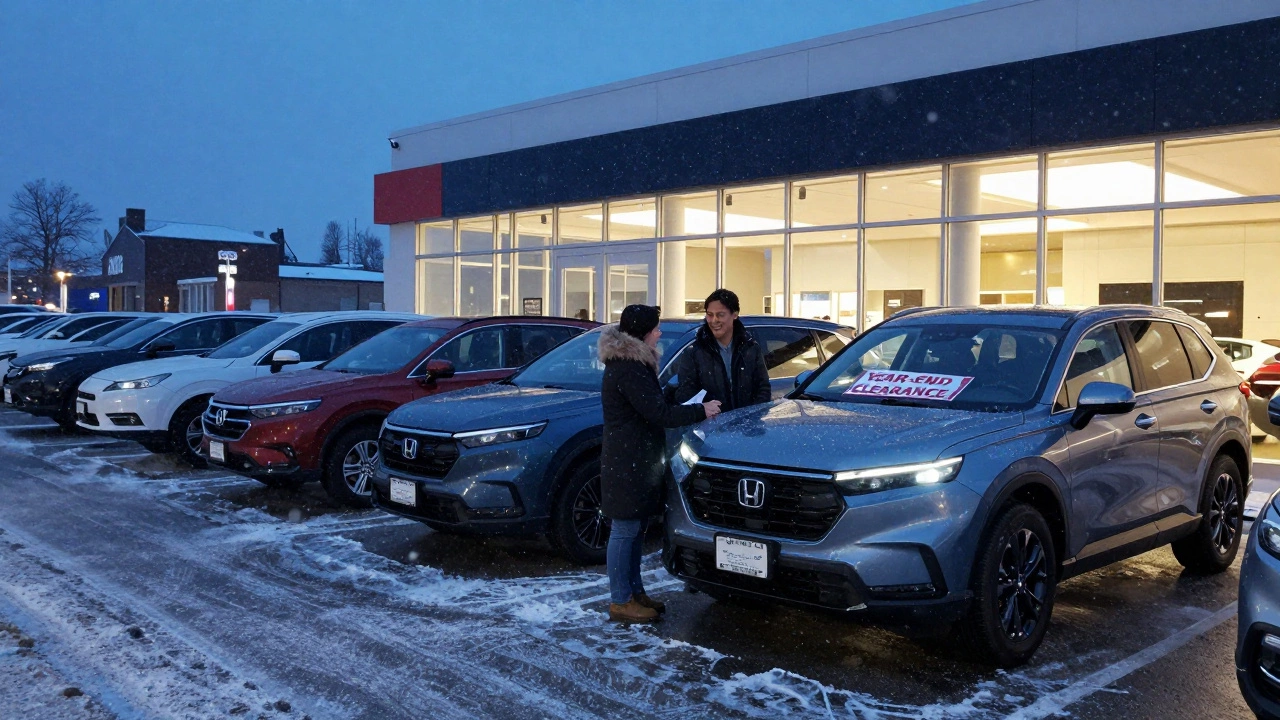
In Toronto, December is the worst month for car shopping if you're looking for selection. Snow, ice, and short daylight hours keep most buyers away. But for you? That’s the sweet spot. Dealers have excess inventory from the fall, and they’re desperate to clear it before the new year. You’ll see discounts of 8% to 15% off MSRP on last year’s models. Some dealers even throw in free maintenance packages or extended warranties just to close the deal.
Don’t assume all dealers are equal. Smaller independent dealers often have bigger discounts than big franchise chains. Why? They don’t have corporate overhead to answer to. They just need to make rent and pay their staff. If you walk into a small dealership on December 20 with a pre-approved loan, you’re in a strong position.
End-of-month sales are better than end-of-year
December isn’t the only good time. The last few days of any month are prime for negotiation. Salespeople have monthly quotas, too. If they’re at 92% of their goal by the 28th, they’ll bend over backward to close one more sale before the clock hits midnight.
Here’s a real example from a Toronto buyer in 2025. They were looking at a 2025 Honda CR-V. On the 27th of June, the salesperson told them the car was “almost sold.” But when they returned on the 30th, the same salesperson offered $2,200 off and free roadside assistance for two years. Why? Because they needed to hit their monthly target. That’s not an exception-it’s standard practice.
Don’t wait until the last day unless you’re ready to walk away. The best window is the 25th through the 30th. Salespeople are still motivated, and managers are more likely to approve extra discounts to get the sale done.
Model year changes mean big savings
Every August to October, dealerships start clearing out the current year’s models to make room for the next year’s inventory. That’s when you’ll see the biggest markdowns on cars that are still brand new.
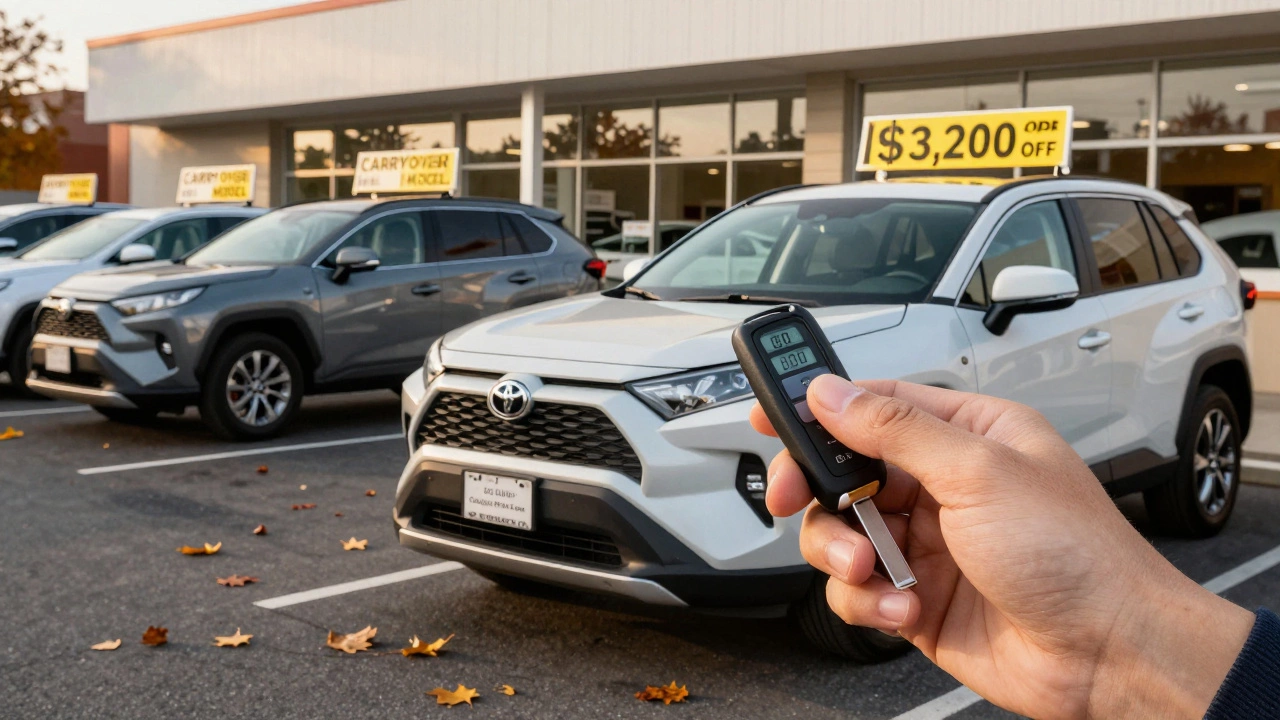
Let’s say you’re eyeing a 2026 Toyota RAV4. In July, it’s still priced like a 2026 model. By September, it’s already tagged as “2026.5” or “carryover model.” Dealers are trying to avoid holding onto inventory for more than 60 days. Why? Because financing costs pile up. Each day a car sits on the lot, it costs the dealer $10-$20 in interest. After 90 days, they’re losing real money.
By October, you’ll often find 2026 models with discounts of $3,000 or more compared to their original MSRP. The cars are still new-low mileage, factory warranty intact. You’re not buying last year’s model. You’re buying this year’s model, just a few months early.
Black Friday and holiday weekends matter
Black Friday isn’t just for TVs anymore. Since 2020, automakers have rolled out national promotions tied to the holiday weekend. In 2025, Ford, Chevrolet, and Hyundai offered 0% financing for 84 months, $1,000 cash back, or both. These deals are usually available nationwide, not just at a few select dealers.
But here’s the catch: these deals are often tied to specific models. You won’t get the best offer on a luxury SUV. You’ll get it on mid-size sedans, compact crossovers, or trucks with high inventory. In Toronto, the 2025 Hyundai Kona and 2025 Kia Sportage saw record sales on Black Friday. Why? Because the financing terms were unbeatable.
Don’t assume Black Friday is the best day. Often, the deals start on the Wednesday before and run through the Sunday after. If you’re flexible, you can shop for three days and still get the same discount.
What to avoid: January and early spring
January is the worst time to buy a car. Why? Because everyone else just bought one. New car sales spike in December, and then they drop off. Dealers are flush with cash, and they don’t need to discount. Inventory is low. And you’re competing with people who got tax refunds and holiday bonuses.
February and March aren’t much better. The new model year has just arrived. Dealers are still paying off their floor plan loans. They’re not in a hurry to sell. And you? You’re still paying full price.
Even if you see a “New Year Sale” sign, it’s usually just a marketing trick. The discount might be $200. That’s not a deal-that’s a coffee cup.
How to use timing to your advantage
Timing matters, but so does preparation. Here’s how to make sure you’re ready when the right moment hits:
- Get pre-approved for a loan before you shop. Banks and credit unions often offer lower rates than dealerships. In Canada, credit unions like Desjardins or Vancity often beat bank rates by 0.5% to 1.5%.
- Know the invoice price. Use tools like Edmunds or Kelley Blue Book to see what the dealer actually paid. You’re not trying to beat the MSRP-you’re trying to beat the invoice.
- Check inventory online. Most dealerships list their stock. Look for cars with 45+ days on the lot. Those are the ones they’ll discount.
- Don’t mention trade-ins until after you’ve negotiated the price of the new car. If you bring up your old car too early, they’ll bundle it into the deal and hide the discount.
- Be ready to walk away. If they say “That’s the best I can do,” ask for the sales manager. Managers have more authority to approve discounts, especially near month-end or year-end.
What about electric vehicles?
EVs follow the same pattern-but with a twist. In Canada, federal and provincial rebates expire or change at the end of the calendar year. Ontario’s $5,000 EV rebate, for example, resets on January 1. So if you’re buying an EV in December, you’re not just getting a dealer discount-you’re getting the full government incentive.
But here’s the catch: EV inventory is tighter than gas cars. Popular models like the Tesla Model Y or Hyundai Ioniq 5 often sell out by November. If you want one, you need to start looking in August. That means you’re not waiting for the end of the year-you’re buying early to lock in the rebate.
For EVs, the best window is late October to mid-November. You get the rebate, the dealer discount, and still have time to take delivery before year-end.
Final tip: Don’t rush the decision
Waiting for the perfect time doesn’t mean you should sit on your hands for months. If you find a car with a 12% discount in September, and it’s exactly what you want, take it. The best deal isn’t always the lowest price-it’s the one that meets your needs now.
But if you can wait until December, or even the last week of the month? You’ll almost always come out ahead. The numbers don’t lie. Dealers have to move cars. And when they do, they’ll give you a better deal than you think.
Is it better to buy a car at the end of the year or the end of the month?
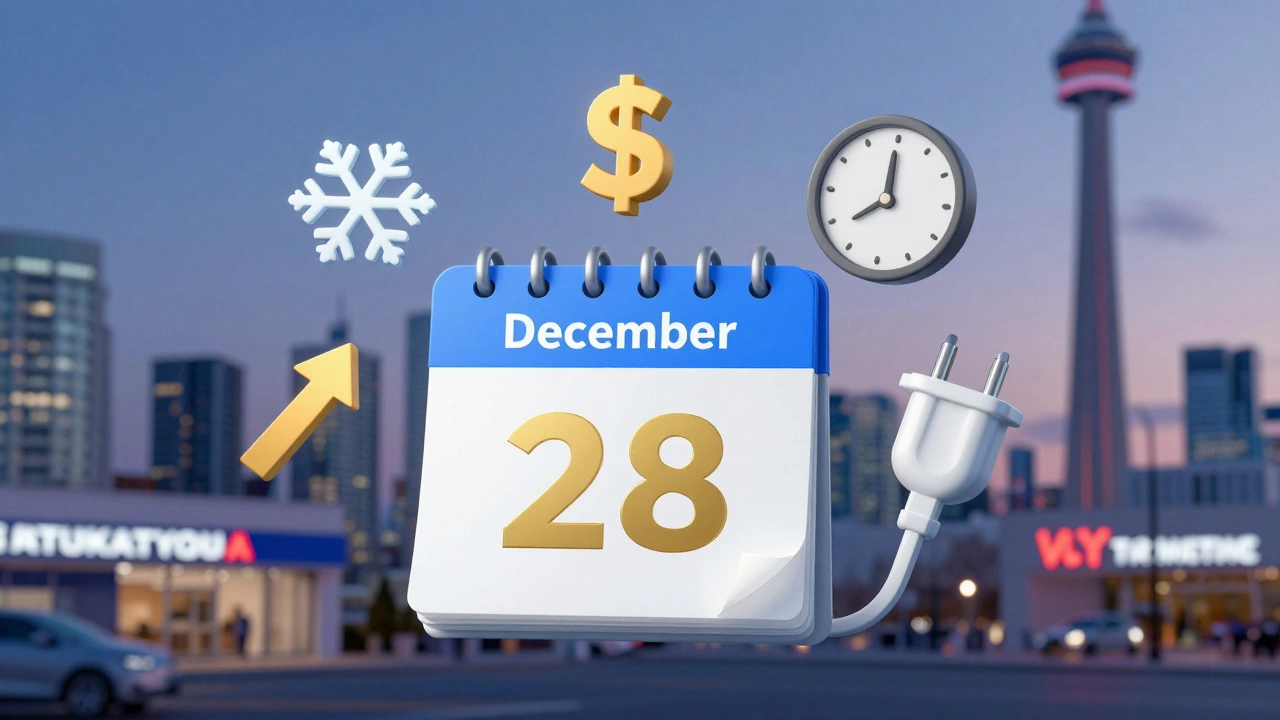
Both are good, but for different reasons. End-of-year (December) gives you the biggest discounts because dealers are clearing out inventory to meet annual quotas. End-of-month (25th-30th) works well if you’re shopping outside December, since salespeople are trying to hit their monthly targets. If you can time it for both-like December 28-you’ll likely get the best deal possible.
Should I wait for Black Friday to buy a car?
Black Friday can be a great time, especially if you’re buying a model with high inventory like a compact SUV or sedan. Automakers often offer 0% financing or cash-back deals that aren’t available at other times. But don’t expect the same discounts on luxury or high-demand models. Always compare Black Friday offers to December deals-sometimes December is better.
Do car prices drop in January?
No, prices typically go up-or stay high-in January. That’s when dealers have new inventory and buyers are flush with cash from holiday bonuses or tax refunds. You’ll pay more, and you’ll have fewer negotiating options. Avoid January unless you absolutely need a car right away.
Are used cars cheaper at certain times of the year?
Yes, but not as dramatically as new cars. Used car prices dip slightly in late winter (February-March) when people sell cars after winter damage or high insurance costs. Also, after tax season (April), some sellers list their cars to fund big purchases. But the biggest drops happen in December, when people trade in their cars for new ones.
Can I negotiate a better price if I pay cash?
Yes, but not because dealers prefer cash. They make more money from financing. Paying cash gives you leverage because it simplifies the deal. No loan approval delays. No paperwork. That’s why dealers are more willing to cut the price if you’re paying cash. But always get pre-approved anyway-you’ll know your budget, and you’ll have a benchmark to compare against.