
What Is the Best Time of Year to Buy a Car in 2026?
 Feb, 8 2026
Car Buying Timing Calculator
Your Purchase Details
Timing Analysis
Key Recommendations
Buying a car isn’t just about finding the right model-it’s about timing. If you’ve ever paid full price when everyone else got a deal, you know how much money you can save by waiting for the right moment. In Canada, especially in cities like Toronto where winter weather drives demand for reliable vehicles, knowing when dealerships are desperate to move inventory can save you thousands.
December Is the Sweet Spot
By the time December rolls around, dealerships have hit their annual sales targets, but they’re still under pressure to clear out the current year’s models. Why? Because automakers give dealers bonuses for hitting yearly quotas, and they also push them to make room for next year’s inventory. That’s when you’ll see the biggest discounts.
In 2025, Canadian dealers offered an average of 8.3% off the MSRP on December sales, according to data from AutoTrader Canada. Some models-especially those with low inventory or older designs-saw discounts over 15%. If you’re looking at a 2025 model in early December 2026, you’re essentially buying last year’s car at a steep discount.
Don’t just wait for Black Friday. While Black Friday sales get attention, they’re often more about marketing than real savings. Dealers might run promotions, but they rarely drop prices below what they offer in the final two weeks of December. The real deals start after the 15th, when sales teams are scrambling to close out the year.
End-of-Month Sales Are Real
Dealership salespeople work on monthly quotas. If they’re behind at the end of the month, they’ll bend over backward to make a sale-even if it means cutting into their own commission. This is especially true in the last three business days of the month.
For example, if you walk into a dealership on the 28th of March and the sales rep needs to hit their target, they’re more likely to throw in free floor mats, extended warranties, or even a free oil change package. These extras add up. In Toronto, one buyer saved $2,100 in added value on a 2025 Honda CR-V by negotiating on the last Friday of March.
That’s why the best strategy isn’t just picking a month-it’s picking a day. Aim for the last Thursday or Friday of any month. Avoid the first week: salespeople are fresh, motivated, and not yet pressured. The last few days? That’s when the pressure hits.
Model Year Changes Bring Bigger Discounts
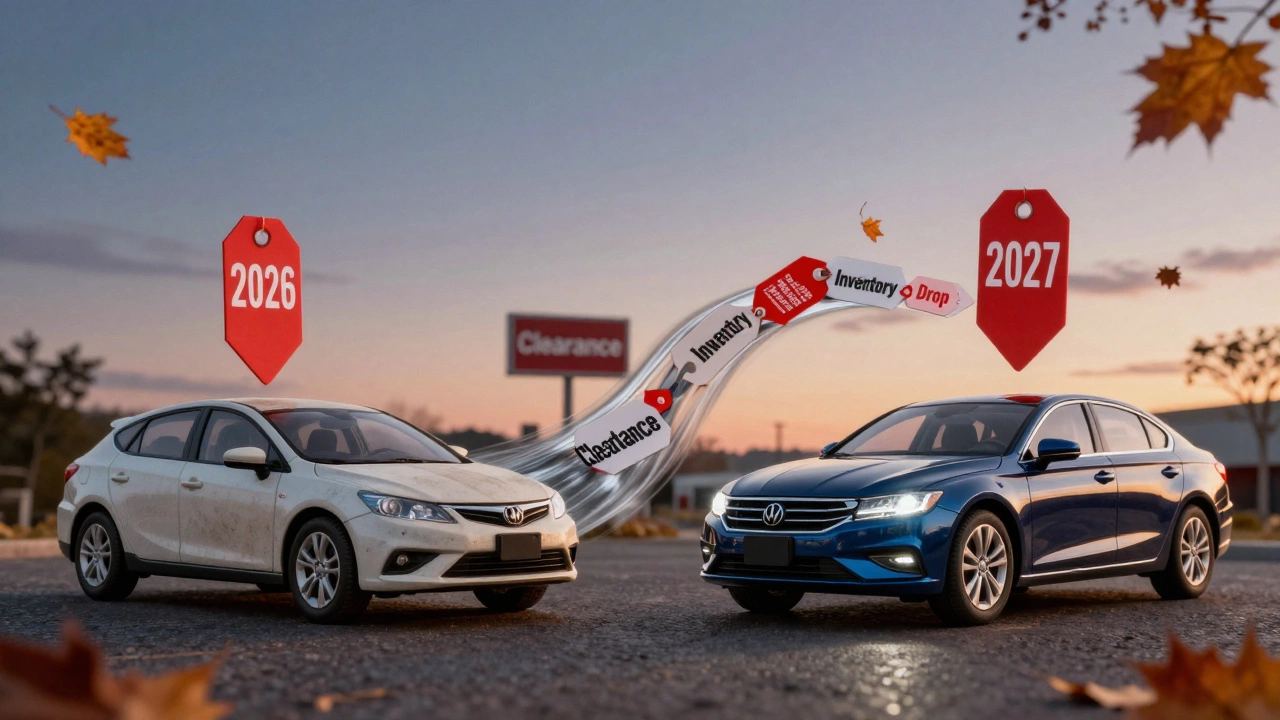
Automakers typically release new model years between August and October. That’s when dealers get their first shipments of 2027 models. Suddenly, the 2026 models are last year’s tech. And they’re sitting on the lot.
Dealers don’t want to carry old inventory into the new year. They lose money on it because financing costs pile up, and they can’t get the same incentives from manufacturers. So between late August and mid-October, you’ll see the steepest price drops on the previous year’s models.
For example, in 2025, a 2024 Toyota RAV4 in Ontario dropped an average of $4,200 from July to October. That’s not a minor discount-that’s almost 10% off the sticker price. If you’re okay with last year’s infotainment system or minor styling changes, this is the golden window.

What About Holiday Weekends?
Canada Day, Labour Day, and Victoria Day weekends get a lot of hype. And yes, dealers run promotions. But here’s the catch: those deals are often designed to look good on paper. You’ll see ads saying “$5,000 OFF!” but then find out it’s only for specific trims or requires a 72-month loan.
Compare that to December, where discounts are often applied directly to the price, with no strings attached. Holiday weekends are good if you’re flexible and willing to shop around, but they rarely beat the end-of-year sales.
One exception: Labour Day weekend. In Canada, it’s the last big shopping push before winter hits. Dealers know families are looking for vehicles before the snow flies. So you’ll see decent deals, especially on SUVs and trucks. But again, not as deep as December.
Why Avoid Spring and Early Summer?
March through June is the worst time to buy a car in Canada. Why? Because demand spikes. Families are planning vacations. Parents are upgrading after kids start driving. Dealers know this. They don’t need to discount-they’re selling at full price.
In 2025, the average transaction price for a new car in Ontario rose by 3.7% between April and June compared to December. That’s a $2,000+ difference on a $50,000 vehicle. If you’re buying in April, you’re paying a premium just because the weather’s getting nicer.
And don’t fall for “spring clearance” claims. Those are usually just rebranded end-of-year deals that didn’t move. The real clearance happens in the fall and winter.
Used Cars: Different Rules
Used cars follow a different rhythm. The best time to buy a used car is between January and March. Why? Because that’s when people are selling cars after holiday spending, tax refunds, or New Year’s resolutions to cut costs. Inventory is high, and sellers are motivated.
Also, many people trade in their cars during the holidays, and those vehicles hit the used lot in January. That means more selection and lower prices. In Toronto, used car listings on Kijiji and AutoTrader spiked by 22% in January 2025 compared to August.
Just be careful: winter driving can mean higher wear on tires and suspension. Get a pre-purchase inspection. A $150 inspection can save you $2,000 in repairs later.
What About Financing?
Dealers make money on financing just as much as on the car. So even if you’re offered 0% APR, ask if the price was marked up to cover it. Sometimes the advertised rate is only available if you pay full price.
Always get pre-approved for a loan from your bank or credit union before stepping onto the lot. That gives you leverage. If the dealer says they can beat your rate, ask them to put it in writing. In 2025, Canadian buyers who used bank financing saved an average of $1,800 compared to those who took dealer financing.
Also, watch out for extended loan terms. A 72-month loan might look attractive because the monthly payment is low, but you’ll pay more in interest and risk being upside-down on your loan if the car depreciates faster than you pay it off.
Final Checklist: When to Pull the Trigger
- Best time for new cars: Last two weeks of December, or late August through October.
- Best day to negotiate: Last Thursday or Friday of any month.
- Best time for used cars: January to March.
- Avoid: April through June-highest prices, lowest leverage.
- Always: Get pre-approved, compare multiple dealers, and never sign on the first offer.
Car buying isn’t about being in a hurry. It’s about being patient. The dealers will move inventory. You just need to wait for the moment they’re desperate enough to make a deal.
Is it better to buy a car at the end of the year or at the beginning of the year?
For new cars, the end of the year-especially December-is almost always better. Dealers are trying to clear out the current year’s models to make room for new ones, and they’re under pressure to hit annual sales targets. That leads to bigger discounts. Buying at the beginning of the year means you’re paying for last year’s leftover inventory, but you won’t get the same level of discount because dealers aren’t as desperate yet.
Do car prices go down in the winter?
Yes, especially in December and January. In Canada, winter weather actually increases demand for reliable vehicles, but dealers still lower prices to move inventory before the new model year arrives. The combination of high demand and low inventory pressure makes December the best month for deals. January is better for used cars, as people sell their vehicles after holiday spending.
Should I wait for a new model year to get a better deal?
If you’re buying a new car, waiting for a new model year isn’t about getting a better deal on the new model-it’s about getting a better deal on the old one. When the 2027 models arrive in late summer or early fall, dealers slash prices on 2026 models to clear them out. That’s when you’ll find the biggest savings. If you don’t need the latest tech or styling, the previous year’s model is often a smarter buy.
Are end-of-month sales really better than holiday sales?
Yes, more often than not. Holiday sales like Canada Day or Labour Day are flashy but rarely offer the deepest discounts. End-of-month sales are driven by real pressure: salespeople need to hit their quotas. That gives you real negotiating power. You can walk in on the 28th of the month and get better pricing, free upgrades, or extended warranties-without the marketing hype.
How much can I realistically save by timing my car purchase?
On average, buyers who time their purchase for December or late summer save between 8% and 15% off the MSRP. That’s $4,000 to $7,500 on a $50,000 vehicle. Used car buyers can save 10% to 20% by shopping in January. Combine that with pre-approved financing and a little negotiation, and you can easily save over $5,000 on a mid-range car.