
What Is the Simplest Budgeting Method?
 Jan, 19 2026
Zero-Based Budget Calculator
If you’ve ever felt overwhelmed by spreadsheets, apps, and complicated budgeting rules, you’re not alone. Most people don’t need a fancy system-they need something so simple they can stick with it. The simplest budgeting method isn’t about tracking every coffee or calculating net worth daily. It’s about making your money work without stress. And the answer? The zero-based budgeting method, done the easy way.
Zero-Based Budgeting, But Without the Complexity
Zero-based budgeting means every dollar you earn has a job before the month starts. Income minus expenses equals zero. Sounds technical? It doesn’t have to be. You don’t need Excel or Mint. All you need is a pen, a piece of paper, or a free note app on your phone.
Here’s how it works in practice:
- Write down your total take-home pay for the month. This is your starting number.
- List every expense you know you’ll have: rent, groceries, gas, phone bill, savings, even that $5 coffee you buy every Friday.
- Assign every dollar to a category until there’s nothing left. If you have $3,000 income, then $3,000 must be spoken for.
- At the end of the month, check what you actually spent. Did you overspend on food? Adjust next month.
This isn’t about restriction. It’s about control. You decide where your money goes-not your habits, not your bank statements.
Why This Beats Other Methods
There are other simple systems out there. The 50/30/20 rule says spend 50% on needs, 30% on wants, 20% on savings. Sounds clean, right? But what if your rent is 60% of your income? What if you’re saving for a car and need to put 40% away? 50/30/20 doesn’t adapt. It forces you into a box.
The envelope system-where you put cash in labeled envelopes for groceries, entertainment, etc.-is great for people who spend too much in stores. But if you pay everything online, it’s messy. You’re juggling digital payments and physical cash. Not practical for most.
Zero-based budgeting, done simply, fixes both problems. It’s flexible. It’s personal. You don’t need cash. You don’t need apps. You just need to ask one question every month: Where does my money go?
Real Example: A Toronto Grocery Budget
Meet Sarah. She earns $3,200 a month after taxes. She lives in Toronto. Her rent is $1,400. Her car payment is $350. Her phone and internet cost $120. She wants to save $500 for emergencies. She eats out twice a week-about $160. She spends $100 on clothes, $40 on gifts, and $60 on random stuff like pet supplies or bandaids.
Her old system? She just watched her bank account drop. She didn’t know why she was out of cash by the 20th.
She tried zero-based budgeting:
- Rent: $1,400
- Car: $350
- Utilities: $120
- Savings: $500
- Groceries: $400
- Dining out: $160
- Clothes: $100
- Gifts: $40
- Random: $60
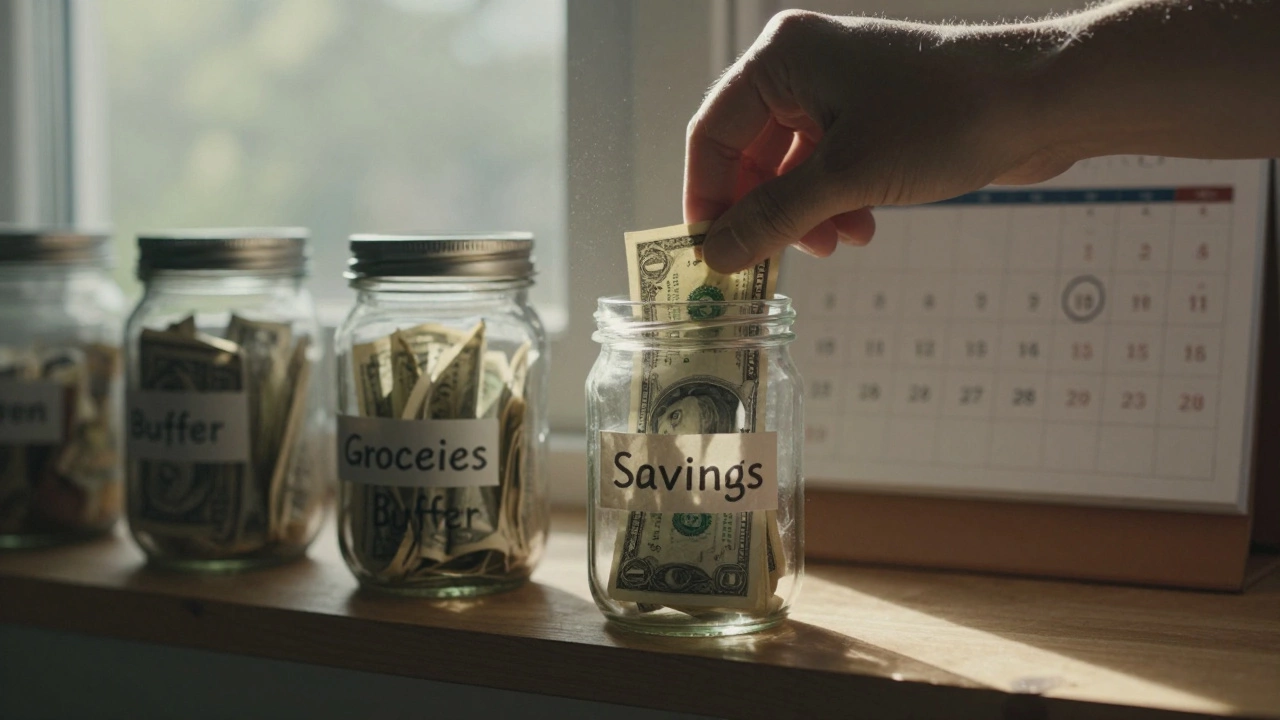
- Buffer: $70
Total: $3,200. Every dollar accounted for. The buffer? That’s for surprises-like a flat tire or a pharmacy bill. She didn’t have it before. Now, she sleeps better.
At the end of the month, she checked her receipts. She spent $420 on groceries instead of $400. So next month, she cut $20 from dining out. No guilt. No panic. Just adjustment.
What You Don’t Need
You don’t need:
- A budgeting app (though you can use one if you want)
- A financial advisor
- Perfect math skills
- To track every receipt
You also don’t need to be perfect. Missed a category? Add it next month. Overspent on entertainment? Take it from next month’s buffer. This isn’t a test. It’s a tool.
Start Small, Stay Consistent
Don’t try to budget your whole life on day one. Start with just three categories: rent, groceries, savings. Assign money to those. Leave the rest as a buffer. Do that for two months. Then add one more category-maybe gas or phone bill. Slowly, you’ll build a full picture without burnout.
Consistency beats perfection. One person I know in Toronto budgets only on Sundays. Five minutes. Just writes down what’s left and what’s coming. That’s it. She’s been debt-free for three years.
What Happens When You Stick With It
People who use this simple version of zero-based budgeting report three things:
- They stop living paycheck to paycheck.
- They feel less anxious about money.
- They start saving without even trying.
Why? Because when you assign every dollar a job, you stop wasting money on things you don’t care about. You see where your money really goes-and you choose to redirect it.
It’s not magic. It’s awareness. And awareness is the first step to real financial freedom.
Common Mistakes (And How to Avoid Them)
Even simple systems get messed up. Here’s what goes wrong-and how to fix it:
- “I forgot about annual bills.” Divide annual costs (like car insurance or property tax) by 12. Put that amount aside every month.
- “I spent too much and feel guilty.” Guilt doesn’t help. Just adjust next month. Budgeting isn’t about punishment.
- “I don’t know how much I spend.” Check your bank statements for the last three months. Add up spending in broad categories. That’s your starting point.
- “It’s too much work.” Start with one category. Do it for a week. Then add another. You don’t need to do it all at once.
The goal isn’t to be perfect. The goal is to be in charge.
Tools That Help (Without Complicating Things)
You don’t need fancy tools. But if you like digital help, here are three free, no-frills options:
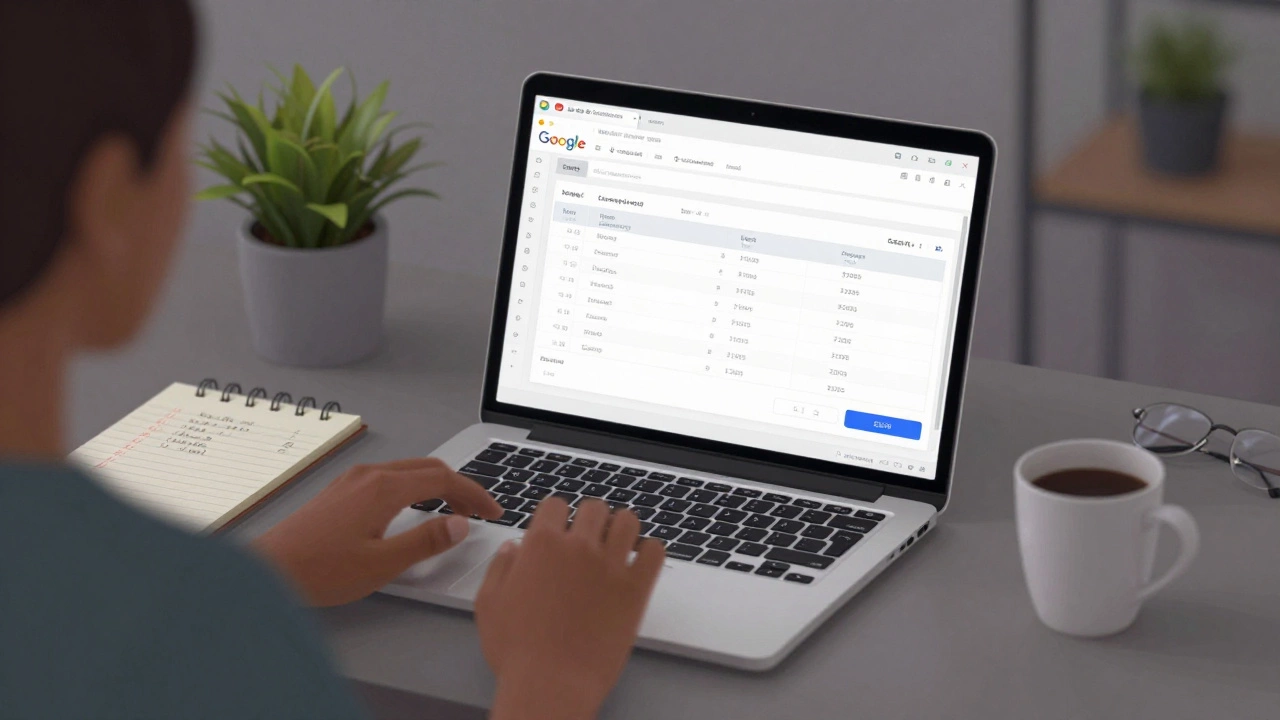
- Google Sheets: Copy a free zero-based budget template. Just type numbers. No syncing, no ads.
- Notion: Create a simple page with income, expenses, and a running balance. Easy to update on your phone.
- Pen and paper: Still the most reliable. You can’t delete it. You can’t ignore it.
Choose one. Stick with it. Don’t switch every month. That’s how people give up.
Final Thought: Your Money, Your Rules
The simplest budgeting method isn’t about being rich. It’s about being clear. It’s about knowing where your money goes so you can stop wondering why it’s gone. You don’t need to earn more. You just need to assign every dollar a purpose.
Start this month. Write down your income. Write down your expenses. Make sure they add up. If there’s leftover cash, give it a job-save it, pay off debt, or treat yourself. But don’t leave it unassigned. That’s where money disappears.
That’s it. No magic. No complexity. Just clarity.
Is zero-based budgeting the same as the envelope system?
No. The envelope system uses cash in physical envelopes for spending categories. Zero-based budgeting assigns every dollar a purpose, but it works with digital payments too. You can do zero-based budgeting entirely online. The envelope system is a physical version of zero-based budgeting, not the other way around.
Do I need an app to use zero-based budgeting?
No. Apps can help, but they’re not required. Many people use a simple notebook, Google Sheets, or even a sticky note on their fridge. The key is consistency, not technology. If an app makes you feel overwhelmed, ditch it and use pen and paper.
What if my income changes every month?
Use your lowest average income over the last 3-6 months. That’s your baseline. If you earn more one month, put the extra into savings or debt payoff. If you earn less, pull from your buffer. This keeps your budget stable even when paychecks vary.
How long does it take to see results?
Most people notice less stress after one month. After three months, they usually have a clearer picture of their spending and start saving without thinking about it. Real change takes time, but the system works fast if you stick with it.
Can I use this if I have debt?
Yes. In fact, zero-based budgeting is ideal for debt repayment. Assign a specific dollar amount each month to pay down your debt-treat it like a bill. That way, you’re not hoping to pay it off. You’re planning for it.
Next Steps
Here’s what to do this week:
- Look at your last pay stub. Write down your take-home pay.
- Open your bank app. Look at your last month’s spending. Group it into 5-7 categories.
- Subtract your expenses from your income. Do you have money left over? Or are you overspending?
- Decide: What’s one category you want to fix next month? Groceries? Dining out? Savings?
- Write it down. That’s your first budget.
You don’t need to be perfect. You just need to start. And the simplest method is the one you’ll actually use.