
What's the best bank to get a loan from in 2025?
 Dec, 1 2025
Personal Loan Cost Calculator
Compare Your Loan Options
See how different banks affect your total cost based on your credit score and loan details.
Choosing the best bank for a personal loan isn’t about picking the biggest name or the one with the flashiest ads. It’s about finding the right match for your financial situation right now. If you’re looking to consolidate debt, cover an unexpected bill, or fund a small project, the bank you pick can save you hundreds-or even thousands-over the life of your loan.
What makes one bank better than another for a personal loan?
Not all personal loans are created equal. The biggest differences come down to four things: interest rates, fees, approval speed, and how strict they are about your credit score. Some banks give you a loan in 24 hours if you have great credit. Others take weeks and still turn you down if your income is a little uneven. Some charge origination fees. Others don’t. Some let you pay off early with no penalty. Others hit you with a fee.
Let’s say you have a credit score of 720. You’re not in the top tier, but you’re solid. You’ve got a steady job and $40,000 in annual income. You need $10,000 to fix up your kitchen. The last thing you want is to get stuck with a 15% APR because you picked the first bank that approved you. That’s $800 extra in interest every year. Over five years? That’s $4,000 more than if you’d found a bank offering 9%.
Top banks for personal loans in 2025
Based on current rates, customer feedback, and approval flexibility, here are the banks standing out in 2025:
- Chime - Best for fast funding and no credit check options. They don’t do traditional credit checks. Instead, they look at your direct deposit history and spending habits. If you’ve had a paycheck coming in for six months, you can get approved in under 10 minutes. Rates start at 8.99%, and funds hit your account the same day.
- SoFi - Best for low rates and no fees. SoFi offers rates as low as 7.99% for borrowers with credit scores above 700. No origination fees. No prepayment penalties. They also let you skip one payment per year if you hit a rough patch. Their approval process takes 1-3 business days.
- PenFed Credit Union - Best for lower credit scores. If your score is between 640 and 680, PenFed is one of the few banks that still gives you a shot. Their rates start at 9.99%, and they’ve been known to approve people with recent bankruptcies if they’ve rebuilt their credit. Membership is required, but you can join by donating $20 to a partner nonprofit.
- Wells Fargo - Best for existing customers. If you already bank with Wells Fargo and have a good history, you might get a rate 1-2% lower than what’s advertised. They offer pre-approvals in minutes through their app. But if you’re not a customer, their rates start at 11.99%, and they charge a 1% origination fee.
- U.S. Bank - Best for loan amounts over $25,000. Most banks cap personal loans at $10,000-$15,000. U.S. Bank goes up to $50,000. Their rates start at 9.24%, and they offer 12-month payment holidays for medical emergencies.
How to compare loan offers like a pro
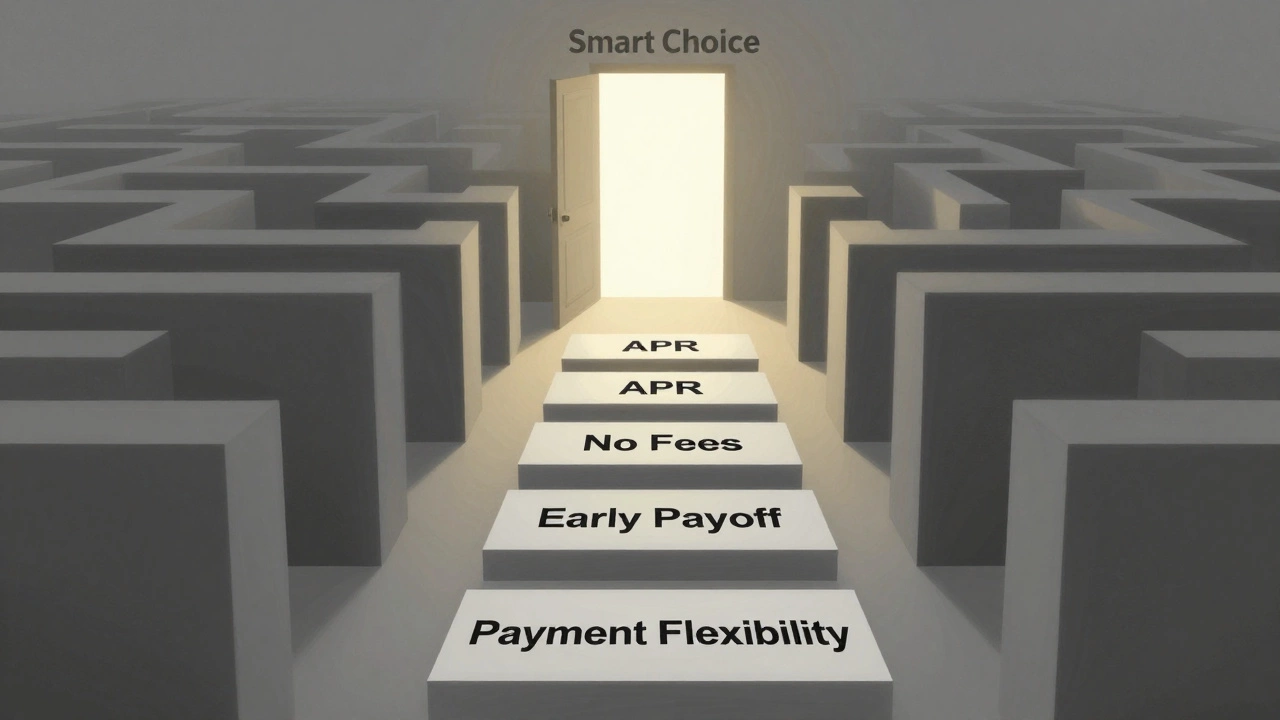
Don’t just look at the interest rate. Look at the annual percentage rate (APR). That includes fees, so it’s the real cost of the loan. A loan with a 9% interest rate and a $200 fee might cost more than a 9.5% rate with no fees.
Here’s what to ask every lender:
- What’s the APR? (Not just the interest rate)
- Is there an origination fee? How much?
- Can I pay it off early without penalty?
- How long does funding take?
- Do you offer payment flexibility? (Like skipping a payment or extending the term)
Also, check if they do a hard credit pull. Some lenders do a soft pull first to give you a rate estimate. That doesn’t hurt your score. A hard pull does. If you’re shopping around, try to get all your quotes within 14 days. Credit bureaus treat multiple inquiries for the same loan type as one, so your score won’t drop.
What if your credit score is below 600?
It’s harder, but not impossible. Banks like PenFed, Navy Federal, and some local credit unions are more flexible than big national banks. You might need a co-signer with good credit. Or you might have to accept a higher rate-maybe 15% to 20%. But even then, it’s better than a payday loan with 400% APR.
Another option: get a secured loan. Put up something of value-like a car title or savings account-as collateral. That reduces the risk for the bank, and they’ll give you a better rate. Some banks even let you use your own savings as collateral. You borrow against your own money, and if you default, they take it back. But you’ll still get a lower rate than an unsecured loan.
Red flags to watch out for
Not every bank that says “easy loan” is trustworthy. Here’s what to avoid:
- Banks that ask for upfront fees before approving you. Legit lenders deduct fees from your loan amount, not from your pocket first.
- Companies that guarantee approval no matter your credit. That’s a scam. Even subprime lenders have limits.
- Loan offers that come via text or social media DM. Real banks don’t cold-message you about loans.
- Too-good-to-be-true rates under 5%. If it’s below 7% for someone with average credit, it’s likely a trap.
Stick to banks you’ve heard of. Check their reviews on the Better Business Bureau or Consumer Financial Protection Bureau. If there are 50 complaints about hidden fees or misreported payments, walk away.
What to do after you get approved
Once you’re approved, don’t just spend the money. Use it for what you planned. If you’re consolidating credit card debt, pay off the cards and then close them. Don’t run up new balances. That’s how people get trapped.
Set up automatic payments. Many banks give you a 0.25% rate discount if you do. That might not sound like much, but on a $10,000 loan at 9%, it saves you $25 a year. Over five years? That’s $125. And you never miss a payment.
Keep your loan statement handy. Track your balance. If you get a raise or a bonus, consider making an extra payment. Even $50 extra a month can cut years off your loan and save hundreds in interest.
Final tip: Don’t rush
It’s tempting to grab the first offer that comes in. But taking 3-5 days to compare just three banks can save you $1,000 or more. Use online tools like Bankrate or NerdWallet to see real-time rates. Then call the bank directly. Sometimes, the rep can give you a better rate if you mention you’re considering another lender.
The best bank for your loan isn’t the one with the lowest rate on paper. It’s the one that fits your life, your credit, and your goals. Take the time. Ask the questions. Read the fine print. Your future self will thank you.
What credit score do I need to get a personal loan?
Most banks require a minimum credit score of 600 for unsecured personal loans. With a score between 600-670, you’ll likely get approved but with higher rates (12%-18%). Scores of 680-740 qualify you for better rates (8%-11%). Above 750, you can get the lowest rates (under 8%) from lenders like SoFi or PenFed.
Can I get a personal loan with no credit history?
It’s difficult, but not impossible. Banks like Chime and some credit unions use alternative data-like rent payments, utility bills, or direct deposit history-to assess risk. You might need a co-signer or opt for a secured loan backed by your savings or car. Avoid lenders that promise approval with no credit check-they’re often predatory.
How long does it take to get a personal loan?
Approval can take minutes (Chime, SoFi) or up to 5 business days (Wells Fargo, U.S. Bank). Funding usually happens within 1-3 days after approval. If you need cash fast, choose a lender that offers same-day funding. Just make sure you’re not paying extra for speed.
Are personal loan interest rates fixed or variable?
Almost all personal loans from banks have fixed rates. That means your monthly payment stays the same for the life of the loan. Variable rates are rare in personal loans-they’re more common with credit cards or home equity lines. Fixed rates give you predictability, which helps with budgeting.
Should I get a personal loan from my current bank?
It’s worth checking. Banks often reward loyal customers with lower rates or waived fees. But don’t assume it’s the best deal. Compare their offer to at least two other lenders. You might find a better rate elsewhere-even if you’ve banked with them for years.
If you’re ready to apply, start with SoFi or Chime if you need speed and low fees. If your credit is average, try PenFed. Always get at least three quotes before deciding. The right loan doesn’t just give you money-it gives you breathing room. Choose wisely.