
When Can I Expect My Student Loan Refund? Timelines, Delays & Tips
 Jul, 6 2026
Student Loan Refund Date Estimator
Estimate Your Refund Date
Estimated Timeline
Breakdown of Delays:
💡 Pro Tip:
Set up direct deposit through your school's portal immediately to avoid check mailing delays.
Enter your details to see when you can expect your student loan refund.
Understanding the Student Loan Refund Timeline
You’ve done the paperwork. You filled out your FAFSA (Free Application for Federal Student Aid), you got accepted into school, and now you’re staring at a bank account that’s running dangerously low. The question on everyone’s mind is simple: when does the money actually hit my account? It feels like it should be instant, but the reality of the financial aid process the system by which students receive government or institutional funds to pay for education is anything but. There are layers of bureaucracy, strict federal rules, and school-specific processing times that all play a role in how long you wait.
If you are expecting a student loan refund, you need to know that this isn't just a direct deposit from a lender to your personal checking account. The money usually goes to your university first. The school applies it toward your tuition, fees, housing, and meal plans. Only after those bills are paid do you get the leftover cash. This "leftover" amount is what we call the refund. Understanding this flow is critical because if your tuition bill isn't fully processed yet, your refund won't trigger either.
The Step-by-Step Journey of Your Money
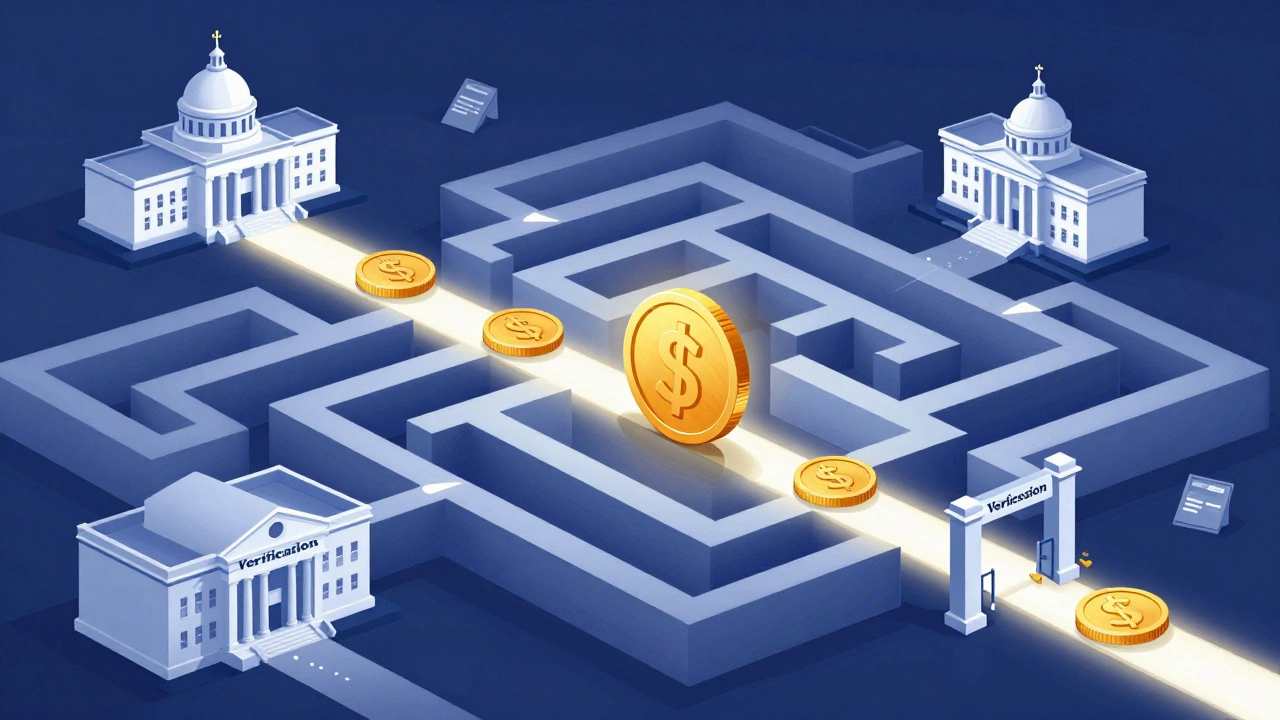
To understand why there is a delay, you have to look at the path the money takes. It doesn't fly straight from Washington D.C. to your pocket. Here is the typical sequence of events for federal loans:
- Disbursement Authorization: The Department of Education sends the funds to your school's financial aid office. This happens in two parts (disbursements) for most academic years-once at the start of the fall semester and once at the start of the spring semester.
- Campus Account Credit: The school receives the money and posts it to your internal student account. This pays off any outstanding charges like tuition or dorm fees.
- Refund Calculation: If the aid exceeds your charges, the business office calculates the surplus. For example, if you received $5,000 in aid but only owe $3,500 in tuition, you have a $1,500 surplus.
- Payment Processing: The school initiates the payment to you via direct deposit or paper check.
This entire process typically takes between 7 to 14 days after the initial disbursement date. However, "initial disbursement" is a key term here. For new borrowers, there is often a mandatory waiting period before the money can even leave the federal system.
New Borrower Rules and Waiting Periods
If this is your very first time taking out a federal student loan, you might face an extra hurdle. Federal law imposes specific waiting periods to ensure students don't default immediately upon receiving funds. These rules apply to Direct Subsidized and Unsubsidized Loans.
| Loan Type | Waiting Period After Enrollment Begins |
|---|---|
| Direct Subsidized Loans | 30 days |
| Direct Unsubsidized Loans | 30 days |
| Direct PLUS Loans (Graduate/Parent) | 10-14 business days (no statutory wait, but processing varies) |
So, if your classes start on August 20th, and you are a new borrower with subsidized loans, you cannot expect the money to disburse until at least September 19th. Add another week for the school to process the refund, and you might not see cash in your hand until late September. This catches many freshmen off guard. Plan your budget accordingly; you may need to cover living expenses for the first month without relying on this refund.
Why Is My Refund Delayed?
Sometimes, the clock starts ticking, but the money never arrives. Delays are common, and they usually stem from one of three issues: incomplete enrollment status, missing documentation, or banking errors.
Enrollment Status Changes: Financial aid is calculated based on full-time enrollment (usually 12 credits). If you dropped a class last minute and are now considered part-time, your aid package might be reduced. The school has to recalculate everything, which pauses the disbursement until the new numbers are finalized.
Masters Promissory Note (MPN) Issues: Did you sign your MPN? Did you complete Entrance Counseling? These are mandatory steps for federal loans. If you skipped them, the Department of Education will block the funds. Even if you did them years ago, sometimes systems glitch, and the school's financial aid office needs to manually verify your compliance.
Direct Deposit Errors: This is the most frustrating but easily fixable problem. Many schools require you to set up direct deposit through their specific portal (like Banner, PeopleSoft, or Workday). If you entered your routing number wrong, or if you haven't enrolled in the school's direct deposit program at all, they will mail a physical check. A check can take weeks to arrive and then days to clear. Always double-check that your banking information matches exactly what your bank provides.
Private Loans vs. Federal Loans
It is important to distinguish between federal aid and private student loans. Private lenders operate differently. They do not follow the same federal disbursement schedules. Instead, they rely on the school's certification process.
When you borrow privately, you must authorize the lender to send the money to your school. The school then certifies the loan, confirming you are enrolled and eligible. Once certified, the private lender disburses the funds. This can happen faster than federal loans-sometimes within 3 to 5 business days after certification-but it depends entirely on the lender's efficiency. Some private lenders are sluggish, while others are quite fast. Check your lender's dashboard for the exact "disbursement date." Unlike federal loans, private loans generally do not have the 30-day new-borrower waiting period, but they may have their own processing buffers.

How to Speed Up the Process
While you can't force the Department of Education to move faster, you can remove bottlenecks on your end. Here is a checklist to ensure your refund arrives as soon as legally possible:
- Set Up Direct Deposit Early: Do not wait until the day classes start. Log into your student portal now and enter your banking details. Verify they are correct.
- Complete All Requirements: Ensure your FAFSA is processed, your Master Promissory Note is signed, and Entrance Counseling is done. Check your student portal for any "holds" on your account.
- Monitor Your Student Account: Keep an eye on your tuition balance. If you have a remaining balance from the previous semester, it might eat into your current refund. Paying that down early ensures more of your current aid comes back to you as cash.
- Contact Financial Aid Immediately: If the expected disbursement date passes and you see no activity, email your financial aid office. Ask specifically: "Has my loan been certified? Has it been disbursed to the bursar?" Get answers in writing if possible.
What to Do With the Refund
Once that money hits your account, it’s tempting to spend it on entertainment or non-essentials. Remember, this is borrowed money (or grant money meant for educational costs). Use it wisely. Prioritize essentials like textbooks, transportation, groceries, and utilities. Create a mini-budget for the semester so you don’t run out of cash before finals week. Treat the refund as a supplement to your income, not a windfall.
How long does it take for a student loan refund to show up in my bank account?
Typically, it takes 7 to 14 days after the school disburses the funds to your campus account. However, if you are a new federal borrower, you must wait 30 days after the start of classes before the money can even be released. So, total wait time can range from 2 weeks to over a month depending on your status.
Can I get my student loan refund if I am not enrolled full-time?
Yes, but the amount may be reduced. Financial aid is prorated based on your credit load. If you drop below full-time status (usually less than 12 credits), your aid package is recalculated. This reduction means your tuition bill might be lower, but your refund will also be smaller. In some cases, if you drop too many classes, you may lose eligibility for certain grants or loans entirely.
Why hasn't my financial aid shown up on my student account yet?
Common reasons include incomplete FAFSA verification, unsigned promissory notes, or holds on your student record. Another reason could be that the disbursement date hasn't arrived yet. Schools often disburse aid in waves throughout the first two weeks of the semester. Check your student portal for any alerts or messages from the financial aid office.
Do I have to use my student loan refund for school-related expenses?
Technically, yes. The purpose of student loans is to cover Cost of Attendance (COA), which includes tuition, fees, room, board, books, supplies, and transportation. While the government does not audit your personal spending habits, using the funds for non-essential luxuries increases your debt burden without adding value to your education. It is best practice to budget the refund for essential living costs during the semester.
What happens if my student loan refund is delayed?
If your refund is delayed, contact your school's bursar or financial aid office immediately. They can tell you if there is an administrative hold or a processing error. In the meantime, you may need to arrange alternative funding for immediate expenses like rent or food. Some schools offer emergency short-term loans or grants for students facing financial hardship due to aid delays.