
Where is the Safest Place to Put Money in 2026: A Complete Guide
 Jun, 7 2026
Safe Investment Strategy Calculator
Not sure where to put your extra cash? Enter your details below to find the optimal balance of safety, yield, and access.
Your Financial Profile
Safety Analysis & Insurance Check
Enter your details to see how to protect your principal in 2026.
You have extra cash. Maybe it’s from a bonus, a tax refund, or years of careful saving. The bank offers you 0.01% interest on your checking account. The stock market is up, but volatile. Your friends are talking about crypto, which crashed last week. Where do you actually put this money so it doesn’t disappear? This is the single most common question in personal finance, and the answer isn’t one-size-fits-all.
In 2026, the financial landscape has shifted. Inflation has settled into a new normal, interest rates remain higher than they were in the 2010s, and banking regulations are tighter than ever. If your goal is safety-not getting rich quick-you need to look at instruments that protect your principal above all else. We will break down exactly where your money is safest, how much protection you actually get, and what trade-offs you face regarding returns.
The Gold Standard: Government-Backed Savings Accounts
When people ask for the "safest" place, they usually mean "where can I lose nothing?" The closest thing to zero risk is a deposit insured by the government. In Canada, this means looking at institutions covered by the Canada Deposit Insurance Corporation (CDIC). In the US, it’s the Federal Deposit Insurance Corporation (FDIC).
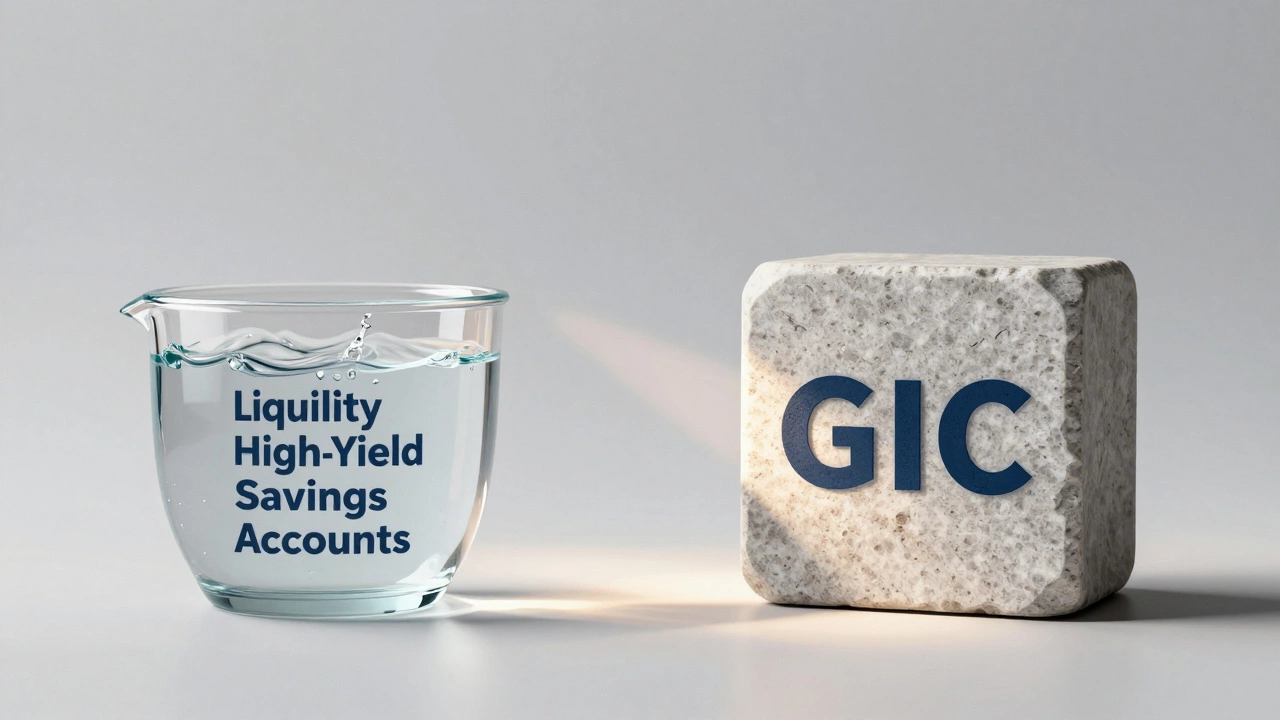
A standard High-Yield Savings Account (HYSA) is often the best starting point. Why? Because it combines safety with liquidity. You can withdraw your money whenever you want without penalty. As of mid-2026, many major banks and credit unions are offering rates between 3.5% and 4.5% on these accounts. This beats inflation slightly or matches it closely, depending on the month.
The key here is understanding the insurance limits. CDIC coverage goes up to $100,000 per account category per institution. If you have $200,000, you don’t just leave it in one account. You split it across two different banks, or use joint accounts (which have separate coverage). This simple move makes your savings virtually bulletproof against bank failure.
- Liquidity: Instant access via debit card or transfer.
- Risk Level: Near zero (backed by federal/provincial governments).
- Return: Moderate (currently ~3.5%-4.5%).
- Best For: Emergency funds and short-term goals (under 3 years).
Locked-In Safety: Guaranteed Investment Certificates (GICs)
If you don’t need the money for a while, you can trade flexibility for a slightly higher return using Guaranteed Investment Certificates (GICs). A GIC is a loan you make to a bank. They promise to pay you back your principal plus interest at a set date. It is not an investment in stocks; it is a debt instrument.
In 2026, term GICs ranging from 1 to 5 years are popular. A 2-year GIC might offer 4.8%, while a 5-year could hit 5.2%. These rates are fixed. Even if market rates drop next year, your rate stays the same. That is the beauty of locking in.
There are two main types you should know:
- Non-Redeemable GICs: You cannot touch the money until maturity. If you try, you lose the interest earned. This forces discipline and usually offers the highest rate.
- Redeemable GICs: You can cash out early, but the interest rate is lower to compensate for the bank’s risk.
For maximum safety, stick to big-name banks or credit unions that are CDIC members. Avoid "brokered GICs" unless you understand the fees involved. Brokered GICs allow banks to sell their excess capacity to other investors, but the paperwork and potential penalties for early withdrawal can be messy.
Treasury Bills and Government Bonds
If you want to go beyond banks and lend directly to the government, look at Government of Canada Bonds or Treasury Bills (T-Bills). These are considered the benchmark for "risk-free" assets because they are backed by the full faith and credit of the nation.
T-Bills are short-term debt securities that mature in one year or less. They are sold at a discount. For example, you might buy a T-Bill for $9,500 that pays you $10,000 when it matures. The difference is your interest. They are highly liquid and very safe. You can buy them through your brokerage account or directly from the government website.
Longer-term bonds (2, 5, or 10 years) pay regular interest coupons. However, bonds have a quirk: their market price moves inversely to interest rates. If you hold a bond to maturity, you get your principal back. But if you need to sell it early and rates have risen, you might sell it for less than you paid. For pure safety, hold them to maturity.
| Vehicle | Insurance/Backing | Liquidity | Typical Return (2026) | Minimum Investment |
|---|---|---|---|---|
| High-Yield Savings | CDIC/FDIC ($100k limit) | Instant | 3.5% - 4.5% | $0 - $1,000 |
| GIC (2-Year) | CDIC/FDIC ($100k limit) | Low (Penalty for early exit) | 4.5% - 5.0% | $500 - $1,000 |
| T-Bills | Government Full Faith | Medium (Sell before maturity) | 4.0% - 4.8% | $1,000 - $25,000 |
| Money Market Funds | Not Insured (Diversified) | High (Next day) | 3.8% - 4.2% | $1,000+ |
Money Market Funds: The Brokerage Alternative
Many investors keep cash in their brokerage accounts using Money Market Funds. These are mutual funds that invest in short-term, high-quality debt like T-Bills and commercial paper. They aim to maintain a stable net asset value (NAV), usually $1.00 per share.
Are they safe? Mostly yes. They are diversified, meaning you aren’t relying on one bank. However, they are not CDIC or FDIC insured. There is a theoretical risk that the fund could "break the buck" (drop below $1.00), though this is extremely rare in regulated markets like Canada and the US. They offer convenience because you can sweep cash into them instantly within your trading app.
For someone who trades stocks but wants their idle cash to earn something better than zero, this is a practical choice. Just remember: it’s not a guarantee. It’s a low-risk investment, not an insured deposit.
What About Crypto and Stocks?
Let’s address the elephant in the room. Is Bitcoin safe? No. Is Apple stock safe? Not really. While blue-chip stocks have historically gone up over decades, they can drop 20%, 30%, or even 50% in a single year. If your definition of "safe" means "I cannot afford to lose any of this money," then stocks and crypto are off the table.
Crypto, despite some regulatory advancements in 2025 and 2026, remains highly volatile and largely uninsured against exchange hacks or fraud. Some jurisdictions now offer insurance for custodial services, but it is limited and complex. Do not confuse "potential for high growth" with "safety." They are opposites.
Common Pitfalls to Avoid
Even when seeking safety, people make mistakes. Here are three traps to watch out for in 2026:
- Chasing Yield Without Checking Insurance: Some online banks or credit unions offer unusually high rates (e.g., 6%+) to attract deposits. Always verify they are CDIC/FDIC members. If they are not, you are taking on significant counterparty risk.
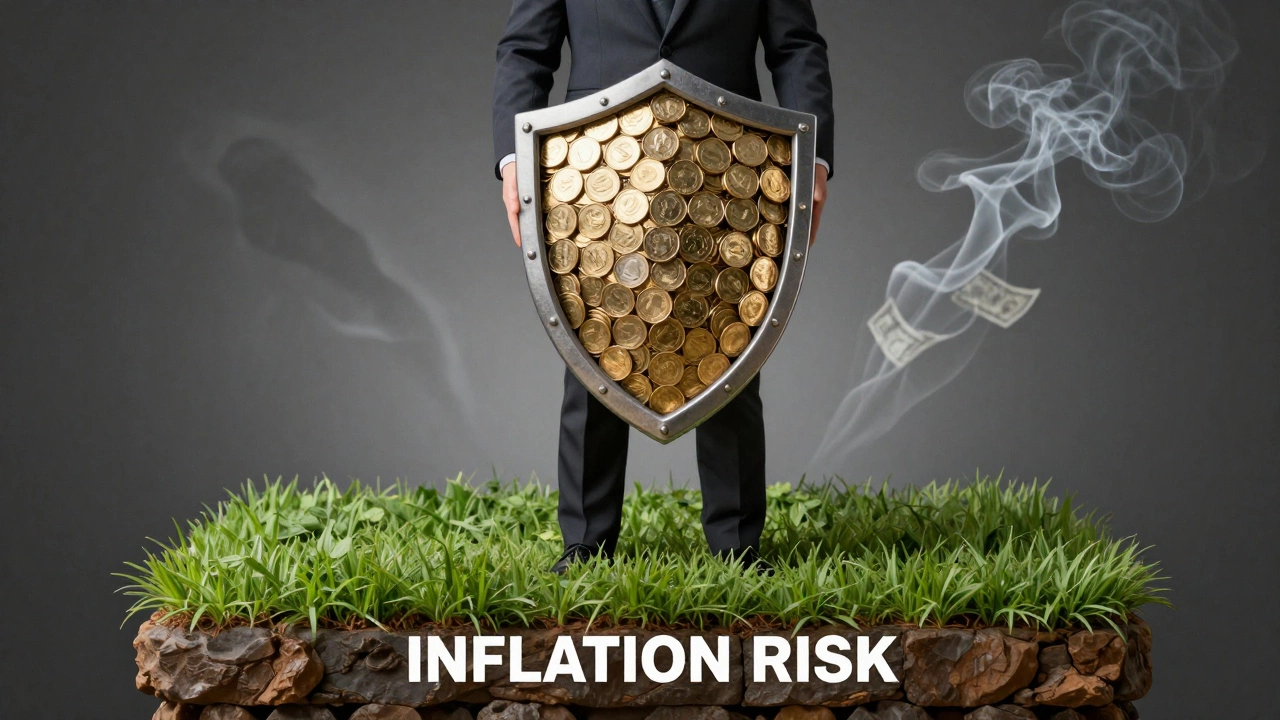
- Ignoring Inflation Risk: Keeping $10,000 under your mattress is "safe" from theft (if you’re careful) and bank failure. But if inflation is 3%, you lose $300 in purchasing power every year. Safety includes protecting your buying power.
- Over-Concentration: Putting $500,000 into one GIC at one bank leaves $400,000 uninsured. Diversify across institutions or use umbrella insurance policies if available.
How to Choose Based on Your Timeline
Your time horizon dictates your safety strategy. Ask yourself: When will I need this money?
0-12 Months: Use a High-Yield Savings Account. You need instant access for emergencies or upcoming bills. Don’t lock it away.
1-3 Years: Consider a ladder of 1-year and 2-year GICs. This gives you slightly better rates than savings while ensuring some money becomes accessible regularly.
3+ Years: You can start looking at longer-term Government Bonds or a mix of GICs and high-grade corporate bonds. The longer the term, the more sensitive the price is to rate changes, but holding to maturity eliminates that risk.
Frequently Asked Questions
Is a CDIC-insured account completely risk-free?
It is as close to risk-free as possible for retail investors. The Canadian government backs the CDIC, meaning if a member institution fails, your deposits up to $100,000 per category are protected. The only real risks are inflation eroding your purchasing power or human error (like putting too much money in one account).
What happens if I break my GIC early?
If you have a non-redeemable GIC and cash it out before maturity, you will typically lose all the interest you have earned so far. Some banks may also charge a small administrative fee. Redeemable GICs allow early withdrawal but come with a significantly lower interest rate to begin with.
Are Money Market Funds safer than Savings Accounts?
No, they are generally considered slightly riskier because they are not government-insured. Savings accounts are backed by CDIC or FDIC guarantees. Money Market Funds rely on the quality of the underlying assets (short-term debt). While the risk of loss is very low, it is not zero, whereas insured deposits have a legal guarantee.
Should I put my emergency fund in a GIC?
Generally, no. An emergency fund needs to be liquid, meaning you can access it immediately without penalties. Breaking a GIC early usually results in losing your interest earnings. A High-Yield Savings Account is better suited because it offers similar safety with instant access.
How does inflation affect the safety of my money?
Inflation is a silent thief. If your money earns 4% interest but inflation is 5%, you are losing purchasing power. To truly keep your money "safe," you need returns that match or exceed inflation. In 2026, many high-yield savings accounts and GICs are coming close to matching inflation, making them viable for capital preservation.