
Where to Get 7% Interest on Savings in 2026: Best Accounts & Strategies
 May, 10 2026
High-Yield Savings & GIC Calculator
Your Parameters
Projected Returns
High-Yield SavingsTotal Value
Interest Earned
Comparison with Other Strategies
Finding a 7% interest rate on savings is no longer just a dream; it’s a realistic target for savvy savers in 2026. While traditional brick-and-mortar banks often lag behind with single-digit or low-double-digit percentages, alternative financial instruments and digital-first institutions have raised the bar. If you are holding cash under the mattress or in a standard checking account, you are losing purchasing power to inflation. The good news? You can earn significantly more by shifting your strategy slightly.
The Reality of 7% Interest Rates in 2026
Let’s be clear about the landscape. As of May 2026, the global economic environment has stabilized somewhat after the volatile years of 2023-2025. Central banks, including the Bank of Canada and the Federal Reserve, have maintained relatively higher benchmark rates compared to the near-zero era of the previous decade. However, "7%" is not a magic number that applies everywhere equally. It depends heavily on where you live, what currency you hold, and how much risk you are willing to take.
In Canada, where I spend my time in Toronto, getting a flat 7% on a guaranteed, insured deposit is tough but possible if you look at specific promotional offers from online banks or high-yield Guaranteed Investment Certificates (GICs). In the United States, several high-yield savings accounts and short-term certificates of deposit (CDs) have hovered around this mark. The key is understanding that these rates are dynamic-they change monthly based on central bank policy decisions.
Top Vehicles for High-Yield Savings
To hit that 7% target, you need to move beyond basic demand deposits. Here are the primary financial vehicles that currently offer competitive returns:
- High-Yield Savings Accounts (HYSAs): These are offered primarily by online-only banks. Without physical branches, they save on overhead and pass those savings to you as higher interest rates. Many top-tier US HYSAs offer between 4.5% and 5.5%, while some aggressive Canadian online TDs (Term Deposits) can spike higher during promotional periods.
- Certificate of Deposit (CD) / GIC: By locking your money away for a set term (e.g., 12 months), you agree to leave it untouched. In return, the institution pays a premium. Short-term CDs (3-6 months) often track closely with current prime rates, while longer terms may offer lower yields if the market expects rates to fall.
- Money Market Funds: These are investment vehicles that pool money to invest in short-term, high-quality debt securities. They are not insured by deposit insurance schemes like CDIC (Canada) or FDIC (US), but they historically maintain a stable net asset value and offer yields comparable to short-term government bonds.
- Government Bonds: Directly buying short-term treasury bills (T-Bills) can sometimes yield better than savings accounts because there is no middleman taking a cut. In Canada, one-year T-Bills have occasionally surpassed 4-5%, and combined with other strategies, can help reach your goals.
Geographic Differences: Canada vs. United States
Your location drastically changes your options. If you are in the US, finding a 5%+ APY (Annual Percentage Yield) on a high-yield savings account is common among fintech companies like Ally, Marcus, or SoFi. Reaching exactly 7% usually requires locking into a CD or looking at specialized brokered CDs.
If you are in Canada, the math is different. The Big Five banks (RBC, TD, Scotiabank, BMO, CIBC) typically offer meager rates on regular savings accounts-often below 1%. To get close to 7% in Canada, you likely need to look at:
- Promotional Term Deposits: Online banks like EQ Bank, Tangerine, or Simplii Financial frequently run limited-time promotions where 12-month GICs offer boosted rates. Occasionally, these spike above 5%, and with compounding or specific promotional tiers, you might approach higher effective yields.
- Brokered CDs: Some Canadian brokers allow access to US-based CDs, which often carry higher yields due to the stronger USD interest rate environment. However, this introduces currency exchange risk.
- TFSA/GIC Combinations: While the TFSA (Tax-Free Savings Account) itself doesn't generate interest, placing a high-interest GIC inside it ensures all earnings are tax-free, effectively boosting your net return.
How to Maximize Your Effective Yield
Getting 7% isn't just about picking an account; it's about optimizing your approach. Consider these tactics:
| Strategy | Risk Level | Liquidity | Potential Yield (2026 Est.) |
|---|---|---|---|
| Online High-Yield Savings | Low | High | 4.5% - 5.5% |
| 12-Month GIC/CD | Low | Low (Locked) | 5.0% - 6.0% |
| Money Market Fund | Low-Medium | Medium | 4.8% - 5.8% |
| Short-Term Govt Bonds | Very Low | Medium | 4.5% - 5.2% |
| Corporate Bond ETFs | Medium | High | 6.0% - 8.0%* |
*Note: Corporate bond ETFs involve market risk and are not principal-guaranteed.
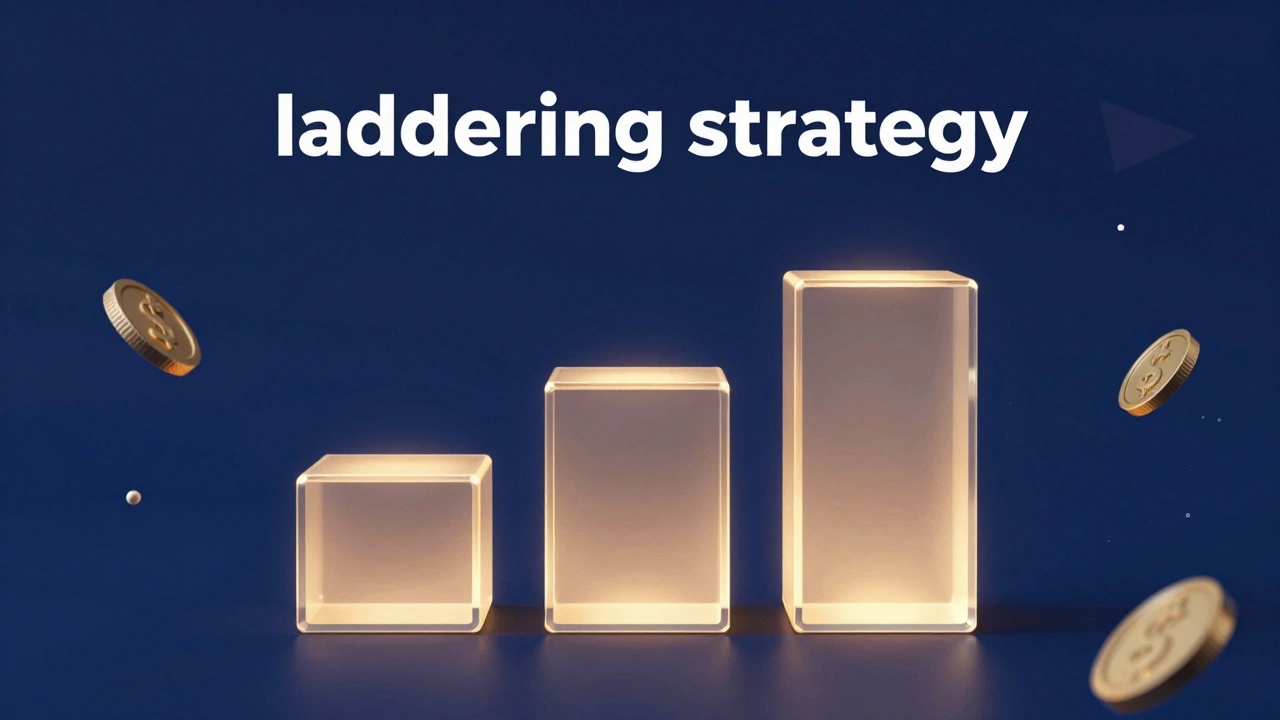
To bridge the gap between 5% and 7%, consider a laddering strategy. Instead of putting all your money into one 12-month GIC, split it into three 4-month GICs. This way, you capture higher short-term rates that are often more responsive to central bank hikes, and you have liquidity every few months to reinvest at potentially higher rates.
Risks and What to Watch Out For
Higher returns always come with trade-offs. Before chasing that 7% figure, ask yourself these questions:
- Is the institution insured? In Canada, ensure your deposits are covered by the CDIC up to $100,000 per category. In the US, look for FDIC insurance. Never chase yield into uninsured platforms unless you fully understand the counterparty risk.
- Are there hidden fees? Some accounts advertise high rates but charge monthly maintenance fees or withdrawal penalties that eat into your profits. Look for "no-fee" structures.
- What happens when rates drop? If you lock in a 7% rate for two years, and the central bank cuts rates by 2% next year, you’re sitting pretty. But if you keep your money in a variable savings account, your yield will drop immediately. Decide if you want certainty (fixed) or flexibility (variable).
- Currency Risk: If you are a Canadian earning CAD but investing in USD assets to get higher yields, a strengthening Canadian dollar could wipe out your interest gains. Use hedged funds or stay in your home currency if you are risk-averse.

Action Plan: How to Start Today
You don’t need a massive fortune to benefit from these rates. Here is a step-by-step plan to boost your savings yield:
- Audit Your Current Accounts: Check your everyday savings account. If it’s paying less than 2%, it’s time to move. Calculate how much you’re losing annually. For $10,000, moving from 0.5% to 5.5% saves you $500 a year.
- Open a High-Yield Account: Research online banks with strong ratings. In Canada, look at EQ Bank, Wealthsimple Cash, or Tangerine. In the US, compare Ally, Discover, and Capital One. Ensure they meet insurance requirements.
- Diversify with GICs/CDs: Allocate a portion of your emergency fund (e.g., 6 months of expenses) into fixed-term deposits. Use a ladder structure to balance liquidity and yield.
- Automate Transfers: Set up automatic transfers from your checking account to your high-yield savings. This ensures you save consistently without thinking about it.
- Review Quarterly: Interest rates change. Every quarter, check if new promotional rates are available. Be ready to break early-withdrawal GICs (if penalty is low) or switch providers if better rates emerge.
Frequently Asked Questions
Can I really get 7% interest on savings in 2026?
Yes, but it requires looking beyond traditional big banks. While standard savings accounts rarely exceed 4-5%, short-term GICs, promotional term deposits, and certain money market funds can approach or exceed 7%, especially if you combine strategies like laddering or use tax-advantaged accounts like TFSAs in Canada.
Are high-yield savings accounts safe?
Most reputable high-yield savings accounts are very safe. In the US, look for FDIC insurance, which covers up to $250,000 per depositor. In Canada, look for CDIC insurance, covering up to $100,000 per category. Always verify the insurance status before depositing funds.
What is the difference between APY and APR?
APR (Annual Percentage Rate) is the simple interest rate. APY (Annual Percentage Yield) includes the effect of compounding interest. For savings, APY is the more important metric because it shows your actual annual return. A 7% APR compounded daily results in a slightly higher APY.
Should I choose a GIC or a high-yield savings account?
Choose a GIC if you know you won’t need the money for a specific period (e.g., 1 year) and want a guaranteed rate. Choose a high-yield savings account if you need liquidity and want to benefit from potential rate increases. Many people use both: keeping emergency funds in savings and long-term savings in GICs.
Do I have to pay taxes on the interest earned?
In most cases, yes. Interest income is taxable. However, in Canada, if you hold these investments within a TFSA (Tax-Free Savings Account), you pay no tax on the growth. In the US, Roth IRA contributions grow tax-free, but traditional IRAs defer taxes until withdrawal. Consult a tax professional for personalized advice.
Finding 7% interest is achievable in 2026 if you are willing to do a little research and move your money to the right places. Don’t let your cash sit idle. Start comparing rates today and watch your savings grow faster than ever.