
Which Bank Has the Best Savings Account in 2026?
 Sep, 24 2026
Savings Account Yield Estimator
Enter your current savings balance to see how much more you could earn by switching from a traditional bank (approx. 0.05% APY) to a top-tier online bank (approx. 4.50% APY).
Enter a balance and click calculate to see results.
It is 2026, and if your money is sitting in a traditional brick-and-mortar checking account earning 0.01% interest, you are essentially paying for the privilege of holding cash. Inflation doesn't care about your brand loyalty. While national giants like Chase or Bank of America offer convenience, they rarely offer growth. The real winners in the savings game are often the digital-first institutions that don't have to pay for marble lobbies and tellers on every corner.
Finding the best savings account isn't just about picking the highest number on a screen. It’s about matching the right type of account to your specific financial behavior. Do you need instant access? Are you willing to lock money away for six months? Do you value customer service over an extra 0.5% APY? Let's break down who actually wins this year and why.
The Top Contenders for High-Yield Savings
If you are looking for pure return on investment with minimal friction, three names consistently rise to the top in 2026: Marcus by Goldman Sachs, Ally Bank, and Discover Bank. These aren't obscure startups; they are established players that have figured out how to keep overhead low and pass those savings to you.
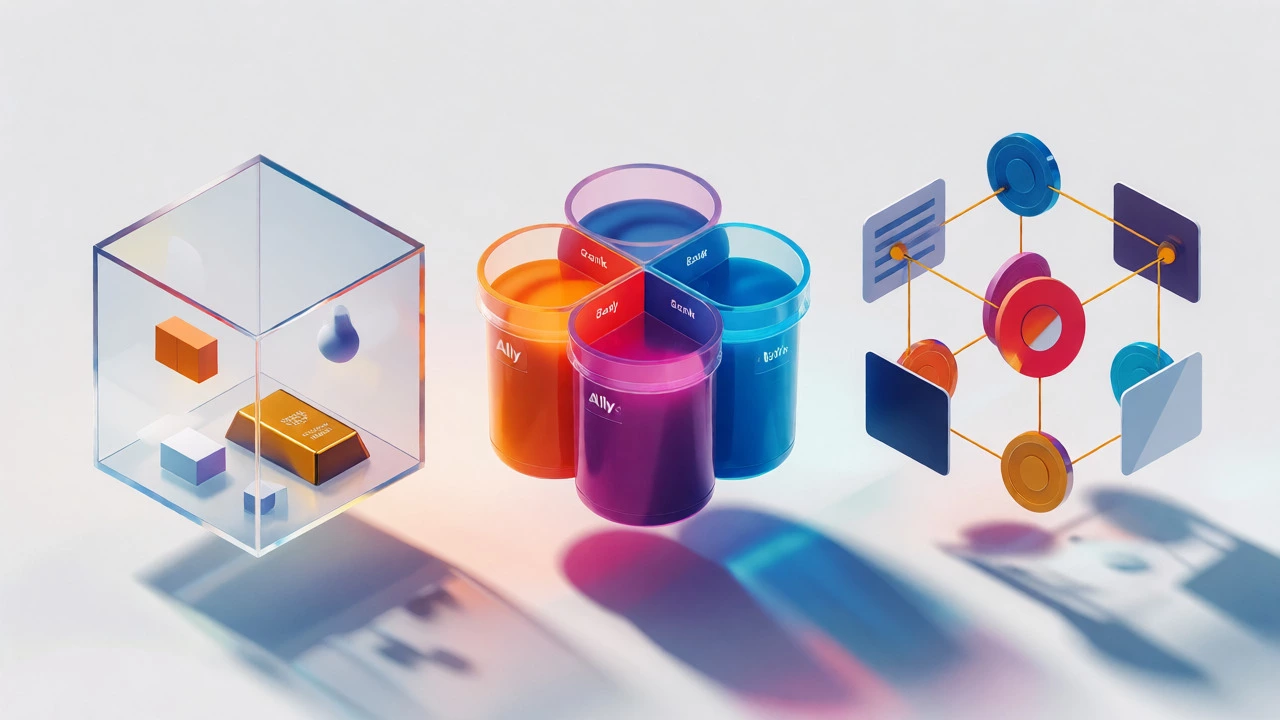
Ally Bank remains a favorite because it combines high yields with genuinely helpful tools. Their "Buckets" feature lets you subdivide your savings into goals like "Emergency Fund" or "Vacation," all within one account. This psychological separation helps prevent accidental spending. Plus, their customer service is rated highly for responsiveness, which matters when your app glitches at 2 AM.
Marcus by Goldman Sachs takes a different approach. They stripped away everything non-essential. No fees, no minimums, and a simple interface. Because there are no branches and no physical checks (you transfer funds electronically), their operating costs are rock bottom. This allows them to offer competitive Annual Percentage Yields (APY) that often beat traditional banks by 300% or more.
Discover Bank rounds out the top tier. Known originally for credit cards, their banking arm offers robust savings accounts that integrate seamlessly with their card ecosystem. If you already use Discover for daily spending, moving your savings here creates a closed loop where transfers are instant and rewards can be directed straight to your savings balance.
Traditional Banks vs. Online Banks: The Real Trade-Off
You might wonder why your local branch offers 0.05% while an online bank offers 4.5%. The difference lies in infrastructure. Traditional banks maintain expensive physical networks. Online banks operate on servers. When you choose an online-only institution, you are trading face-to-face interaction for better math.
| Feature | Online Banks (e.g., Ally, Marcus) | Traditional Banks (e.g., Chase, Wells Fargo) |
|---|---|---|
| Average APY | 4.00% - 4.80% | 0.01% - 0.10% |
| Monthly Fees | $0 | $0 - $12 (often waived with conditions) |
| Minimum Balance | $0 - $500 | $0 - $1,500+ |
| Access Method | App, Website, ATM Network | Branch, App, ATM |
| Transfer Speed | 1-2 Business Days (ACH) | Instant (Internal) / 1-2 Days (External) |
Notice the transfer speed column. This is the biggest pain point for new online bank users. Moving money from your primary checking account to your online savings account usually takes one to two business days via ACH. You cannot withdraw cash instantly from your pocket unless you have a debit card linked to the account. Some online banks, like SoFi or Varo, now offer debit cards that work at ATMs, but others require you to plan ahead. If you need cash today, traditional banks win. If you want growth, online banks win.
Understanding APY vs. Interest Rate
Banks love to advertise "Interest Rates." But as a saver, you should only care about APY, which stands for Annual Percentage Yield. This is the critical distinction most people miss.
Here is the simple truth: Interest rate is the simple percentage paid on your principal. APY includes compound interest-meaning you earn interest on your interest. In a high-yield environment, the gap between the advertised interest rate and the actual APY can be significant. Always compare accounts based on APY. If Bank A says "4.5% APY" and Bank B says "4.4% APY," Bank A pays more, regardless of what the base interest rate looks like on the fine print.
Furthermore, watch out for promotional rates. Some banks offer a teaser rate for the first three months. Read the terms. Does the rate drop after 90 days? Will it stay competitive if the Federal Reserve cuts rates? In 2026, with economic shifts still settling, variable rates are common. Ensure the bank has a history of maintaining competitive rates during downturns, not just spiking them during highs.
Who Should Choose Which Bank?
Not everyone needs the same solution. Your ideal bank depends on your personality and financial habits.
- The Goal-Oriented Saver: Choose Ally Bank. Their Bucket system visualizes progress toward specific targets. Seeing your "Car Fund" grow separately from your "Emergency Fund" reduces mental clutter and keeps you motivated.
- The Minimalist: Choose Marcus by Goldman Sachs. If you hate clutter and want a set-it-and-forget-it experience, Marcus is clean. No bells, no whistles, just high yield and reliability backed by a major financial institution.
- The Ecosystem User: Choose Discover Bank or Capital One. If you already use their credit cards, consolidating your finances simplifies tracking. Capital One also offers hybrid features, including some branch access in select cities, bridging the gap between online and offline.
- The Cash Access Needer: Consider Sofi or Varo. These fintech apps offer high-yield savings but come with debit cards and early paycheck access. You get the online bank rates with the immediate access of a traditional checking account.

Pitfalls to Avoid When Switching Banks
Switching banks sounds easy, but mistakes cost money. Here are the traps to dodge.
First, ignore the "minimum balance to avoid fees" trap. Many traditional banks charge $12 a month if you dip below $1,500. That fee alone eats up years of interest earnings. Stick to accounts with zero monthly maintenance fees, which almost all reputable online banks offer.
Second, don't forget FDIC insurance. Whether you choose a tech-savvy neobank or a century-old bank, ensure your deposits are protected. The Federal Deposit Insurance Corporation (FDIC) insures up to $250,000 per depositor, per insured bank, for each account ownership category. Most legitimate online banks partner with chartered banks to provide this coverage. Verify this before moving large sums.
Third, consider tax implications. Savings account interest is taxable income. At the end of the year, you will receive a 1099-INT form. If you have multiple high-yield accounts across different banks, managing these forms can get messy. Consolidating into one or two main institutions simplifies tax season.
Final Verdict: Is There a Single "Best"?
There is no single "best" bank for everyone, but there is a best bank for you. If you prioritize maximum return and don't mind waiting 48 hours for cash, Marcus or Ally are hard to beat. If you want seamless integration with existing credit products, Discover or Capital One make sense. If you need immediate cash access without sacrificing too much yield, look at fintech hybrids like SoFi.
The era of leaving money idle in low-interest accounts is over. With current rates, moving $10,000 from a 0.01% account to a 4.5% APY account earns you roughly $450 extra per year. That is free money for doing nothing but clicking a few buttons. Start small. Open one high-yield account. Move your emergency fund there. Watch the difference.
Is my money safe in an online-only bank?
Yes, provided the bank is FDIC-insured. Most reputable online banks either hold their own FDIC charter or partner with one that does. As long as your total deposits are under $250,000 per institution, your money is protected against bank failure just as it would be in a traditional bank.
Why do online banks offer higher interest rates?
Online banks have significantly lower overhead costs. They do not pay for physical branches, extensive staff, or utility bills for thousands of locations. These savings are passed on to customers in the form of higher Annual Percentage Yields (APY).
Can I lose money in a high-yield savings account?
You cannot lose your principal deposit due to market fluctuations, unlike stocks or crypto. However, inflation can erode purchasing power. Also, if the Federal Reserve lowers rates, your APY will decrease, meaning you earn less interest in the future, but your initial deposit remains intact.
How long does it take to open a savings account online?
Most online applications take less than 10 minutes. You typically need your Social Security number, government ID, and bank routing/account numbers for funding. Approval is often instantaneous, though verifying identity documents can occasionally take 24-48 hours.
Do I need a checking account with the same bank?
No. You can link any external checking account to an online savings account. However, having both at the same institution can simplify transfers and sometimes unlock additional benefits like faster internal transfers or combined relationship bonuses.