
Which Banks Offer 7% Interest on Savings Accounts in 2026?
 Jul, 16 2026
Savings Account Switch Calculator
Traditional Bank Total
$0.00
High-Yield Total
$0.00
Potential Earnings Gained:
by switching to a High-Yield Savings Account
Note: Calculations assume daily compounding interest. Rates are estimates based on mid-2026 market conditions. Actual rates may vary by institution.
You want your money to work for you. That is why a 7% interest rate sounds too good to be true. In mid-2026, finding a legitimate bank that pays this much on a standard savings account is nearly impossible for most everyday depositors. If you see an ad promising 7% guaranteed returns with zero risk, stop and look closer. It is likely a marketing trick, a limited-time promo that has expired, or something entirely different than a regular savings account.
The reality of the banking landscape in July 2026 is starkly different from the hype you might see on social media. While interest rates are higher than they were five years ago, they have stabilized or dipped slightly as central banks adjust their policies. Most traditional big banks offer between 0.5% and 1.5% on basic savings. Even the top-performing online high-yield savings accounts (HYSA) typically cap out around 3.5% to 4.5%. To get anywhere near 7%, you usually need to lock your money away for years in a Guaranteed Investment Certificate (GIC) or accept significant market risk in stocks or crypto.
The Reality Check: Where Did the 7% Myth Come From?
Confusion often stems from mixing up different financial products. A few years back, during a period of rapid inflation and aggressive rate hikes by the Bank of Canada and the Federal Reserve, some short-term GICs briefly touched 5% or 6%. But 7%? That number usually belongs to the world of investing, not saving.
Consider the S&P/TSX Composite Index. Over long periods, the stock market averages about 7% to 9% annual returns. But that is an average over decades, including crashes and booms. It is not a guaranteed monthly payout from a bank. Similarly, certain corporate bonds or high-risk cryptocurrency staking protocols might advertise yields above 7%. However, these come with the real possibility of losing your principal investment. A savings account, by definition, should be safe. In Canada, deposits are insured by the Canada Deposit Insurance Corporation (CDIC) up to $100,000 per category. No CDIC-insured product currently offers 7% because banks cannot lend out your money at rates high enough to cover that cost while maintaining safety margins.
If a website claims to offer a 7% savings account, check the fine print. Are they talking about Annual Percentage Yield (APY) compounded daily? Is it a promotional rate for the first 30 days only? Or is it actually a term deposit where you cannot touch your cash for two years? Understanding these distinctions protects you from misleading ads.
What Rates Can You Actually Get in 2026?
To set realistic expectations, let’s look at what the market actually offers right now. As of July 2026, the highest interest rates for liquid savings accounts are found at online-only banks and credit unions. These institutions have lower overhead costs than brick-and-mortar branches, allowing them to pass more value back to customers.
| Institution Type | Typical Interest Rate (APY) | Liquidity | Risk Level |
|---|---|---|---|
| Big Five Traditional Banks | 0.5% - 1.2% | High (Instant Access) | Very Low |
| Online High-Yield Banks | 3.5% - 4.5% | High (Instant Access) | Low (CDIC Insured) |
| Term Deposits / GICs (1-Year) | 4.0% - 5.0% | Low (Locked Funds) | Low (CDIC Insured) |
| Stock Market Index Funds | ~7% (Historical Avg) | Medium (Market Hours) | High (Volatility) |
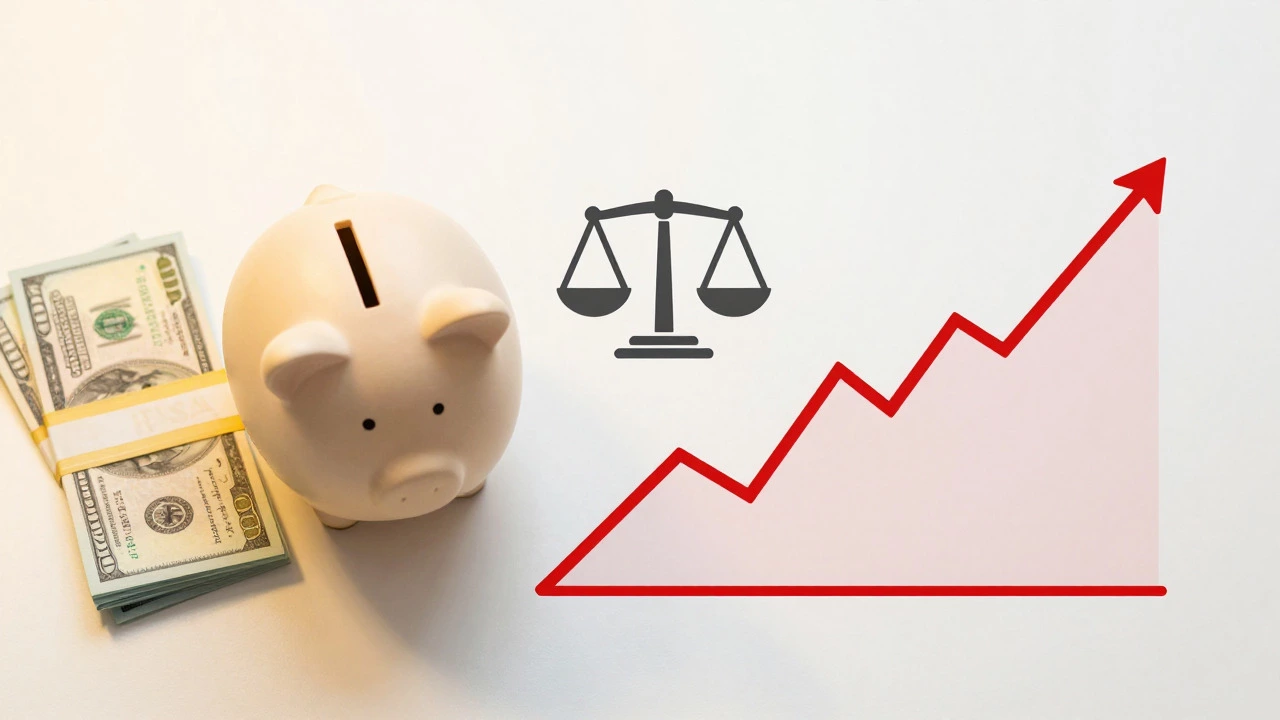
Notice the gap. The jump from 4.5% (top savings) to 7% (market average) requires taking on substantial risk. If you need the money for an emergency fund or a down payment in six months, you should stick to the 3.5%-4.5% range. Chasing 7% in volatile assets could leave you with less money when you need it most.
Top Online Banks Offering Competitive Rates
Since no one is giving you 7% on a simple savings account, the next best move is to maximize what is available. Here are the types of institutions leading the pack in 2026:
- Wealthsimple Save: This popular platform often matches top-tier rates, hovering around 4.0% to 4.2%. It integrates easily with budgeting apps and offers instant transfers to linked chequing accounts.
- BMO eSaving: While BMO is a big bank, their digital-first savings account competes well, offering rates close to 3.8%. It is ideal if you already bank with BMO and want seamless integration.
- RBC Royal Bank High Interest Savings: Similar to BMO, RBC offers competitive rates for digital users, though sometimes slightly lower than pure-play fintechs. Look for promotional boosts for new customers.
- Cashko: A newer player focusing on micro-investing and savings. They occasionally run promotions that push effective yields higher, but always check the base rate.
- Meridian Credit Union: Many Canadian credit unions still beat big banks. Meridian, based in BC but accessible online, frequently offers rates above 4.5% on their high-interest savings accounts.
These options are far better than leaving your cash in a chequing account earning 0.01%. Switching takes minutes and can add hundreds of dollars to your balance annually without any extra effort.
How to Maximize Your Returns Without Risk
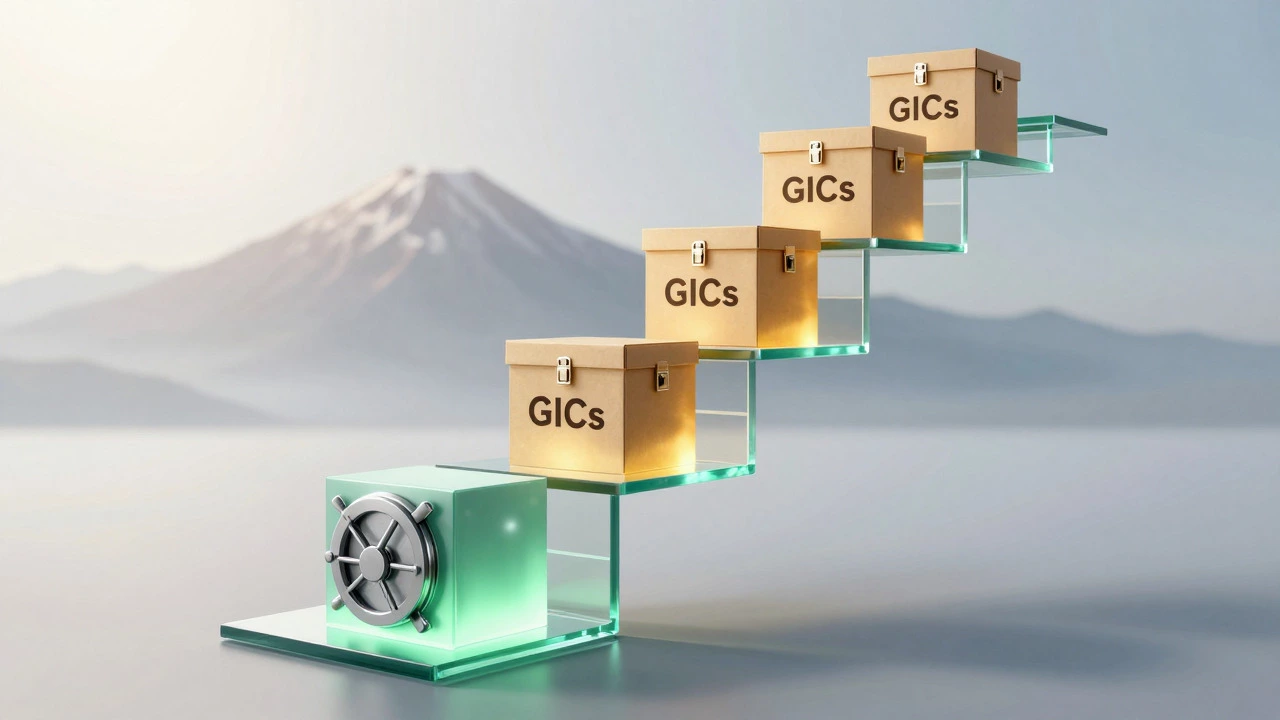
If you are determined to approach higher yields safely, consider a ladder strategy. Instead of putting all your money into one savings account, split it. Keep three months of expenses in a high-yield savings account for immediate access. Then, take another chunk and lock it into a 1-year or 2-year GIC. Currently, some lenders offer 5% to 5.5% on 2-year GICs. This isn’t 7%, but it is significantly better than 1% and still fully insured.
Another tactic is to use cash-back credit cards wisely. If you spend $2,000 a month on groceries and gas, a card offering 2% cash back effectively adds $480 a year to your income. Combined with a 4% savings account, your overall return on capital improves dramatically. Just ensure you pay off the balance in full every month; otherwise, the 20%+ interest charge on credit debt will wipe out any gains instantly.
Pitfalls to Avoid
Be wary of "hybrid" accounts that claim to invest your savings automatically. Some robo-advisors market themselves as savings alternatives. While they may target 7% returns, they are not insured like bank deposits. If the market drops 20% next quarter, your "savings" drop with it. True savings accounts guarantee your principal. Never confuse growth potential with safety.
Also, watch out for fees. Some online accounts charge monthly maintenance fees if you don’t meet minimum transaction requirements. A 4% interest rate becomes useless if you’re paying $10 a month in fees. Always choose accounts with no monthly fees and no minimum balance penalties.
Understanding Compounding: The Secret Weapon
Interest compounds differently across institutions. Daily compounding means you earn interest on your interest every single day. Monthly compounding does it once a month. While the difference seems small, over time it adds up. For example, $10,000 at 4% compounded daily yields slightly more than 4% compounded monthly. When comparing banks, look for the APY (Annual Percentage Yield), which includes compounding effects, rather than just the nominal rate.
In Canada, regulations require banks to disclose both the rate and the compounding frequency. Use this information to calculate the true return. There are free online calculators that can show you exactly how much you’ll earn after one, three, or five years. Plug in the numbers for different banks before you sign up.
Is It Worth Moving Your Money?
Absolutely. Staying with a big bank for convenience is costing you money. If you have $20,000 in a traditional savings account earning 0.5%, you make $100 a year. Move that same amount to an online HYSA earning 4.2%, and you make $840 a year. That is $740 extra for doing nothing but clicking a button to transfer funds. Over ten years, that difference grows substantially due to compounding.
The process is straightforward. Open an account with an online provider. Link your existing chequing account. Set up automatic transfers so a portion of your paycheck goes directly into the high-yield account. Most transfers between Canadian banks via Interac e-Transfer or bill pay take one business day. It is not instantaneous, but it is fast enough for almost all needs.
Future Outlook: Will Rates Go Higher?
Economists predict that interest rates will remain relatively stable through late 2026 and into 2027. The era of ultra-low rates is over, but we are unlikely to see a return to the double-digit rates of the 1980s. Central banks are focused on keeping inflation low, which means borrowing costs won’t skyrocket further. For savers, this is good news. Rates are likely to stay in the 3%-5% range for savings and GICs, providing a reliable buffer against inflation.
If you heard rumors of 7% savings accounts, they are likely misplaced. Focus on securing the best available safe rate today. Build your emergency fund. Pay down high-interest debt. And only then consider riskier investments for long-term growth. Your future self will thank you for being smart, not greedy.
Are there any banks in Canada offering 7% interest on savings accounts in 2026?
No. As of July 2026, no legitimate, CDIC-insured bank in Canada offers 7% interest on standard savings accounts. Top high-yield savings accounts typically range between 3.5% and 4.5%. Claims of 7% usually refer to risky investments, limited-time GICs, or misleading marketing tactics.
What is the safest way to get close to 7% returns?
To approach 7% returns safely, you would need to combine high-yield savings (4%) with other strategies like cash-back rewards or dividend-paying stocks. However, purely safe, liquid savings accounts do not reach 7%. Guaranteed Investment Certificates (GICs) may offer 5%-5.5% if you lock your money for two years, but this is still below 7%.
Why do big banks offer such low interest rates?
Big banks have high overhead costs due to physical branches, staff, and legacy systems. They also benefit from customer inertia-many people keep money in low-interest accounts for convenience. Online banks have lower costs and compete aggressively on price to attract customers, resulting in higher rates.
Is my money safe in online high-yield savings accounts?
Yes, provided the institution is a member of the Canada Deposit Insurance Corporation (CDIC). Most reputable online banks and credit unions in Canada are CDIC members, meaning your deposits are insured up to $100,000 per category. Always verify CDIC membership before opening an account.
Should I choose a GIC or a High-Yield Savings Account?
Choose a High-Yield Savings Account if you need access to your money for emergencies or short-term goals. Choose a GIC if you can afford to lock your money away for a fixed term (e.g., 1-2 years) and want a slightly higher guaranteed rate. A balanced approach is to keep 3-6 months of expenses in savings and park longer-term funds in GICs.