
Which crypto is best to invest now? Top 5 cryptos with real traction in 2026
 Feb, 23 2026
Crypto Portfolio Calculator
Calculate your ideal investment allocation based on the 2026 strategy: 50% Bitcoin, 30% Ethereum, 10% Solana, 5% Polkadot, 5% Chainlink
Everyone’s asking the same question: which crypto is best to invest now? It’s not about hype. It’s not about memes. It’s about what’s actually moving, building, and getting used - right now, in early 2026.
Bitcoin isn’t dead - it’s the foundation
Bitcoin still holds over 50% of the total crypto market cap. That’s not luck. It’s because institutions, pension funds, and even sovereign wealth funds are quietly adding it to their reserves. Why? Because it’s the only digital asset with a proven track record of surviving crashes, regulation, and skepticism for over 15 years.
The Bitcoin halving in April 2024 triggered a new cycle. By Q1 2026, on-chain data shows that long-term holders are accumulating at record rates. Wallets holding over 1,000 BTC have grown by 37% since last year. This isn’t speculation - it’s institutional conviction. If you’re new to crypto, starting with Bitcoin isn’t flashy, but it’s the safest anchor in a volatile sea.
Ethereum: The engine behind everything
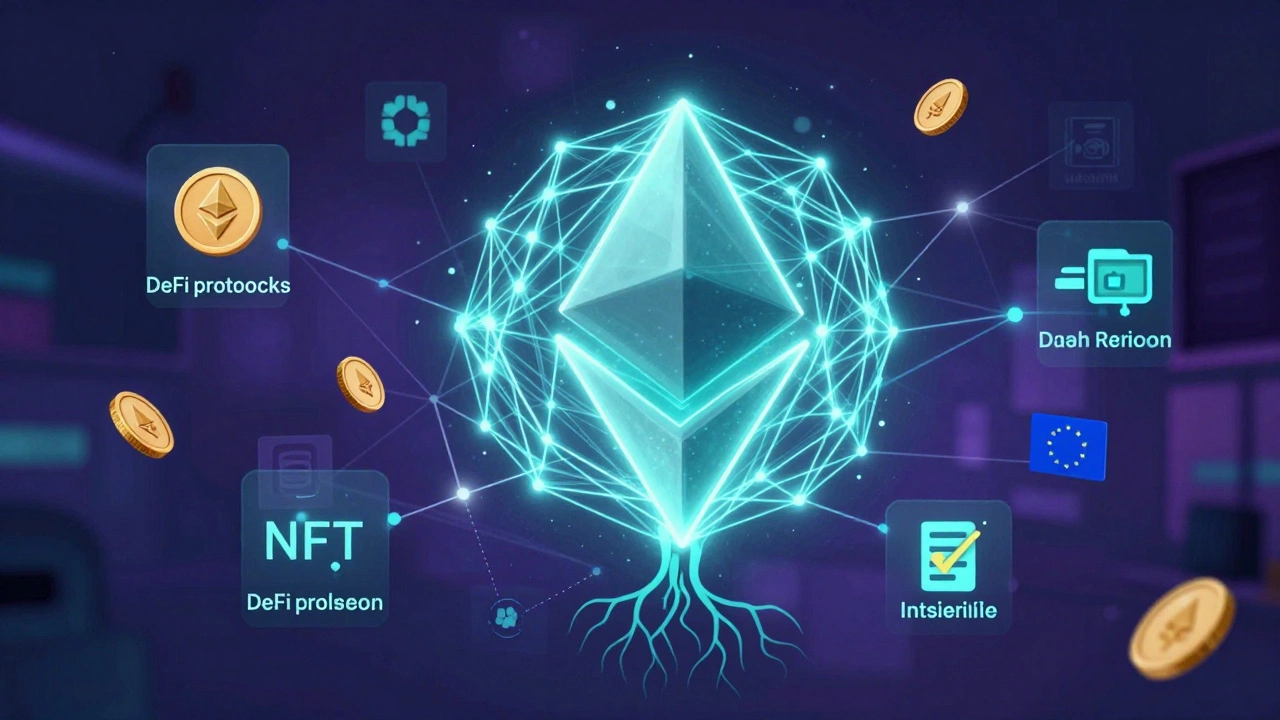
Ethereum isn’t just a coin. It’s the backbone of decentralized finance, NFTs, tokenized assets, and even real-world applications like land registries in Dubai and carbon credit tracking in the EU. Since the Merge in 2022, Ethereum uses 99.95% less energy than before. That matters - regulators are watching.
What’s new in 2026? Layer-2 networks like Arbitrum and Optimism now process over 80% of Ethereum’s transaction volume. Gas fees are consistently under $0.10. That’s cheaper than a coffee. Developers are building faster. Users are joining in droves. Ethereum’s ecosystem now supports over 7,000 active protocols. If crypto is the future, Ethereum is the operating system.
Solana: Fast, cheap, and breaking out
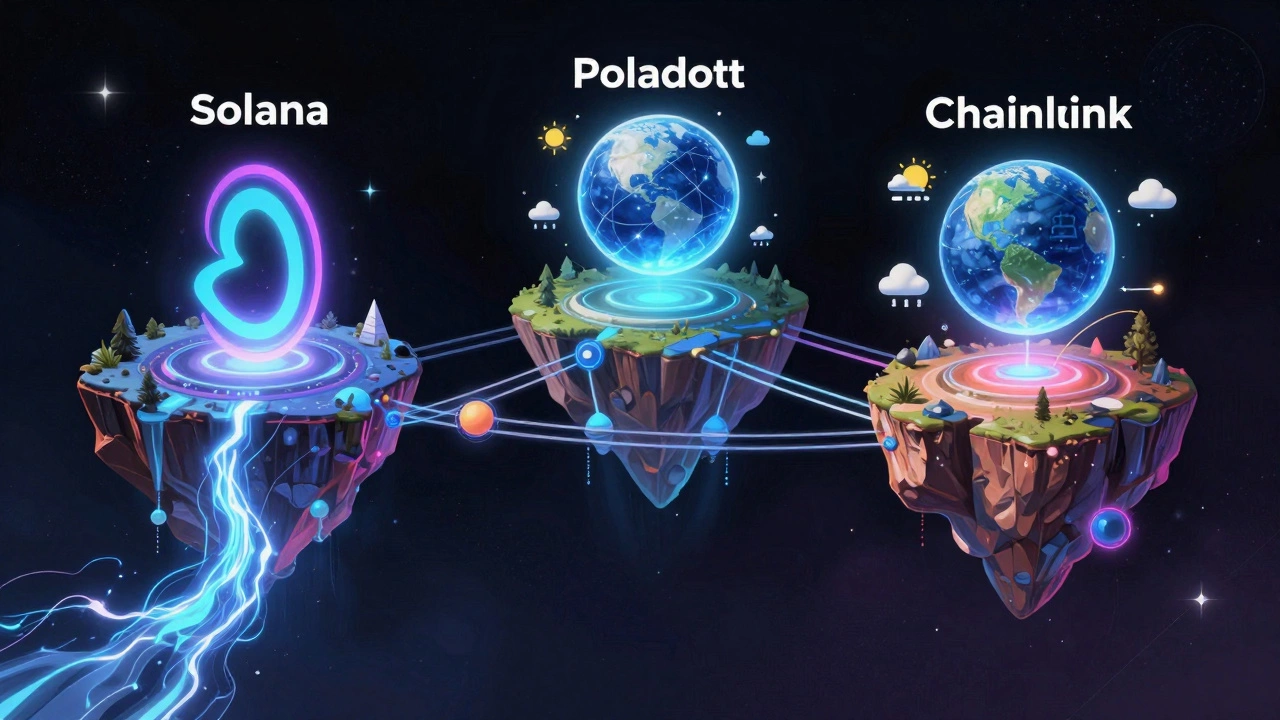
Solana got hammered in 2022 and 2023. But it didn’t die - it rebuilt. In 2025, it processed over 1.2 billion transactions in a single month. That’s more than Visa on its busiest day. Its network is stable now, with 99.99% uptime since late 2024.
Why does this matter? Because apps that need speed - like decentralized gaming, real-time trading bots, and social tokens - are moving here. Solana’s native token, SOL, is the fuel for these apps. And it’s not just DeFi. Major brands like Nike, Starbucks, and even a Canadian indie music label have launched NFTs on Solana. It’s becoming the go-to chain for user-facing crypto.
Polkadot: The internet of blockchains
Most people think crypto is a bunch of separate networks. Polkadot says no - it’s about connecting them. Polkadot’s relay chain lets independent blockchains (called parachains) talk to each other securely. No bridges. No wrapped tokens. Just native interoperability.
In 2026, over 70 parachains are live. Some are doing things you wouldn’t expect: a blockchain for carbon offsets verified by satellite data, another for AI training data sharing, and one for decentralized identity in the EU. DOT isn’t the flashiest coin, but it’s the glue holding together a multi-chain future. If you believe crypto won’t stay in silos, Polkadot is the bet.
Chainlink: The real-world data bridge
Crypto can’t just trade digital assets. It needs real data - weather, stock prices, insurance claims, supply chain logs. That’s where Chainlink comes in. It’s not a blockchain. It’s an oracle network. Think of it as a secure API that brings off-chain data onto blockchains.
Today, Chainlink feeds data to over 800 projects. It powers weather insurance payouts in Kenya, automates crop loans in Brazil, and verifies flight delays for refund systems in Europe. The LINK token isn’t for speculation - it’s for paying data providers. And as more industries move to smart contracts, Chainlink becomes more essential. No other project does this at scale.
What to avoid
There are thousands of cryptos. Most won’t last. Stay away from coins with no real use case, no team transparency, or no open-source code. Avoid anything promoted by influencers with no skin in the game. If a project doesn’t have a GitHub repo updated in the last 30 days, it’s probably dead.
Also, don’t chase pumps. The altcoin season that came in late 2024 was fueled by meme coins and low-liquidity tokens. Most of them lost 90% of their value by Q4 2025. Real value comes from utility, not tweets.
How to invest - practically
Don’t put all your money in one coin. A simple 2026 strategy:
- 50% Bitcoin - your core holding
- 30% Ethereum - your growth engine
- 10% Solana - your speed play
- 5% Polkadot - your interoperability bet
- 5% Chainlink - your real-world data exposure
Buy in slowly. Use dollar-cost averaging. Put in $100 a week, not $5,000 all at once. This smooths out volatility. And always store your crypto in a non-custodial wallet - like Ledger or Trezor. Never leave it on an exchange.
Bottom line
The best crypto to invest in now isn’t the one with the biggest pump. It’s the one with the most real-world use, the most developers building on it, and the most users relying on it. Bitcoin, Ethereum, Solana, Polkadot, and Chainlink aren’t perfect. But they’re the only ones that have passed the test of time, scale, and utility in 2026. Start there. Stay patient. Let the network effects work.