
Which is the best ISA account in 2026: Stocks, Cash, or Lifetime?
 Aug, 3 2026
ISA Strategy Finder
We Recommend:
You have £20,000 sitting there. It’s your annual tax-free savings limit for 2026. The clock is ticking toward April 6th, and every day you wait, inflation might be quietly eating away at its value. But here is the real problem: there is no single "best" ISA account. If you put that money into a high-interest savings account and try to retire in twenty years, you will likely lose purchasing power. If you dump it all into risky tech stocks and need the cash next month for a wedding, you could panic-sell at a loss.
The right choice depends entirely on what you are trying to do with the money. Are you saving for a house deposit? Planning for retirement? Or just building an emergency fund? Your goal dictates the vehicle. Let’s break down which ISA fits which life stage so you can stop guessing and start growing your wealth tax-free.
Understanding the ISA Landscape in 2026
Individual Savings Account (ISA) is a UK government-wrapped container for your savings and investments that shields profits from income tax and capital gains tax. Think of it not as a product itself, but as a tax wrapper. You can put different types of assets inside this wrapper depending on the rules.
In 2026, the core rule remains simple: you can save up to £20,000 across all ISAs combined. This is known as the ISA Allowance. Once you use it, it’s gone for the year. Unused allowance does not roll over. If you only save £10,000 in 2025, you don’t get £30,000 in 2026. You still get £20,000. This creates urgency. Many people treat their ISA like a regular bank account, topping it up sporadically. Smart savers automate contributions to hit the cap early, giving their money more time to work.
There are four main types of ISAs available to most adults:
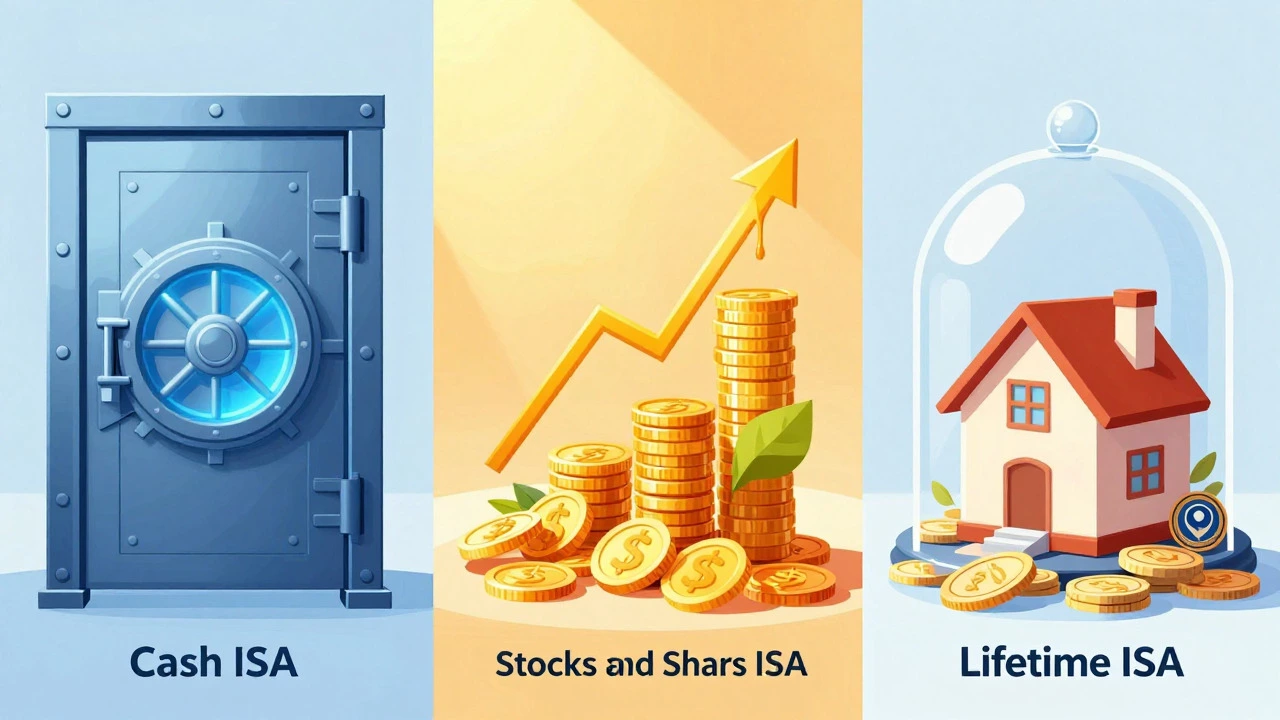
- Cash ISA: For short-term safety and liquidity.
- Stocks and Shares ISA: For long-term growth through markets.
- Lifetime ISA (LISA): For first-time home buyers or retirement (with bonuses).
- Innovative Finance ISA (IFISA): For peer-to-peer lending (higher risk).
You can hold multiple ISAs at once, provided you do not pay into two of the same type in the same tax year. For example, you can split your £20,000 between a Cash ISA and a Stocks and Shares ISA. This flexibility is powerful, but it also leads to confusion. Let’s look at who wins in each scenario.
The Best ISA for Long-Term Wealth: Stocks and Shares
If your timeline is five years or longer, the Stocks and Shares ISA is the most effective tool for beating inflation and building significant wealth. Why? Because cash loses value over time due to inflation. In 2026, while interest rates may be stable, historical data shows that equities outperform cash over decades.
Inside a Stocks and Shares ISA, you typically buy funds rather than individual stocks. Specifically, low-cost index trackers that mirror the global market. These funds charge minimal fees, often around 0.1% to 0.25% per year. Over thirty years, those small fee differences compound into tens of thousands of pounds.
Consider this: if you invest £20,000 annually in a diversified global index fund averaging 7% real returns (after inflation), you could accumulate over £1 million in today’s money by retirement. That growth is completely tax-free. Without the ISA wrapper, you’d pay Capital Gains Tax on profits above your annual exempt amount, which has been shrinking in recent budgets.
However, volatility is the price of admission. In bad market years, your portfolio might drop 20%. If you need that money for a holiday next summer, that’s stressful. But if you’re investing for a pension top-up or a child’s education ten years down the line, dips are opportunities to buy more units cheaper. The key is discipline. Set up a monthly direct debit, ignore the daily news noise, and stay invested.
The Best ISA for Short-Term Goals: Cash ISA
Need the money within three years? Don’t touch the stock market. Use a Cash ISA is a savings account where interest earned is free from UK income tax. While the returns are lower-typically between 4% and 5% gross in 2026-they are guaranteed. Your capital is protected up to £85,000 by the Financial Services Compensation Scheme (FSCS).
This makes Cash ISAs ideal for emergency funds, wedding deposits, or car purchases. The psychological benefit is huge. Knowing your money won’t vanish overnight allows you to sleep better. When choosing a Cash ISA, look for two things: easy access versus fixed terms, and whether the rate is variable or fixed.
Fixed-rate Cash ISAs lock your money away for one to five years in exchange for a slightly higher interest rate. Variable rates fluctuate with the Bank of England base rate. In 2026, with rates potentially stabilizing after the volatile 2022-2024 period, fixed deals offer predictability. Just remember: once you move money into a fixed term, you usually can’t add more to that specific ISA provider without losing your allowance status elsewhere.
The Best ISA for First-Time Buyers: Lifetime ISA
If you are under 40 and dreaming of owning a home, the Lifetime ISA (LISA) is a specialized account offering a 25% government bonus on contributions, capped at £1,000 per year. There is literally no better deal in personal finance. You put in £4,000, the government adds £1,000. That’s an instant 25% return before any market growth.
You can contribute up to £4,000 a year until age 50. This counts toward your overall £20,000 ISA allowance. So, you could max out your LISA (£4,000) and still have £16,000 left for other ISAs. The bonus is paid monthly into your account, compounding over time.
But beware the penalties. If you withdraw money for anything other than buying your first home (up to £450,000) or after age 60 for retirement, you face a 25% withdrawal charge. This effectively takes back the bonus plus a 5% penalty on your own contributions. It’s designed to keep the money locked in. For many young people, this rigidity is a feature, not a bug. It forces savings habits that are hard to maintain otherwise.
Comparison: Which ISA Fits Your Profile?
| Feature | Cash ISA | Stocks & Shares ISA | Lifetime ISA |
|---|---|---|---|
| Best For | Short-term goals (<3 years) | Long-term growth (>5 years) | First home / Retirement |
| Risk Level | Low (Capital Protected) | Medium to High | Medium (Market Linked) |
| Potential Return | 4-5% p.a. | 6-8% p.a. (historical avg) | 25% Gov Bonus + Market Growth |
| Max Annual Contribution | £20,000 | £20,000 | £4,000 |
| Access Flexibility | High (Easy Access) | High (Sell anytime) | Low (Penalties apply) |

Common Mistakes to Avoid
Even with good intentions, people sabotage their ISA strategy. Here are the biggest pitfalls I see clients make:
- Leaving Allowance Unused: Thinking you’ll save later. Life gets busy. Automate it.
- Chasing Past Performance: Buying into last year’s hottest sector. By the time you hear about it, the bubble might be bursting. Stick to broad diversification.
- Ignoring Fees: A 1% fee vs a 0.2% fee seems small. On £100,000, that’s £800 a year difference. Over 20 years, it’s massive.
- Mixing Up Types: Paying into two Cash ISAs in the same tax year. HMRC will flag this, and you’ll have to untangle it. Keep records.
- Panic Selling: Seeing a red screen during a market dip and selling. Time in the market beats timing the market.
How to Choose Your Provider
Not all platforms are created equal. When picking where to open your ISA, consider these factors:
- Platform Fees: Some charge flat monthly fees; others charge percentage-based fees. For smaller accounts, flat fees can eat your returns. Look for providers with low entry barriers.
- User Experience: Can you easily set up direct debits? Is the app intuitive? If the interface is clunky, you’re less likely to check in and stay engaged.
- Fund Selection: Do they offer low-cost Vanguard, iShares, or Legal & General trackers? Avoid platforms that push expensive proprietary funds.
- Customer Service: Read reviews. When things go wrong-and they will-you want humans who can help, not bots.
Popular choices in 2026 include Fidelity, Hargreaves Lansdown, Vanguard, and AJ Bell. Each has strengths. Vanguard is unbeatable on fees for its own funds. Hargreaves offers excellent research tools. Fidelity provides a strong mix of both. Compare them based on your specific needs.
Next Steps: Action Plan
Don’t overthink it. Start now. Here is your checklist:
- Determine Your Goal: Home? Retirement? Emergency fund?
- Check Your Age: Under 40? Open a Lifetime ISA immediately.
- Assess Timeline: Less than 3 years? Go Cash. More than 5? Go Stocks.
- Open Accounts: Sign up with a reputable provider. Take advantage of sign-up bonuses if available.
- Automate Contributions: Set up monthly transfers to ensure you hit your target without thinking about it.
- Review Annually: Check if your asset allocation still matches your risk tolerance.
The best ISA account is the one you actually use consistently. Perfection is the enemy of progress. Open the account today, even if it’s just with £100. Build the habit. The rest will follow.
Can I have more than one ISA?
Yes, you can hold multiple ISAs simultaneously. However, you cannot pay into more than one of the same type (e.g., two Cash ISAs) in the same tax year. You can split your £20,000 allowance across different types, such as putting £10,000 in a Cash ISA and £10,000 in a Stocks and Shares ISA.
What happens if I exceed my ISA allowance?
If you over-subscribe, your provider must report it to HMRC. You may face tax charges on the excess amount. To fix it, you usually need to transfer the excess funds to another provider or withdraw them, though withdrawing might affect your tax position. Always double-check your total contributions across all providers.
Is the Lifetime ISA only for buying a house?
No, you can also use it for retirement. After age 60, you can withdraw funds for any reason without the 25% penalty. Before 60, withdrawals for non-qualifying reasons incur the penalty. It’s a flexible long-term savings tool with strict early-access rules.
Do I need to declare ISA income on my tax return?
Generally, no. Interest and gains within an ISA are tax-free. However, if you receive dividends from shares held outside an ISA, those are taxable. Inside the ISA wrapper, everything is shielded from Income Tax and Capital Gains Tax.
Can I change my mind about my ISA type mid-year?
You can switch types by transferring existing funds, but you cannot simply withdraw and re-deposit without using up your current year’s allowance again. Use the official transfer process to move money between ISAs without affecting your £20,000 limit.