
Will Mortgage Rates Ever Be 3% Again? A Realistic Look at the Future of Borrowing
 May, 14 2026
Mortgage Rate Impact Calculator
Loan Details
Rate Comparison
Drag sliders to compare the "Golden Era" rate against today's reality.
Monthly Payment Breakdown
Loan Amount: $400,000| Scenario | Interest Rate | Monthly Payment | Total Interest Paid |
|---|---|---|---|
| The "Golden Era" | 3.0% | $0 | $0 |
| Current Reality | 6.5% | $0 | $0 |
It feels like a lifetime ago when mortgage rates were sitting comfortably around the low single digits, specifically hovering near 3%. For many homebuyers who locked in those numbers between 2020 and 2021, watching today’s rates climb into the mid-to-high 5s or even 6s is painful. You might be wondering if those cheap borrowing days are gone forever or if we’re just in a temporary blip. The short answer is yes, rates will likely drop again. But whether they hit exactly 3% requires looking past simple wishful thinking and understanding the structural shifts in the global economy.
The Golden Era: Why 3% Was an Anomaly
To understand where we are going, we have to look at where we came from. The period from 2020 to early 2022 was not "normal." It was a historical outlier driven by a perfect storm of crisis response. When the pandemic hit, central banks across the globe, including the Federal Reserve in the US and the Bank of Canada, slashed interest rates to near zero. They did this to prevent economic collapse.
This wasn’t just about making loans cheaper; it was about keeping the financial system alive. Governments also injected massive amounts of stimulus money into households. This combination-cheap debt and extra cash-created a frenzy in the housing market. Buyers could afford more because their monthly payments were artificially low. Lenders, eager for business, relaxed some standards. This created a bubble that made 3% seem like the new baseline, but it was actually a ceiling that only existed under extreme monetary policy conditions.
Think of it like a sale price at a store. If you see a 90% discount during a clearance event, you don’t expect that price to be permanent. The 3% mortgage was the clearance event of a generation. Once the immediate threat of economic shutdown passed, the inflationary pressure built up, forcing central banks to reverse course aggressively. We moved from near-zero rates to restrictive territory in record time, which is why your current mortgage payment feels so heavy compared to your neighbor’s.
What Drives Mortgage Rates Today?
Mortgage rates aren’t set by banks out of thin air. They are tethered closely to long-term government bond yields, specifically the 10-year Treasury yield in the United States or the Government of Canada bond yield here in Toronto. When investors demand higher returns on safe assets like bonds, lenders must charge more for risky assets like mortgages.
Three main factors currently keep rates elevated:
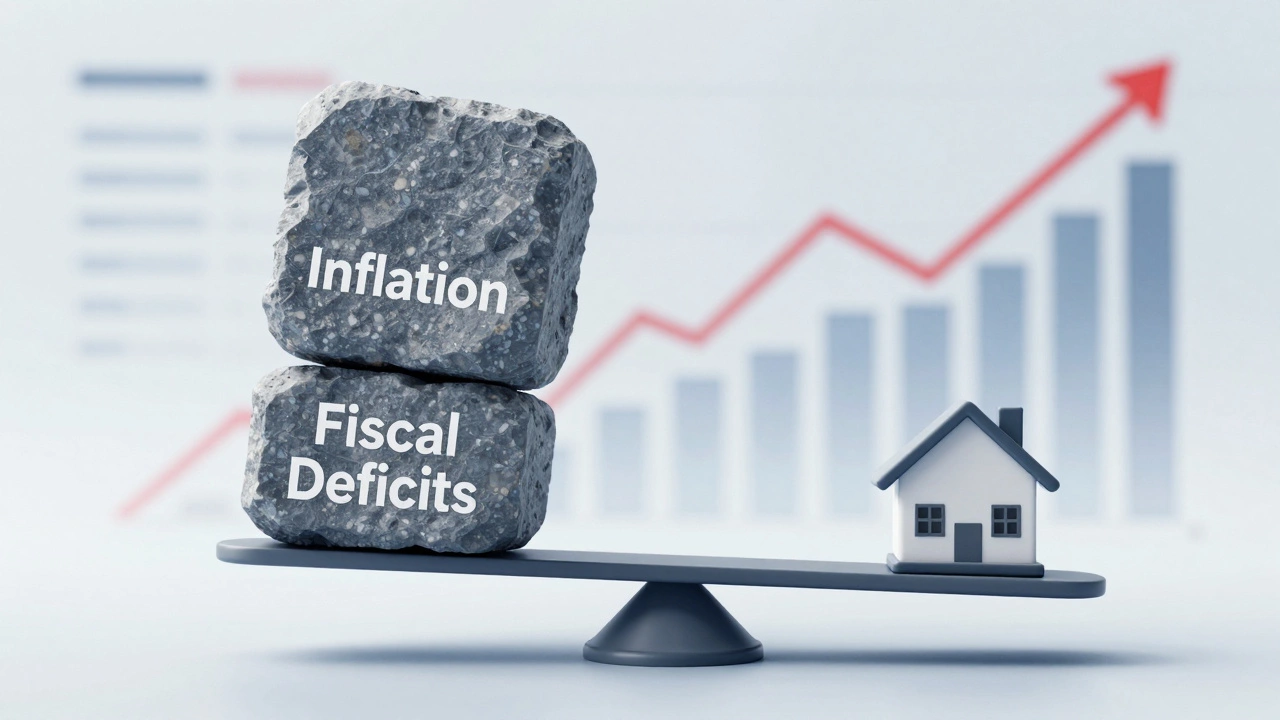
- Inflation Stickiness: Even though headline inflation has cooled from its peaks, core services inflation (like rent, insurance, and wages) remains stubbornly high. Central banks won’t cut rates significantly until they are confident inflation is sustainably back at their 2% target.
- Fiscal Deficits: Governments in both the US and Canada are running large budget deficits. To fund this spending, they issue more debt. An oversupply of bonds can push yields higher as investors demand more compensation for holding them.
- Demographic Demand: There is still strong demand for housing relative to supply. In cities like Toronto, Vancouver, and New York, population growth continues to outpace new construction. High demand supports higher prices, which indirectly supports higher lending rates as lenders perceive less risk in collateral values.
Unlike the 2020 era, there is no emergency forcing rates down. The economy is resilient, unemployment is relatively low, and labor markets are tight. This means the "floor" for interest rates is higher than it was a decade ago. Economists generally believe the neutral rate-the rate that neither stimulates nor slows the economy-is higher now due to aging populations and green energy investments requiring more capital.
The Case for Returning to 3%
Despite the structural headwinds, there are scenarios where mortgage rates could dip back toward 3%. These are not baseless hopes but specific economic conditions that would need to align.
First, a significant economic recession could trigger another round of aggressive rate cuts by central banks. If GDP contracts sharply and unemployment spikes, the Bank of Canada and the Federal Reserve would prioritize job preservation over inflation control. In such a scenario, short-term rates would drop fast, and long-term bond yields might follow suit as investors flee to safety. This happened in 2008-2010 and again in 2020.
Second, a sudden deflationary shock could lower rates. If asset prices (stocks, real estate) crashed severely, or if energy prices plummeted unexpectedly, inflation expectations would fall. Lower inflation expectations mean lower nominal interest rates. However, this comes with a painful trade-off: widespread job losses and potential foreclosures.
Third, technological disruption in lending could reduce costs. Fintech companies and AI-driven underwriting are slowly reducing the overhead for lenders. While this hasn’t dramatically lowered rates yet, increased competition and efficiency could shave off basis points over the next decade. But this alone is unlikely to bridge the gap from 5% to 3% without broader macroeconomic support.
Why 4-5% Might Be the New Normal
If you’re waiting for 3%, you might be disappointed for a while. Many economists argue that the "new normal" for mortgage rates sits between 4% and 5.5%. Here’s why that range makes sense.
Historically, before the 2008 financial crisis, average 30-year fixed mortgage rates in the US hovered around 5-6%. In Canada, prime-based variable rates often tracked closer to 4-5%. The sub-3% era was a brief anomaly lasting roughly three years out of the last fifty. Statistically, we are returning to the mean.
Consider the concept of "real interest rates." This is the nominal rate minus inflation. If inflation is 2% and the mortgage rate is 4%, the real cost of borrowing is 2%. During the 2020 boom, nominal rates were 3% but inflation was sometimes negative or very low, meaning real rates were positive but affordable. Today, with inflation stabilizing around 2-2.5%, a 4.5% mortgage rate represents a similar real cost of borrowing as a 3% rate did in a deflationary environment.
Moreover, banks need to maintain healthy net interest margins to remain solvent. If mortgage rates drop too low while deposit rates stay competitive, banks lose profitability. This can lead to tighter lending standards, fewer loan products, and reduced availability of credit. A moderate rate environment ensures that credit remains accessible to qualified borrowers without breaking the banking system.
| Period | Average Rate | Inflation Context | Economic Driver |
|---|---|---|---|
| 2000-2007 | 6.0% - 6.5% | Stable (~2%) | Growth & Expansion |
| 2020-2021 | 2.5% - 3.2% | Low/Negative | Pandemic Stimulus |
| 2023-2026 | 5.0% - 6.5% | Elevated (2-3%) | Anti-Inflation Fight |
| Projected 2030+ | 4.0% - 5.0% | Target (2%) | New Equilibrium |
Strategies for Homebuyers in a Higher Rate World
Waiting for rates to magically return to 3% can cost you dearly. Every month you delay buying, you might miss out on equity buildup, face rising home prices, or pay rent instead of building ownership. Instead of timing the market perfectly, focus on strategies that mitigate rate risk.
Consider Adjustable-Rate Mortgages (ARMs): If you plan to move within five years, an ARM might offer a lower initial rate than a fixed mortgage. Just ensure you have a clear exit strategy before the rate adjusts upward.
Make Larger Down Payments: Increasing your down payment reduces the principal amount, lowering your total interest paid over the life of the loan. It also helps you avoid private mortgage insurance (PMI) in the US or CMHC insurance premiums in Canada, which can save thousands annually.
Refinance Strategically: If you already have a mortgage, watch for rate dips. Even a reduction of 0.5% can significantly lower your monthly payment or shorten your amortization period. In Canada, consider open vs. closed mortgages based on your liquidity needs.
Improve Your Credit Score: Lenders offer their best rates to borrowers with exceptional credit (typically 760+ in the US, 750+ in Canada). Paying down existing debts and ensuring all bills are paid on time can qualify you for preferred rate tiers, potentially saving you hundreds per month.
Look Beyond Major Banks: Credit unions and smaller lenders often have different funding models and may offer more competitive rates or flexible terms. Shopping around is essential; don’t settle for the first quote you receive.

Regional Differences Matter
Not everyone faces the same rate landscape. In the United States, rates vary slightly by state due to local regulations and competition. In Canada, provincial differences in land transfer taxes and property tax structures affect affordability more than the interest rate itself. For example, a buyer in Toronto might face higher closing costs than someone in Calgary, even if the mortgage rate is identical.
Additionally, rural areas sometimes benefit from specialized government-backed programs that offer below-market rates. In the US, USDA loans can provide zero-down options with competitive rates for eligible rural properties. In Canada, the First-Time Home Buyer Incentive allows shared equity arrangements that effectively lower your mortgage burden. Explore these niche options if you qualify.
Final Thoughts on Patience and Perspective
Will mortgage rates ever be 3% again? Probably. But not soon, and not without a major economic setback. The era of ultra-cheap money is over, replaced by a more sustainable, albeit more expensive, borrowing environment. This shift encourages more disciplined financial planning and realistic budgeting.
Rather than fixating on a specific number, focus on your ability to repay. Can you comfortably afford the payment at today’s rates? If yes, buy. If no, wait and save. The goal isn’t to get the lowest possible rate; it’s to secure a home that fits your lifestyle and financial health. History shows that homeownership remains one of the most reliable wealth-building tools, regardless of whether your rate is 3% or 5%.