
Debt Consolidation: How to Combine Multiple Debts into One Payment
 Oct, 22 2026
Debt Consolidation Savings Calculator
Enter your current debts below to see if consolidating them into a single loan with a lower interest rate saves you money.
- Current Path: $0.00
- Consolidated Path: $0.00
You open your mailbox and find five different envelopes. One is for your credit card, another for a store card you forgot about, a third for an old student loan, and two more for medical bills from last year. The due dates are scattered across the month. The interest rates vary wildly. You’re spending half your weekend just tracking who gets paid when. This chaos isn’t just annoying; it’s expensive. Missing a payment because you lost track of one bill can tank your credit score faster than any other financial mistake.
The solution most people look for is simple: debt consolidation. Is it possible to put all this mess into one single monthly payment? The short answer is yes. But the longer, more important answer involves understanding how this actually works, what it costs, and whether it truly saves you money or just rearranges the deck chairs on the Titanic.
What Exactly Is Debt Consolidation?
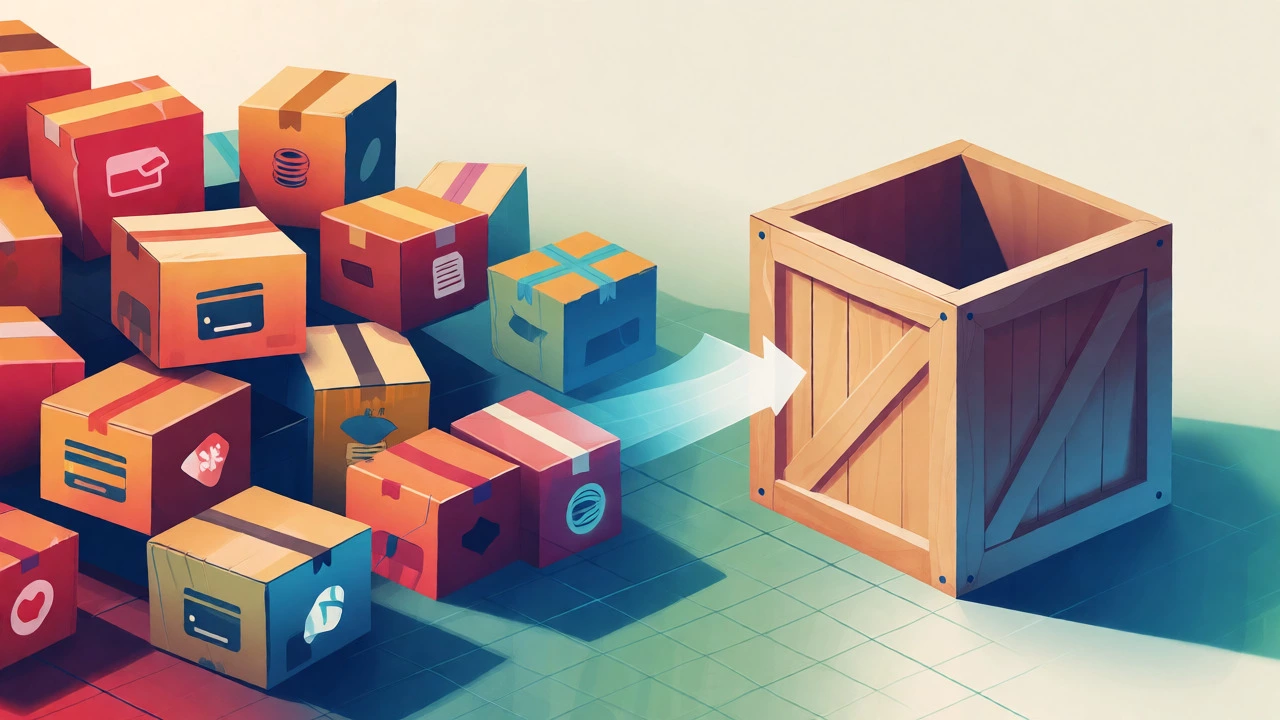
Think of debt consolidation as moving boxes. Right now, you have small, awkwardly shaped boxes (your various debts) sitting in different corners of your house. They’re hard to manage, easy to trip over, and you never know which one contains what. Consolidation means buying one big, sturdy crate. You take everything out of those small boxes, put it all into the big crate, and label it clearly.
In financial terms, debt consolidation is the process of combining multiple outstanding debts into a single new loan or line of credit. Instead of paying Visa, Mastercard, Amex, and that random furniture store separately, you take out one new loan large enough to pay off all those balances. Now, you only owe one entity, and you make one payment each month.
This doesn’t erase the debt. It changes the structure. If you owe $10,000 total, you still owe $10,000 after consolidating. The magic-or the trap-lies in the interest rate and the term length.
The Three Main Ways to Consolidate
Not all consolidation methods are created equal. Your choice depends heavily on your credit score, income stability, and how much equity you have in assets like your home. Here are the three primary routes available in Canada today.
- Personal Debt Consolidation Loans: This is the most common method. You apply for a fixed-rate installment loan through a bank, credit union, or online lender. If approved, they send the funds directly to your creditors. You then repay the new lender over a set period, usually 2 to 5 years. These loans often offer lower interest rates than credit cards if you have good credit (typically above 680).
- Balance Transfer Credit Cards: Many Canadian banks offer promotional periods where you can transfer existing high-interest balances to a new card with 0% interest for 6 to 12 months. This is great for smaller amounts ($5,000-$15,000) if you can pay it off before the promo ends. However, there’s usually a transfer fee of 1% to 3% of the amount moved.
- Home Equity Lines of Credit (HELOC): If you own a home in Toronto or elsewhere in Canada with significant equity, you can borrow against it. HELOCs generally have variable interest rates tied to the Bank of Canada’s prime rate. While rates are often lower than unsecured loans, you risk losing your home if you default. This is a powerful tool but comes with higher stakes.
When Does Consolidation Actually Save Money?
Here is the critical calculation most people skip. You aren’t just looking for "one payment." You are looking for a lower total cost. To determine if consolidation makes sense, compare your current weighted average interest rate against the new loan’s APR (Annual Percentage Rate), including fees.
Let’s say you have three credit cards. Card A has $2,000 at 22%, Card B has $3,000 at 19%, and Card C has $1,000 at 24%. Your weighted average rate is roughly 21%. If you qualify for a consolidation loan at 12%, you save nearly 10 percentage points. Over three years, that could mean saving hundreds or even thousands of dollars in interest.
However, if your current average rate is already low (say, 8% on a car loan and 5% on a student loan), consolidating them into a 10% personal loan might actually increase your total cost. Always run the numbers before signing anything.
| Option | Typical Interest Rate | Best For | Risk Factor |
|---|---|---|---|
| Personal Loan | 8% - 18% | Good credit, stable income | Low (Unsecured) |
| Balance Transfer Card | 0% (promo) then 19%+ | Small debts, fast payoff | Medium (Credit limit risk) |
| HELOC | Prime + 0.5% - 1% | Homeowners with equity | High (Secured by home) |
| Debt Management Plan | Negotiated reductions | Struggling with minimums | Medium (Credit impact) |
The Hidden Pitfalls to Avoid
Consolidation solves the cash flow problem, but it doesn’t solve the behavior problem. I’ve seen countless clients consolidate their credit card debt, feel relieved because their monthly payment dropped, and then immediately start using the empty credit cards again. Within six months, they have the new consolidation loan payment plus new credit card balances. Now they owe more than before.
Another trap is extending the loan term too long. Suppose you have $15,000 in debt. Paying it off in 2 years requires a hefty monthly payment. If you stretch that loan to 7 years, your monthly payment looks manageable. But you’ll pay significantly more interest over the life of the loan. Always ask: "Am I lowering my payment because I got a better rate, or just because I’m taking longer to pay it off?"
Fees matter too. Some lenders charge origination fees upfront, which get deducted from the loan proceeds. If you need exactly $10,000 to clear your debts but the lender charges a 2% fee, you might receive $9,800, leaving you short. Read the fine print carefully.
Step-by-Step Guide to Consolidating Your Debt
If you decide to move forward, here is the practical workflow. Don’t skip steps.
- List every debt: Write down the creditor, balance, interest rate, and minimum payment for every single obligation. Include taxes, payday loans, and lines of credit.
- Check your credit report: Know your score before applying. In Canada, you can check your Equifax or TransUnion report for free once a year. Errors here can hurt your approval odds.
- Shop around: Apply with multiple lenders within a 14-day window. Most credit scoring models treat multiple inquiries for the same type of loan within a short period as a single inquiry, protecting your score.
- Get pre-approved: Look for soft-pull quotes first. This lets you see potential rates without hurting your credit score until you formally accept.
- Apply and close accounts: Once funded, ensure the lender pays off your old creditors directly. Then, keep those old credit card accounts open but unused to help your credit utilization ratio, unless annual fees are high.
- Set up autopay: Automate the single new payment so you never miss a due date again.

Alternatives If You Can’t Qualify for a Loan
What if your credit score is below 600 or your debt-to-income ratio is too high? You might not qualify for a traditional bank loan. That doesn’t mean you’re stuck with five payments forever.
A Consumer Proposal is a legally binding agreement administered under the Bankruptcy and Insolvency Act. You negotiate with your creditors to pay back a portion of what you owe over up to 5 years. Interest stops accruing, and you make one payment to a Licensed Insolvency Trustee (LIT). It impacts your credit rating differently than bankruptcy but clears debt faster than many people expect.
Alternatively, a Debt Management Plan (DMP) through a non-profit credit counselling agency can sometimes reduce interest rates without requiring a new loan. You make one payment to the agency, which distributes it to creditors. This is less formal than a proposal but still provides the "single payment" benefit.
Frequently Asked Questions
Will debt consolidation hurt my credit score?
Initially, yes, slightly. Applying for a new loan triggers a hard inquiry, which may drop your score by a few points. Also, closing old accounts can shorten your credit history length. However, if you consistently make on-time payments on the new loan and keep your credit utilization low, your score typically recovers and improves within 6 to 12 months.
Can I consolidate mortgage debt with credit card debt?
Technically, yes, especially if you use a HELOC or re-mortgage. However, financial experts rarely recommend it. Mortgages are secured, low-interest debt. Credit cards are unsecured, high-interest debt. Mixing them puts your home at risk for consumer spending habits. It’s usually better to keep mortgage debt separate from revolving consumer debt.
Is it better to pay off debt or invest?
It depends on the interest rate. If your debt costs 18% interest, paying it off gives you a guaranteed 18% return. The stock market historically averages 7-10% annually. Mathematically, paying off high-interest debt is almost always better. Only consider investing alongside debt repayment if the debt interest rate is very low (e.g., under 5%) and you have an emergency fund.
Do I need collateral to consolidate debt?
No, not necessarily. Personal loans and balance transfers are unsecured, meaning no collateral is required. HELOCs and Home Equity Loans are secured by your property. If you don’t own a home, stick to unsecured options or debt management plans.
How much does it cost to consolidate debt?
Costs vary. Balance transfers usually have a 1-3% fee. Personal loans may have origination fees (0-5%). HELOCs involve legal and appraisal fees. Compare the total cost of the new loan against the interest you’d pay by keeping existing debts. Sometimes the "free" option of doing nothing is actually the most expensive due to high compounding interest.