
Is Saving $600 a Month Good? Real Numbers for Canadian Finances in 2025
 Dec, 11 2025
Emergency Fund Calculator
Calculate how long it takes to build a 3-6 month emergency fund based on your monthly expenses and saving $600 per month.
Note: Based on Canadian average expenses ($2,800/month). For best results, keep savings in a high-interest savings account (4-4.75% interest).
Saving $600 a month sounds simple. But is it actually good? It depends on your income, your costs, and what you’re trying to build. For someone earning $3,000 a month after taxes in Toronto, saving $600 means you’re putting away 20% of your take-home pay. That’s more than most Canadians manage. For someone making $8,000 a month, it’s just 7.5% - decent, but not aggressive. The real question isn’t whether $600 is enough. It’s whether it’s enough for you.
What $600 a Month Adds Up To
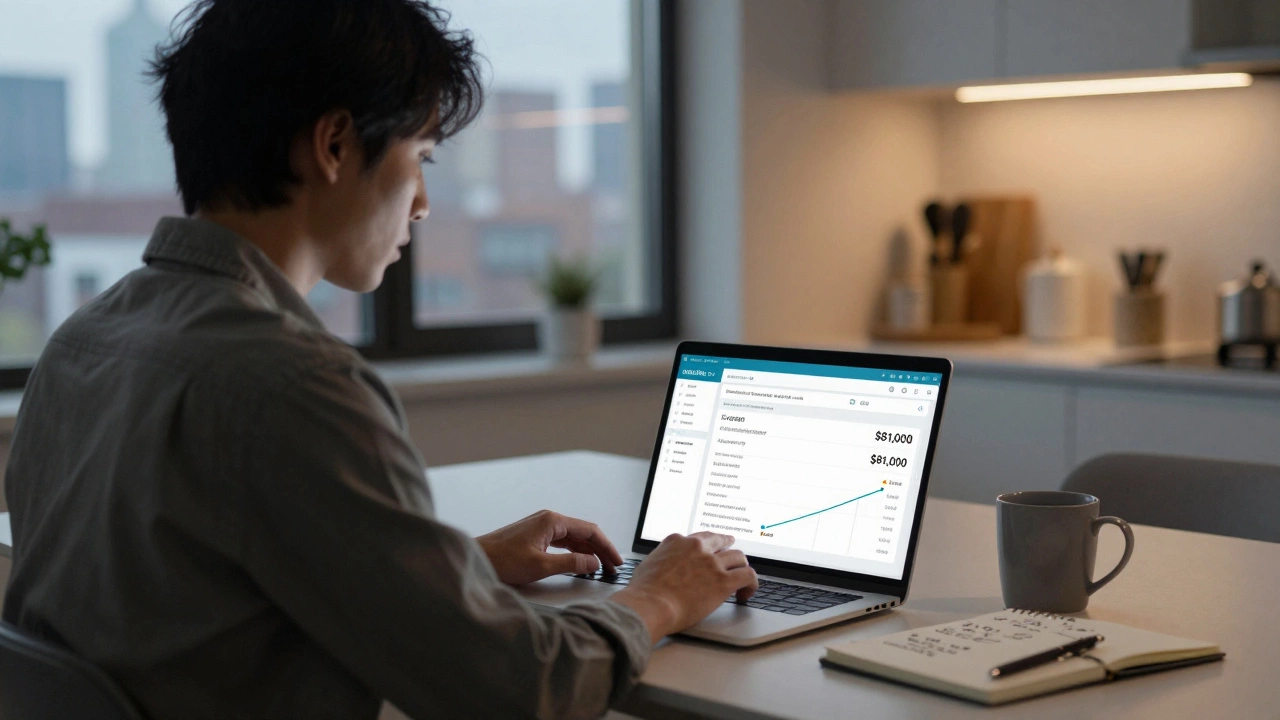
Let’s break down the math. Saving $600 every month for one year equals $7,200. Over five years, that’s $36,000. Ten years? $72,000. That’s not pocket change. If you put that money into a high-interest savings account earning 4% annually - which is common in Canada right now - your balance after ten years would be about $81,000. You’d earn nearly $9,000 in interest alone, just from letting the money sit.
Compare that to inflation. Canada’s inflation rate has hovered around 2.5% since early 2024. So $600 today buys more than $600 will in five years. But if you’re saving consistently, you’re staying ahead of erosion. You’re not just keeping up - you’re building.
Is $600 Enough for an Emergency Fund?
Most financial experts say you need three to six months’ worth of living expenses saved up for emergencies. In Toronto, the average monthly cost for rent, utilities, groceries, transit, and basic insurance is about $2,800 for a single person. That means you need $8,400 to $16,800 just to cover a job loss or medical emergency.
If you’re saving $600 a month, you’ll hit $8,400 in 14 months. That’s realistic. You’ll reach $16,800 in under three years. That’s not fast, but it’s steady. And it’s better than most. According to a 2024 RBC survey, 42% of Canadians couldn’t cover a $1,000 unexpected expense without borrowing. Saving $600 a month puts you in the top 30% of financially prepared Canadians.
What About Retirement?
Saving $600 a month for retirement is a solid start - if you start early. If you begin at age 25 and keep saving until 65, you’ll contribute $288,000 over 40 years. With a conservative 5% average annual return (after fees and inflation), that grows to about $875,000. That’s enough to pull $3,500 a month for 20 years in retirement, without touching your principal.
But if you wait until 35 to start? You’d need to save $1,000 a month to reach the same total. If you wait until 45? You’d need $2,000. Time is your biggest ally. Saving $600 now gives you decades of compounding. Waiting makes it harder - not impossible, just harder.
What You’re Sacrificing
Not everyone can save $600 a month. In Canada, median household income is around $85,000. After taxes, that’s about $5,500 a month. For a family of three in Toronto with rent at $2,600, daycare at $1,800, car payments, insurance, and groceries, $600 is a stretch. It’s not lazy to struggle with this. It’s real.
But here’s the thing: you don’t need to save $600 to be on track. You need to save something consistently. If you can only save $300 now, do that. Then increase it by $50 every six months. A $300 starter becomes $600 in two years. That’s progress.
Where to Keep That $600
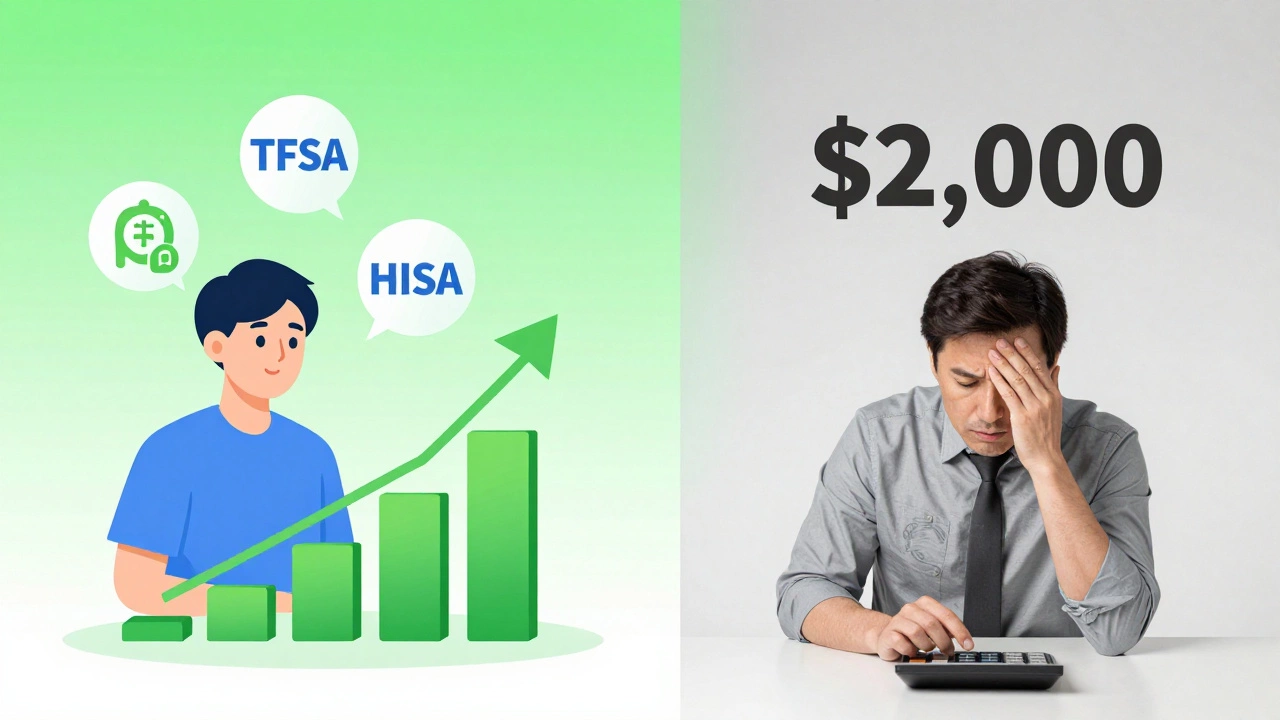
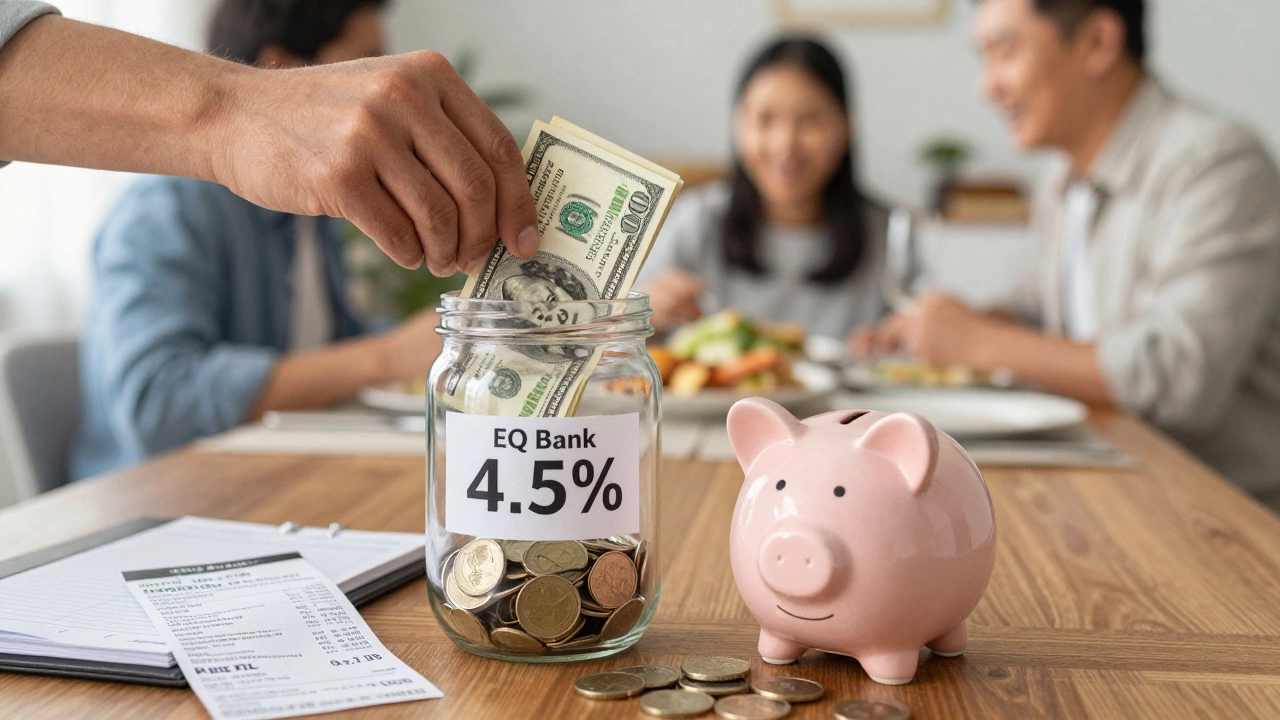
Don’t just stash it under your mattress. In 2025, the best place for emergency savings is a high-interest savings account (HISA). Institutions like EQ Bank, Tangerine, and Neo Financial offer rates between 4.0% and 4.75%. That’s 10 to 20 times higher than the old big bank accounts that paid 0.05%.
For retirement, use a TFSA or RRSP. A TFSA lets you grow your money tax-free and withdraw it anytime. An RRSP gives you a tax refund now, but you pay tax later. If your income is under $50,000, start with a TFSA. If it’s over $70,000, prioritize the RRSP. Either way, automate it. Set up a direct deposit from your paycheck to your savings account on payday. Out of sight, out of mind.
When $600 Isn’t Enough
There are times when $600 a month just doesn’t cut it. If you’re paying off $30,000 in student loans at 7% interest, saving $600 while carrying that debt is like pouring water into a bucket with holes. Pay down high-interest debt first. Then rebuild savings.
Same goes for credit card balances. If you’re paying 20% on a $5,000 balance, you’re losing $1,000 a year in interest. That’s more than you’d earn in a HISA. Crush the debt. Then save.
And if you’re trying to buy a home in Toronto? $600 a month won’t get you a down payment fast enough. The average home price is still over $1 million. A 5% down payment is $50,000. At $600 a month, it would take you 7 years - and that’s without rent or inflation eating into your savings. You’ll need to save more, find help from family, or consider a smaller city.
What 0 a Month Can Buy You
It’s not just about money. It’s about peace of mind. People who save $600 a month don’t panic when the car breaks down. They don’t lie awake wondering if they can pay next month’s rent. They don’t ask friends for loans. They have options.
That freedom? It’s worth more than the number itself. You’re not just saving dollars. You’re saving future-you from stress, shame, and bad choices.
How to Make $600 a Month Stick
- Track every dollar for one month. Use a free app like Simplifi or even a Google Sheet. Know where your money goes.
- Automate your savings. Set up a transfer on payday. Don’t wait until the end of the month.
- Use windfalls wisely. Tax refunds, bonuses, or side gig cash? Put 50% of it straight into savings.
- Review your subscriptions. Cancel two streaming services. That’s $30 a month. Do it for six months? That’s $180 extra.
- Start small. If $600 feels impossible, start with $200. Then $300. Then $400. Momentum matters more than perfection.
Final Answer: Is $600 a Month Good?
Yes - if you’re doing it consistently, if you’re putting it in the right account, and if it’s part of a plan. It’s not magic. But it’s powerful. For most people in Canada, saving $600 a month is above average. It’s a sign you’re thinking ahead. It’s a habit that compounds into security.
It’s not about being rich. It’s about being ready.
Is saving $600 a month enough for an emergency fund?
It depends on your monthly expenses. If you spend $2,800 a month on essentials in Toronto, you need $8,400 to $16,800 for a solid emergency fund. Saving $600 a month gets you there in 14 to 28 months - which is realistic and better than most Canadians. Just make sure the money is in a high-interest savings account, not a checking account.
Can I retire comfortably if I save $600 a month?
Yes - if you start early. If you save $600 a month from age 25 to 65 with a 5% average return, you’ll have about $875,000. That can support $3,500 a month in retirement. But if you start at 45, you’d need to save $2,000 a month to reach the same goal. Time is your biggest advantage.
Should I save $600 a month or pay off debt first?
If your debt has an interest rate over 6%, pay it off first. Credit cards at 20% or student loans at 7% cost you more than any savings account earns. Build one small emergency fund of $1,000 first, then focus on debt. Once it’s gone, ramp up savings.
Where’s the best place to keep $600 a month in savings?
Use a high-interest savings account (HISA) from EQ Bank, Tangerine, or Neo Financial. They pay 4% to 4.75% in 2025 - far better than traditional banks. For retirement, use a TFSA or RRSP. Automate transfers so you never have to think about it.
What if I can’t save $600 a month?
Start with what you can. $200 a month is better than $0. Increase it by $50 every six months. Small steps add up. Most people who save successfully didn’t start at $600 - they built up to it. Consistency beats perfection.