
Student Loan Forgiveness 2026: Who Qualifies and How to Apply
 Nov, 12 2026
Student Loan Forgiveness Pathway Finder
Answer the questions below to identify your most likely forgiveness pathway. This tool focuses on Federal Loans held by the Department of Education.
Your Profile
Recommended Action
Program Name
Description will appear here.
Key Next Steps:
*Disclaimer: This tool provides general guidance based on 2026 regulations. Eligibility can vary based on specific loan servicers, consolidation history, and tax laws. Always consult with a qualified financial advisor or the Department of Education for official determinations.
It’s November 2026, and the landscape of student loan forgiveness has shifted dramatically from the chaotic headlines of the early 2020s. If you are sitting on a pile of federal debt, wondering if you’ll ever see zero balance, you aren’t alone. The good news? You don’t need a lottery ticket or a political miracle. Most people getting their loans wiped clean today are doing it through specific, well-defined pathways that have been around for years but recently got streamlined. You just need to know which door to knock on.
The Big Picture: It’s Not One-Size-Fits-All
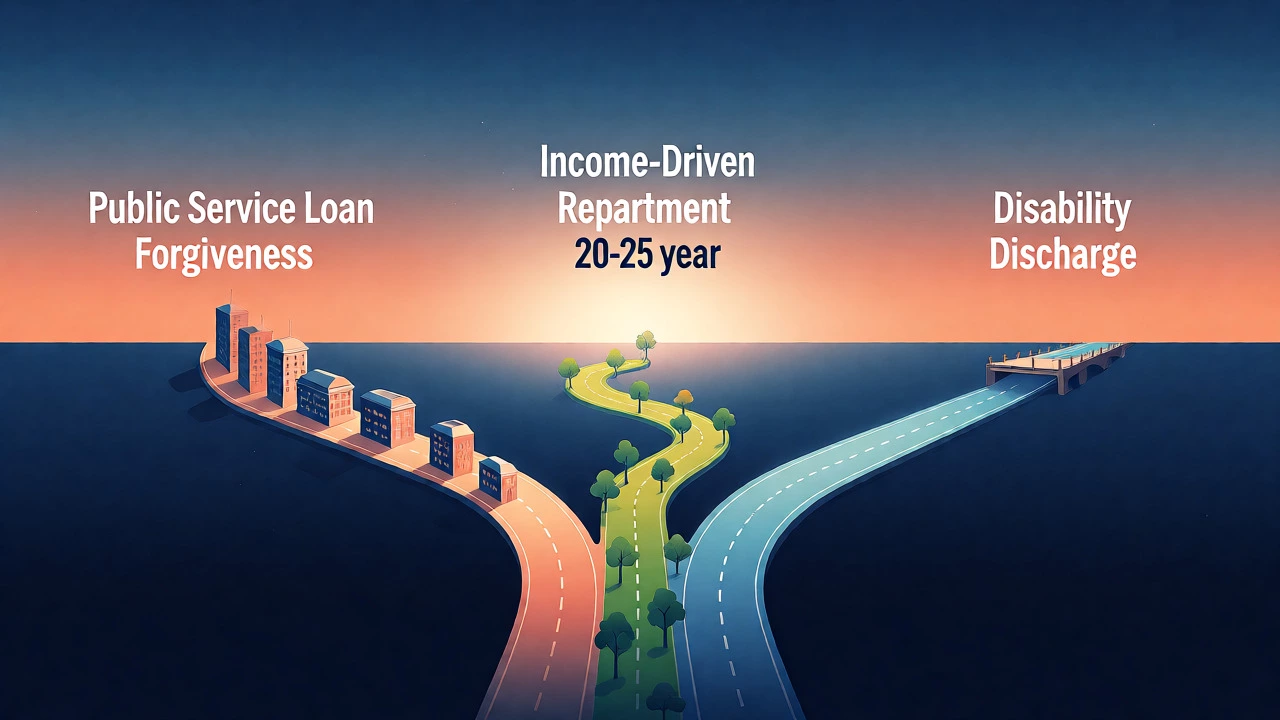
First things first: there is no single "forgiveness button" for everyone. When people ask who is getting forgiven, they are usually mixing up three distinct programs. Think of them as different keys for different locks.
- Income-Driven Repayment (IDR) Forgiveness: This is the most common route for regular folks. If you pay your bills based on what you earn, not what you owe, the remaining balance disappears after 20-25 years.
- Public Service Loan Forgiveness (PSLF): For those working in government or non-profits. Do 120 qualifying payments, and the rest vanishes tax-free.
- Total and Permanent Disability (TPD) Discharge: If a medical condition prevents you from working, your debt can be erased immediately.
Private loans? They generally don’t get forgiven by the government. Unless your lender offers a rare hardship program, private debt stays with you until you pay it off or refinance it. So, this guide focuses on federal loans held by the Department of Education.
Income-Driven Repayment: The Long Game
If you work in the private sector, IDR is likely your best friend. These plans cap your monthly payment at a percentage of your discretionary income. In 2026, the standard caps are typically 5% to 10%. After 20 years (for undergraduate loans under newer plans like SAVE) or 25 years (for graduate loans or older plans), whatever is left is forgiven.
Here is the catch that trips people up: you must recertify your income every year. Miss one deadline, and you might fall back into the standard 10-year plan, which could mean higher payments and no forgiveness at all. Also, keep in mind that while the IRS currently treats IDR forgiveness as taxable income (unless temporary legislation extends the tax exemption), PSLF forgiveness is always tax-free. Check the latest Treasury updates before you celebrate your $40,000 discharge.
| Program | Eligible Workers | Timeframe | Taxable? | Key Requirement |
|---|---|---|---|---|
| SAVE / IBR / PAYE | All federal borrowers | 20-25 Years | Yes (usually) | Annual Income Recertification |
| PSLF | Govt & Non-Profit Employees | 10 Years (120 Payments) | No | Employer Certification Form (ECF) |
| TPD Discharge | Disabled Borrowers | Immediate | No | Medical Documentation |
PSLF: The Public Sector Gold Standard
If you teach, nurse, work for the city, or serve in the military, PSLF is arguably the most powerful tool in your arsenal. Why? Because you only need 120 qualifying payments-that’s just 10 years-instead of 20 or 25. And again, the forgiven amount isn’t taxed.
But here is where the rubber meets the road. Not every employer counts. Your job must be a government agency (federal, state, local, tribal) or a 501(c)(3) non-profit. Some other non-profits qualify too, but you have to check their status carefully. A common mistake? Working for a public university but having your loan servicer misclassify your payments because you were on a grace period or forbearance during some months. Those months don’t count toward the 120.
To stay on track, submit the Employment Certification Form (ECF) annually. Yes, even if nothing changed. This creates a paper trail proving your employer qualifies. If your servicer says "no," you want to know now, not in nine years when you’re denied.
Who Is NOT Getting Forgiven?
Let’s burst a few bubbles. Just because you went to college doesn’t mean the government will bail you out.
- Private Loan Holders: Companies like Sallie Mae, Discover, or SoFi don’t offer federal-style forgiveness. If you refinanced your federal loans into a private loan, you lost access to IDR and PSLF forever. Be careful with refinancing offers that sound too good to be true.
- Parent PLUS Loans: Parents who borrowed for their kids often struggle here. Parent PLUS loans aren’t eligible for most IDR plans unless you consolidate them into a Direct Consolidation Loan first. Even then, the timeline is long (up to 25 years), and PSLF rarely applies to parents unless they work in public service themselves.
- Defaulted Borrowers: If your loans are in default, you aren’t making "qualifying payments." You need to rehabilitate or consolidate your loans to get back into a repayment plan that leads to forgiveness.
The Administrative Hurdles: Servicers and Forms
In 2026, the Department of Education has tried to simplify the process, but bureaucracy still exists. Many borrowers face issues with loan servicers like MOHELA, Nelnet, or Aidvantage. These companies manage the paperwork, but they sometimes miss credits or misapply payments.
A pro tip: Don’t rely solely on your servicer’s website dashboard. Keep your own spreadsheet. Track every payment date, amount, and whether it was marked as "qualifying." If you notice discrepancies, file a complaint with the Consumer Financial Protection Bureau (CFPB). They have a strong track record of forcing servicers to correct errors related to PSLF and IDR counts.
Also, watch out for "consolidation traps." If you consolidate your loans, the clock resets for some purposes, but your previous qualifying payments *should* carry over if done correctly. However, if you consolidate a Parent PLUS loan into a Joint Consolidation Loan with your spouse, you might lose eligibility for certain benefits. Always read the fine print before signing consolidation papers.
State-Specific Programs and Employer Assistance
While federal programs dominate the conversation, don’t ignore local opportunities. Several states have launched their own student loan repayment assistance programs (LRAPs). For example, nurses in rural areas or lawyers in public defender offices might get help paying down debt through state grants. These are separate from federal forgiveness but can accelerate your path to zero.
Additionally, more employers are offering student loan contributions as part of their benefits package. Under recent tax changes, these contributions can be tax-free up to a certain limit (currently $5,250 per year). If your company matches your loan payments, factor that into your budget. It doesn’t forgive the loan outright, but it reduces the principal faster, meaning less interest accrues and potentially lower IDR payments later.
How to Take Action Today
So, what do you actually do right now? Here is a quick checklist to ensure you’re positioned for forgiveness.
- Identify Your Loan Type: Log in to StudentAid.gov. Are your loans Direct Subsidized, Unsubsidized, Grad PLUS, or Parent PLUS? Are any FFEL or Perkins loans still outstanding? Note that FFEL and Perkins loans may need consolidation to qualify for modern IDR plans.
- Check Your Repayment Plan: Are you on Standard Repayment? If so, switch to an Income-Driven Plan immediately. Use the Department of Education’s loan simulator to estimate your new payment. It’s often shockingly low if you have a modest income.
- Submit the ECF (If Applicable): If you work in public service, fill out the Employment Certification Form. Send it to your servicer and keep a copy. Repeat this yearly.
- Set Up Auto-Pay: Most servicers offer a 0.25% interest rate discount for auto-pay. More importantly, it ensures you never miss a due date, which keeps your payment count active.
- Review Tax Implications: Consult a CPA about how future forgiveness might affect your taxes. If you expect a large discharge, you might need to set aside money for a potential tax bill in the year of forgiveness.
Remember, forgiveness isn’t automatic. It’s a reward for consistency. The system rewards those who show up, pay on time, and keep their documentation straight. It feels tedious, but sticking to the rules pays off-in more ways than one.
Do I have to apply for student loan forgiveness?
For Income-Driven Repayment (IDR) forgiveness, you generally do not need to submit a separate application once you reach the end of your term; the servicer should automatically review your account and discharge the balance. However, for Public Service Loan Forgiveness (PSLF), you must actively submit an application after making your 120th qualifying payment. Failure to apply means your debt remains active even if you’ve met the criteria.
Is student loan forgiveness taxable?
It depends on the program. PSLF forgiveness is federally tax-free. IDR forgiveness (like SAVE or IBR) is currently treated as taxable income by the IRS, meaning you might owe federal income tax on the amount forgiven. However, some states do not tax this income. Always check current IRS guidelines and consult a tax professional, as legislative changes can extend tax exemptions temporarily.
What happens if I miss a payment?
Missing a payment does not necessarily disqualify you from forgiveness, but it can delay it. For PSLF, you need 120 *qualifying* payments. If you skip a month, you don’t get credit for that month, extending your timeline. For IDR, missing payments can cause you to fall behind, potentially leading to default if prolonged, which stops forgiveness progress entirely. Contact your servicer immediately if you anticipate a missed payment to explore deferment options.
Can I refinance my federal loans and still get forgiveness?
No. If you refinance your federal student loans with a private lender (like SoFi, Laurel Road, or Earnest), you permanently lose access to federal protections, including IDR plans and PSLF. Only consolidate within the federal system (Direct Consolidation Loan) to maintain eligibility for forgiveness programs. Refinancing lowers interest rates but removes the safety net of forgiveness.
Does working for a church qualify for PSLF?
Generally, yes, if the church is a 501(c)(3) non-profit organization. However, employment with religious organizations is subject to strict scrutiny. Your duties must be secular in nature, or the organization must meet specific criteria regarding its mission and funding. Always submit an Employment Certification Form to verify eligibility before assuming your payments count toward PSLF.