30-Year 401(k) Average: What You Really Need to Know
When people talk about the 30-year 401(k) average, the typical total savings accumulated in a U.S. employer-sponsored retirement account over three decades of contributions and investment growth. It’s not just a number—it’s the difference between retiring with comfort or having to keep working past 70. Most folks assume their 401(k) will magically grow into a comfortable nest egg, but the truth? The average 30-year 401(k) balance for someone who started at 25 and contributed consistently is around $500,000 to $700,000. That sounds like a lot—until you realize inflation, fees, and market swings eat into that number faster than you think.
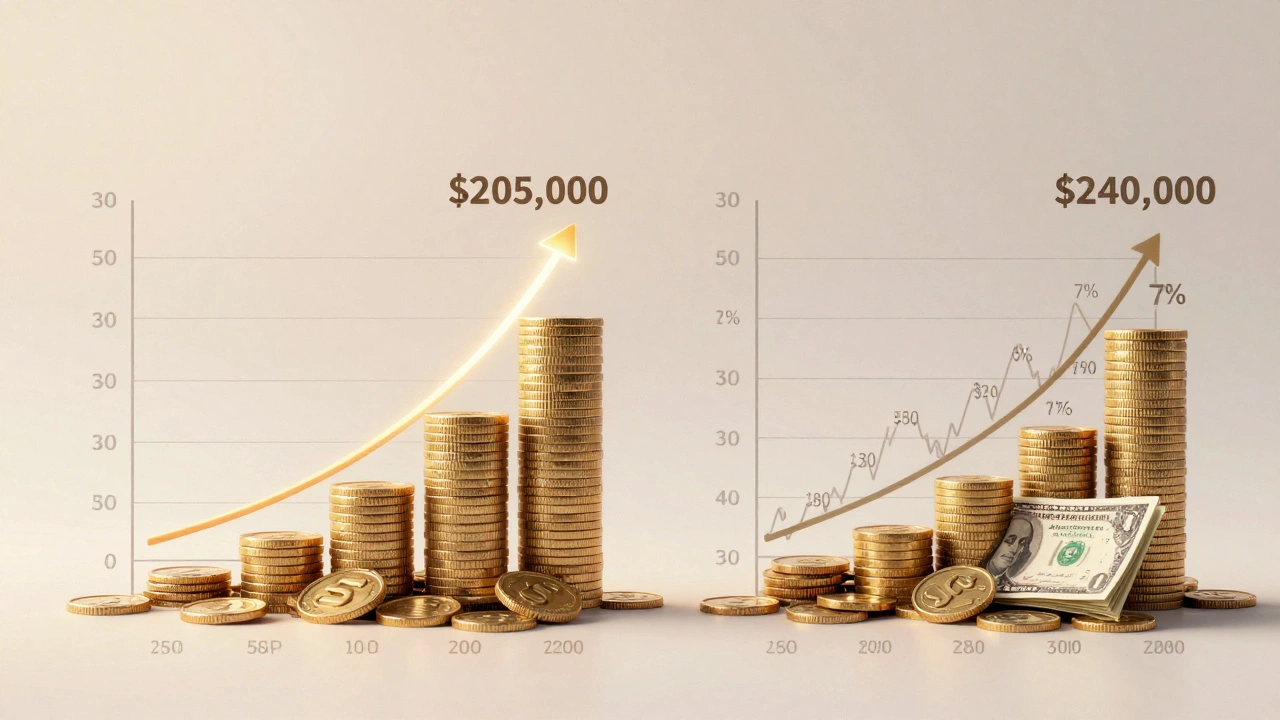
What really drives that number isn’t just how much you put in each month—it’s 401(k) growth, the compounded return on investments held inside your retirement account over time, and how long you let it sit untouched. Someone who starts at 25 and contributes 10% of a $50,000 salary, with a 7% average annual return, ends up with roughly $680,000 by 55. But if they wait until 35? That drops to under $300,000. The 401(k) contributions, the regular amounts an employee and/or employer adds to a retirement account, often with tax advantages matter, but time matters more. And most people don’t realize how much employer matching boosts that number—leaving free money on the table is like turning down a raise.
Then there’s the hidden stuff: fees. A 1% annual fee on a $500,000 account costs you $5,000 a year—over 30 years, that’s more than $150,000 gone. And if you cash out early, change jobs often, or panic-sell during a crash, you’re not just losing money—you’re losing decades of compound growth. The retirement planning, the process of setting financial goals and building a strategy to fund your life after work isn’t about picking the best fund—it’s about staying consistent, keeping costs low, and not touching the money until you absolutely have to.
You’ll find posts here that break down real numbers—not theory. How much you actually need to save each month to hit $1 million. Why most people fall short even when they contribute. What happens if you delay contributions by just five years. How to pick low-cost funds that outperform the average. And what to do if your employer doesn’t offer a match. This isn’t about getting rich overnight. It’s about building something solid, step by step, without the fluff. What you’re about to read is what actually works—for real people, in real time.
What Is the Average 401(k) Return Over 30 Years?
0 Comments
The average 401(k) return over 30 years is typically 6%-7% after inflation. Learn how compound growth, fees, and consistency shape your retirement savings-and why small changes make a huge difference.