
How Much Cash Should I Keep in Savings? A Realistic Guide for Canadians
 Dec, 1 2025
Emergency Savings Calculator
Your Monthly Essentials
Your Risk Factors
Most people know they should have savings, but when you look at your bank account and wonder savings amount is enough, it’s easy to feel lost. You’ve heard the 3-month rule. Maybe even the 6-month rule. But what does that actually mean for your life right now? If you’re in Toronto, paying rent, driving a car, and juggling groceries and phone bills, how much should you really have sitting there, earning next to no interest?
Why savings aren’t just for emergencies
Savings aren’t just a safety net for when your car breaks down or you lose your job. They’re your buffer against life’s little surprises - the sudden vet bill, the fridge dying, the flight home for a family emergency. Without cash set aside, you end up using credit cards or payday loans. That’s how stress turns into debt.In Canada, 42% of adults say they couldn’t cover a $1,000 unexpected expense without borrowing or selling something, according to the 2024 Canadian Financial Literacy Survey. That’s not normal. It’s not sustainable. And it’s not how you build financial peace.
Start with your monthly expenses
Forget vague rules like "save three months". Start with your actual numbers. Add up everything you spend each month on essentials:- Rent or mortgage
- Utilities (hydro, gas, internet, phone)
- Groceries and household supplies
- Transportation (gas, public transit, car insurance, maintenance)
- Minimum debt payments
- Essential subscriptions (Netflix, gym, etc.)
Don’t include dining out, hobbies, or shopping. Focus only on what keeps you alive and housed. If your total is $3,200 a month, then three months of savings = $9,600. Six months = $19,200. That’s your target.
Adjust based on your risk level
Not everyone needs the same amount. Your savings goal should match your situation.- Stable job, dual income, no dependents? Three months might be enough. You’ve got backup.
- Freelancer, gig worker, or self-employed? Aim for six months. Income isn’t predictable.
- Single parent, high medical costs, or caring for someone? Go for six to nine months. Your safety net needs to be thicker.
- Just starting out or recently moved? Even $1,000 is a win. Build up slowly.
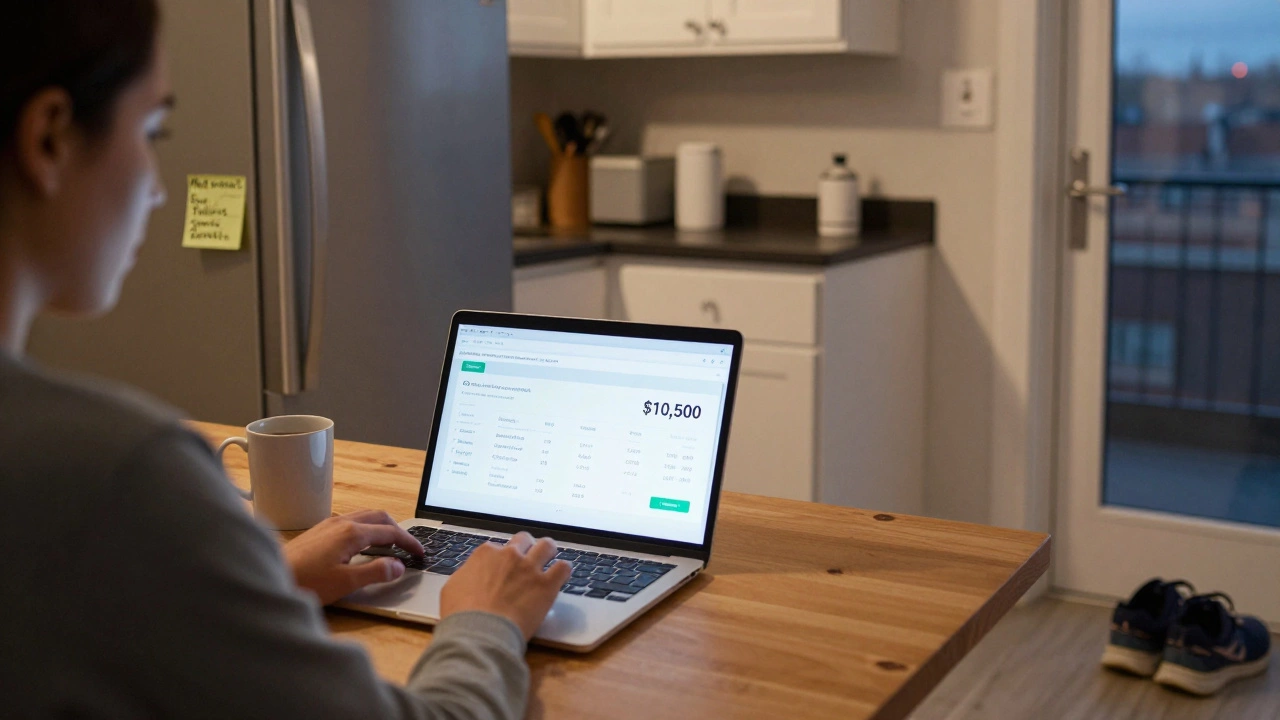
Here’s a real example: Maria, a nurse in Scarborough, earns $5,800/month after tax. Her essentials cost $3,500. She’s single, no kids, and her job is secure. She started with $2,000 saved. Within six months, she hit $10,500 - three months’ worth. That gave her the confidence to say no to a toxic job offer last year. She didn’t panic. She walked away.
Where to keep your savings
Don’t leave your emergency cash in a regular chequing account. You’ll spend it. Don’t lock it in a GIC or term deposit - you need instant access.The best place for your savings is a high-interest savings account (HISA). These accounts are:
- Fully insured by CDIC up to $100,000
- Accessible via online banking or mobile app
- Pay 4% to 5% interest right now (as of December 2025)
Compare options from neobanks like EQ Bank, Tangerine, or Simplii. Traditional banks like RBC or TD offer HISAs too, but their rates are often lower. Don’t overthink it. Pick one with no fees, easy transfers, and a decent rate. Set up an automatic transfer of $200 or $500 each payday. That’s it.
What not to do
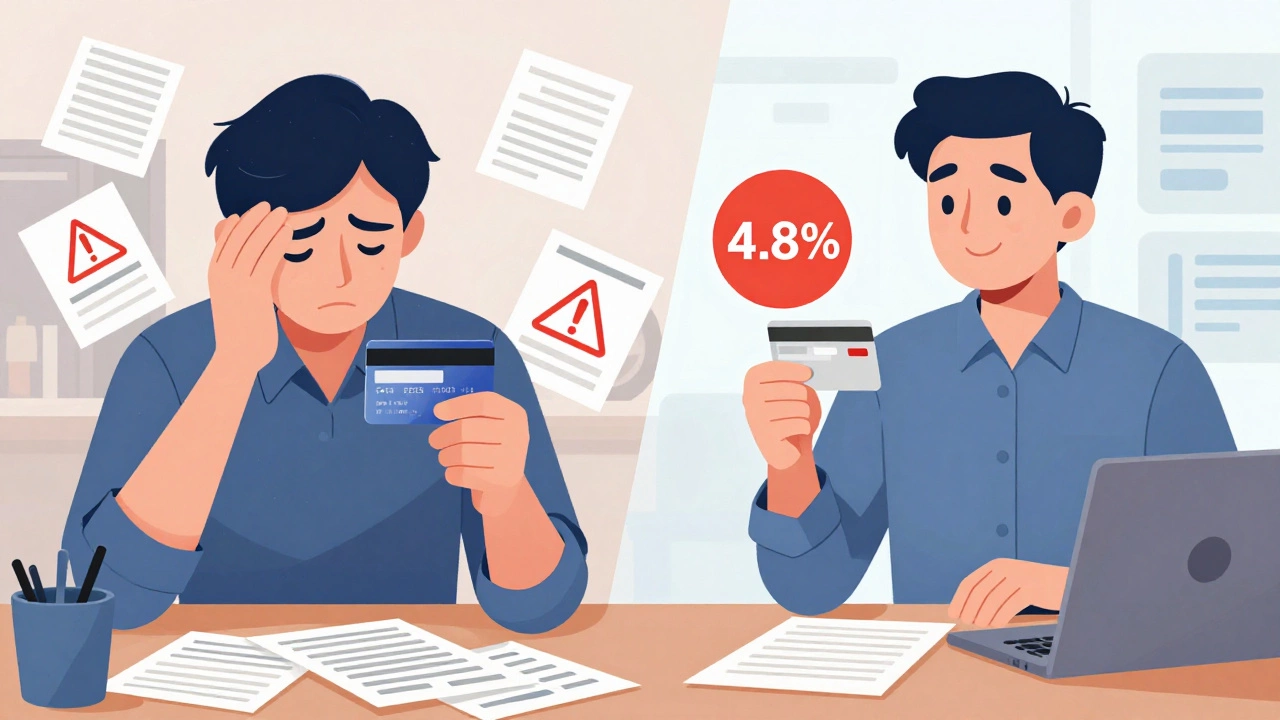
A lot of people think they’re saving by keeping cash under the mattress or in a shoebox. That’s not saving. That’s hiding money. You’re losing value to inflation. With inflation still around 2.5% in Canada, your $10,000 today will buy less than $9,750 next year if it’s not earning interest.Another mistake? Mixing savings with your investment portfolio. Stocks and ETFs aren’t savings. They’re for long-term growth. If the market drops and you need money in three weeks, you’ll be forced to sell low. That’s how savings turn into losses.
Also, don’t wait for the "perfect time" to start. You don’t need to save $5,000 before you begin. Start with $100. Then $200. Then $500. Progress beats perfection.
What if you can’t save much right now?
If you’re living paycheck to paycheck, it feels impossible. But even small steps matter.- Review your spending for one month. Find one $15 expense you can cut - maybe a streaming service you don’t use.
- Switch to a cheaper phone plan. Many Canadians pay $80/month for plans that cost $40 elsewhere.
- Use the "round-up" feature on your debit card. Some apps automatically save the change from every purchase.
- Ask your employer if they offer payroll savings. Deducting $25 from each paycheck feels painless.
One person I know saved $1,200 in four months by switching from a $120/month cable bundle to a $45/month streaming service and using coupons for groceries. That’s three months of savings for a single person. It didn’t require a raise. Just awareness.
When you reach your goal
Once you hit your target - whether it’s $3,000 or $20,000 - don’t stop saving. Keep adding. Why? Because life doesn’t stop.Your car will need a new transmission. Your cat might need surgery. You might want to take a trip to see family. Or your job might change. Your savings isn’t a finish line. It’s your foundation.
Think of it like brushing your teeth. You don’t stop after one year. You keep doing it because it protects you. Same with savings. It’s not about being rich. It’s about being safe.
How to track progress
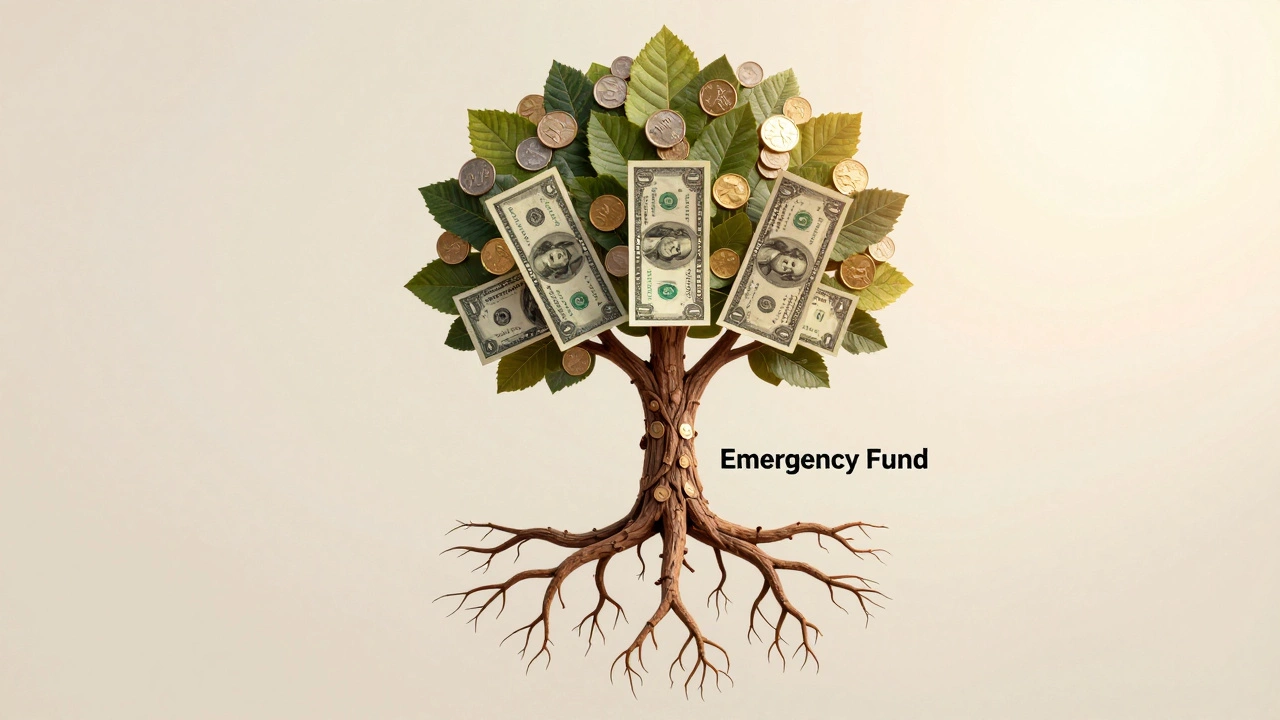
Use a simple spreadsheet or a free app like Mint or Wealthsimple Save. Label it "Emergency Fund" and update it every time you deposit or withdraw. Seeing the number rise gives you motivation. Seeing it dip reminds you why you need to rebuild it.Set a monthly reminder on your phone: "Check savings balance." It takes 30 seconds. But it keeps you grounded.
Final thought: It’s not about having a lot. It’s about having enough.
You don’t need to be rich to be secure. You just need enough cash to handle what life throws at you without falling apart. For most people in Canada, that’s between three and six months of essentials. For some, it’s more. For others, it’s less. But whatever your number is, make it real. Put it in a HISA. Let it earn interest. And don’t touch it unless it’s a true emergency.That’s the difference between living with anxiety and living with freedom.
Is $1,000 enough for an emergency fund?
$1,000 is a good starting point if you’re just beginning, especially if you’re on a tight budget. It can cover small emergencies like a flat tire or a broken phone. But it’s not enough for major events like job loss or medical bills. Once you have $1,000, keep building toward three months of essential expenses.
Should I save more if I have debt?
Yes, but balance it. Pay off high-interest debt (like credit cards) while building a small emergency fund. Aim for $1,000 first, then focus on debt. Once your high-interest debt is gone, ramp up your savings to three to six months. Having even a small cushion prevents you from using credit when unexpected costs pop up.
Can I use my RRSP as emergency savings?
No. RRSPs are for retirement. Withdrawing early means paying taxes and losing years of compound growth. There are exceptions like the Home Buyers’ Plan, but those aren’t designed for emergencies. Keep your emergency fund separate and liquid.
What if I lose my job and use my savings?
That’s exactly what it’s for. If you use your savings in an emergency, don’t feel guilty. Rebuild it as soon as you can. Treat it like a loan to yourself - pay it back with your next paychecks. Start with $200 a month until you’re back to your target.
Do I need a separate bank account for savings?
Yes. Keeping savings in a different account than your chequing account makes it harder to spend accidentally. Use a high-interest savings account from a different bank if possible. Out of sight, out of mind - and that’s exactly what you want.
Next steps: Your 30-day plan
- Week 1: Calculate your monthly essential expenses. Write them down.
- Week 2: Open a high-interest savings account. Set up automatic transfers of $50-$100 per pay period.
- Week 3: Cut one non-essential expense. Redirect that money to savings.
- Week 4: Check your balance. Celebrate. Then set your next goal: $2,000, then $5,000, then your full target.
You don’t need to be perfect. You just need to start. And keep going.